


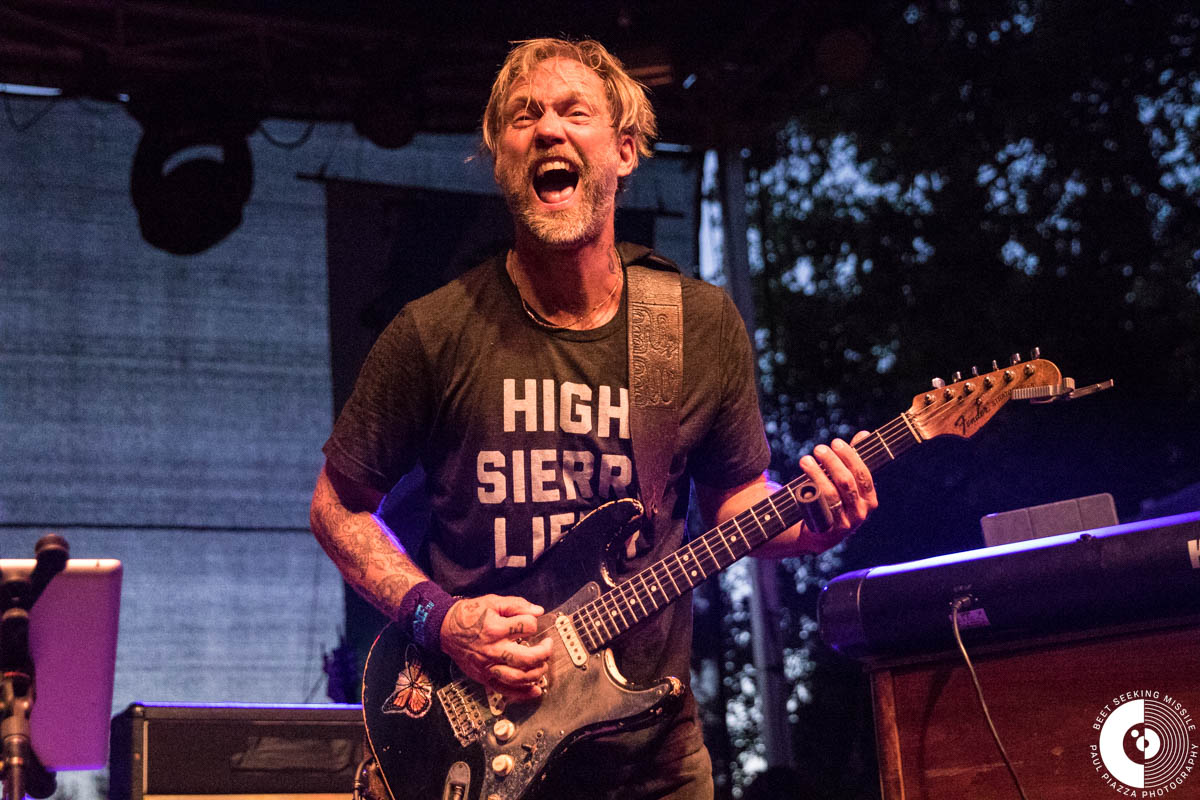
High Sierra Music Festival
Nevada County Fairgrounds, Grass Valley
July 2-5, 2026
Buy Tickets
Photos by Paul Piazza except as marked
The High Sierra Music Festival has become a distinctly unique and widely-known summer celebration during the time of its over-three decades span.
The independent festival, which celebrates its 34th year in 2026, is held over the Fourth of July weekend. This year, the festival will take place in its new home at the Nevada County Fairgrounds in Grass Valley, relocating from its longtime Quincy location.
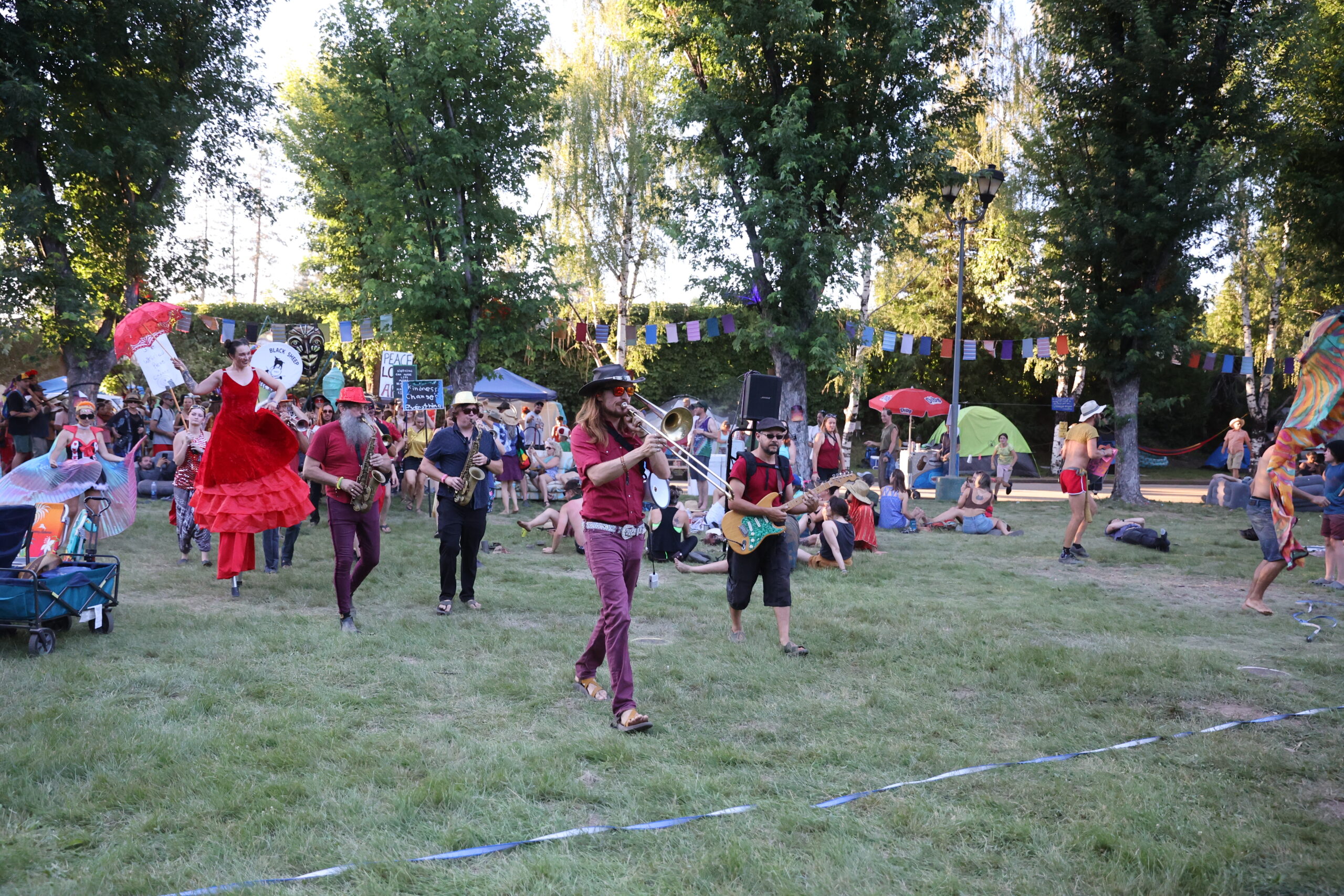
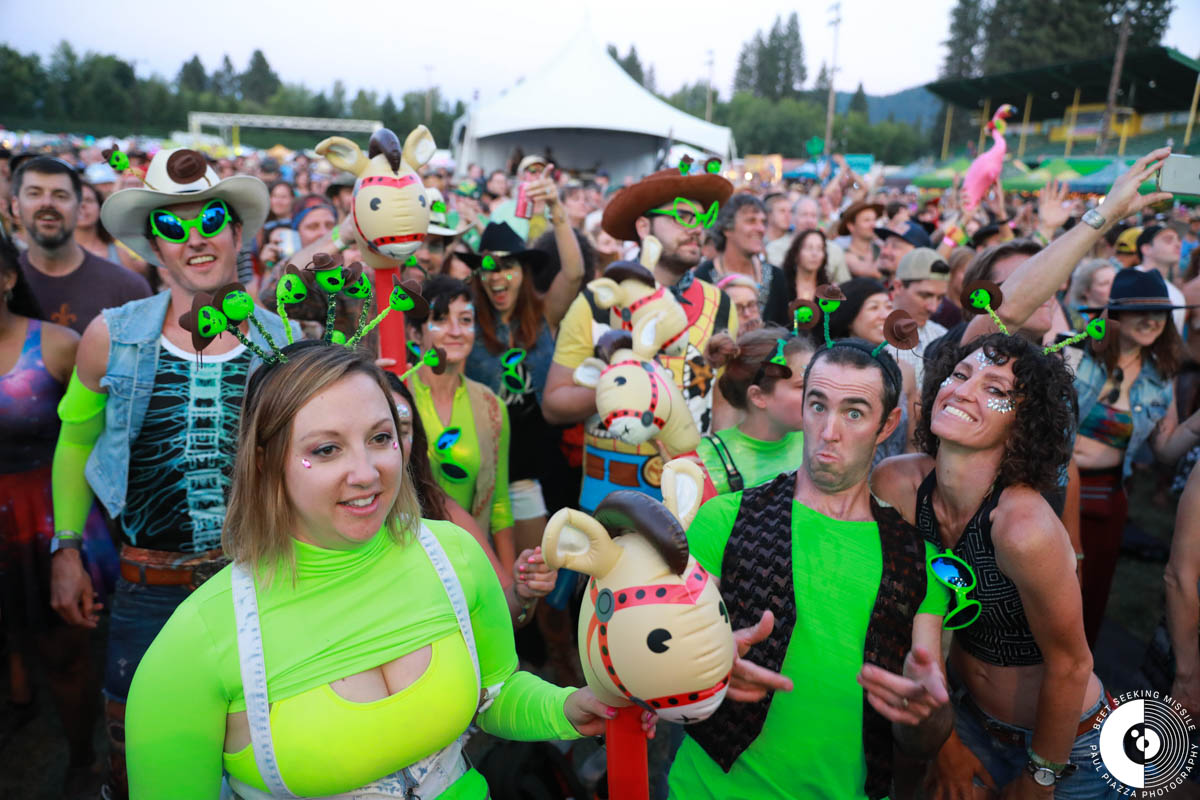
The four-day weekend festival is known both nationally and internationally for bringing jam bands, bluegrass, funk , Americana, and world music acts into a vibrant, spontaneous atmosphere. It’s a family friendly festival that leaves plenty of space for those who want to let their freak flag fly.
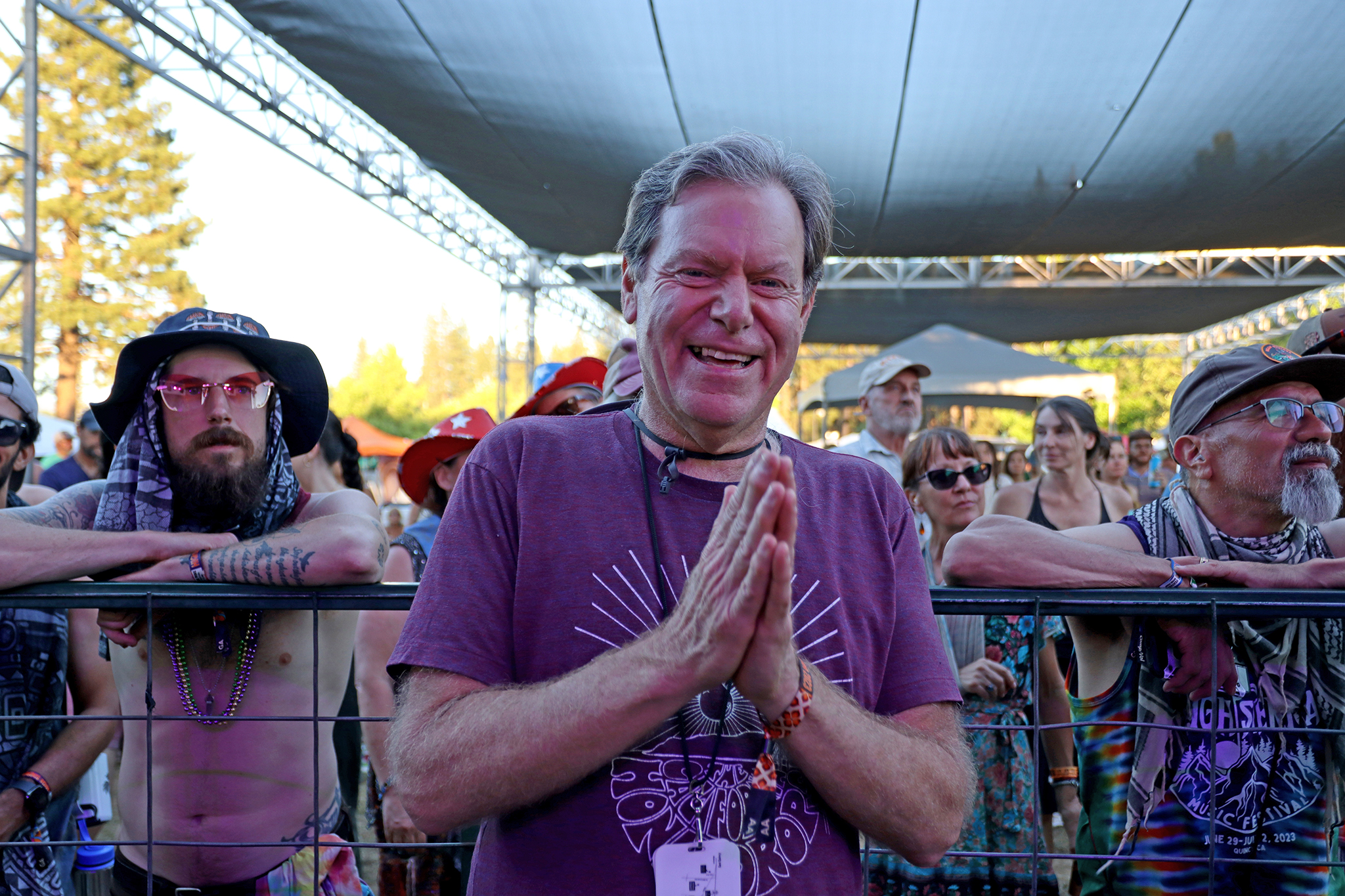
People who attend faithfully characterize themselves as High Sierra Lifers. These folks are devoted, long-term attendees who return to the festival year after year, deeply rooted in its community-driven culture. They are characterized by their commitment to the festival’s intimate, independent vibe and take part in its traditions like artist playshops, daily parades, and sunrise kickball.
The 2026 version of the festival marks a big change in setting for the event as it moves from its longtime home at the Plumas County Fairgrounds in Quincy to its new digs at the Nevada County Fairgrounds in Grass Valley. Due to the challenges of survival in the current economy, and its effect on festival culture in a post-pandemic world, it became time to reposition the festival to a new location.
The storied history of High Sierra Music Festival dates back to 1991-93 when the late Roy Carter and three partners started the event. After spending its first couple of years located in Leland Meadows, the festival moved to Bear Valley from 1994-97. It then relocated to the Plumas County Fairgrounds in 1998 and was there until last year.
Dave Margulies joined the festival as a partner and producer in 1995. After Carter’s death last year and the retirement of longtime partner Rebecca Sparks, Margulies stayed at the helm, taking over the entire enterprise and navigating the festival forward.
As he embarked on continuing the festival’s journey in a new locale, we had a chance to catch up with Margulies as he was about to depart for Jazz Fest. We spoke about the decision to move the festival as well as the challenges of surviving in an ever-changing festival market. It’s a substantial undertaking, but everything about the new home seems to be meshing nicely.
Additionally, we got some insight from a pair of this year’s festival artists – Josh Clark of Tea Leaf Green and Jess Stoll of Boot Juice.
What were the deciding factors in relocating to Grass Valley?
Dave Margulies: The main factor was accessibility and additional lodging options. Quincy, as lovely a location as it is, is really remote and difficult to get to for everybody – fans, artists, staff, production, and craft and food vendors. It’s a long haul. For people coming from Sacramento, Lake Tahoe, and especially the San Francisco Bay Area, Quincy is further away than Grass Valley.
Lodging in Quincy is also really limited. There are a few motels there, and we used almost every available room for artists, staff, and vendors. We also rented some private houses and AirBnBs from local residents. High Sierra has been happening since 1991, and many people who have attended for 5, 10, 15, 20 years or more are now in their 40s, 50s, and 60s; many also have children. I’m 66 years old, and many of my friends who come to High Sierra no longer want to camp and sleep in a tent. Because lodging options in Quincy were limited, some people stopped coming. Moving to Grass Valley makes it easier for people who used to enjoy coming to High Sierra to return, given the plethora of lodging options.
How’s the upcoming 4th of July weekend looking?
Margulies: It’s shaping up really well from a layout and logistics point of view. The community in Grass Valley and Nevada County has been really supportive and there’s a great deal of excitement about us coming to Grass Valley. However, as things are setting up, we still have a long way to go with regard to ticket sales. Industry-wide, advance ticket sales for live events are down, but we’re hopeful we get the turnout we need. We have an incredible weekend planned with a stellar lineup and all the elements that make High Sierra what it is.
And, if you’ve ever been to the fairgrounds in Nevada County, you know what a gorgeous facility it is. There are a lot of tall sugar pine trees, and lots of shade in the campground, so it sets up really nicely for us. I felt bad leaving Plumas County, but we had to do it. We had been there for 25 years, and the town of Quincy really relied on us economically to bring business into the town and to the county. So I felt responsible in a way, but my responsibility is first and foremost to the High Sierra Music Festival and our community and the only path forward was to change locations to one with more lodging.
That was really the biggest factor. And then, I look at all the side benefits of Grass Valley. It’s two and a half hours from the Bay Area, versus four and a half hours, which is how far Quincy is. It’s an hour from Sacramento and Lake Tahoe and an hour and a half from Reno. Those are check marks in the plus column. We did a couple of smaller festivals at the Nevada County Fairgrounds several years ago. We were partners in the Hangtown Music Festival, which was originally in Placerville. Then, we moved it to Grass Valley one year and rebranded it as the Sugar Pine Music Festival. They were much, much smaller events, but the fairgrounds proved to be really, really nice and the folks who run that facility take great pride in that venue, which makes it all the more attractive.
The Nevada County Fairgrounds serves the festival environment really well. There’s a lot of infrastructure there, a lot of versatility. So we’ll be able to do everything that we’ve done in Quincy in Grass Valley and more. We’re not gonna miss a beat. People ask us, “Are you still gonna have sunrise kickball? Are you still gonna have Troubador sessions? Are you still gonna have the Family Village? Are you still gonna have the daily parades?” All of the elements that people have come to love about High Sierra will still be intact in the new location.
With High Sierra being around for 34 years, a lot develops organically at the festival and there are a lot of long-standing “legacy camps” that have been around for 5, 10, 15, 20 years or more. So what we did was invite about a dozen leaders of these camps to come do a walk-through of the site with us, so we could show them our vision and how High Sierra was going to work there. By the end of the day of showing them around the site, we turned doubters into believers. And that was done even before we fully signed the contract with the Fairgrounds.
That’s how our community works. It’s word of mouth, it’s friends telling friends. Hopefully, that messaging will get out there, that this is gonna be an extraordinary venue for High Sierra.
It’s year one, in a sense. So, we’re putting so much time, energy, and effort into making sure that our logistics are all lined up so that we can execute as seamlessly as we can.
Is the capacity similar or more than Quincy?
Margulies: That’s a great question. We don’t necessarily fully know because the festivals that happen there, like the Nevada County Fair, they hit 10,000 people a day that roll through the turnstiles, but nobody’s camping at that one. The Strawberry Music Festival utilizes the site a little bit differently than we do as well. However, I was assured that we have more room than we initially thought by our heads of security, some of whom live in Grass Valley and have worked many events at the Nevada County Fairgrounds.
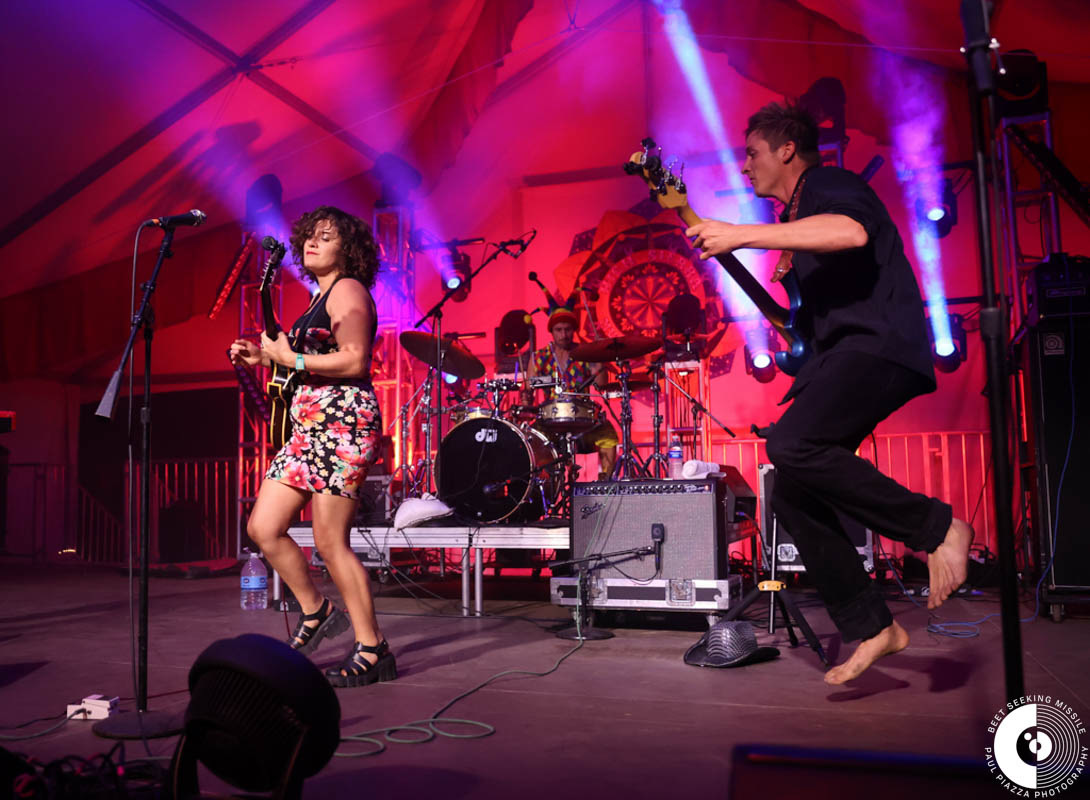
But with the hotels and AirBnbBs, capacity’s not gonna be an issue. At least this year, we’ll have room for everybody that we need to be on site, with an additional 1500 – 2000 people staying off site. Our attendance has been down since the pandemic, so I’m hoping that we increase. There are plenty of hotels in the area, and AirbnBs.
There’s also a really nice RV resort right across the street from the Faigrounds, where folks can purchase packages through our website, highsierramusic.com. So, I’m anticipating that we have plenty of room for everyone, but this year is going to be a big reveal. We’ll find out, truly, how much space we have and how many on-site campers we can accommodate.
Do you walk the festival grounds and make tweaks and adjustments for stage placement as you progress towards the event?
Margulies: Definitely. Years ago, we used to have two separately functioning late-night shows, which both required an additional paid ticket. They were both in large buildings. One called the High Sierra Music Hall, and the other called the Funk’N Jam House. After the pandemic happened, our numbers started decreasing and we couldn’t justify having two competing late nights.
We used to be able to do that back in the day, but we decided to eliminate a second late night and just focus on one late night. Our Vaudeville tent went late until 1:30am. And we always had our acoustic singer-songwriter showcase, the Troubadour Sessions, that happened after the main stage shut down and went for a couple of hours. So we had plenty of entertainment options going.
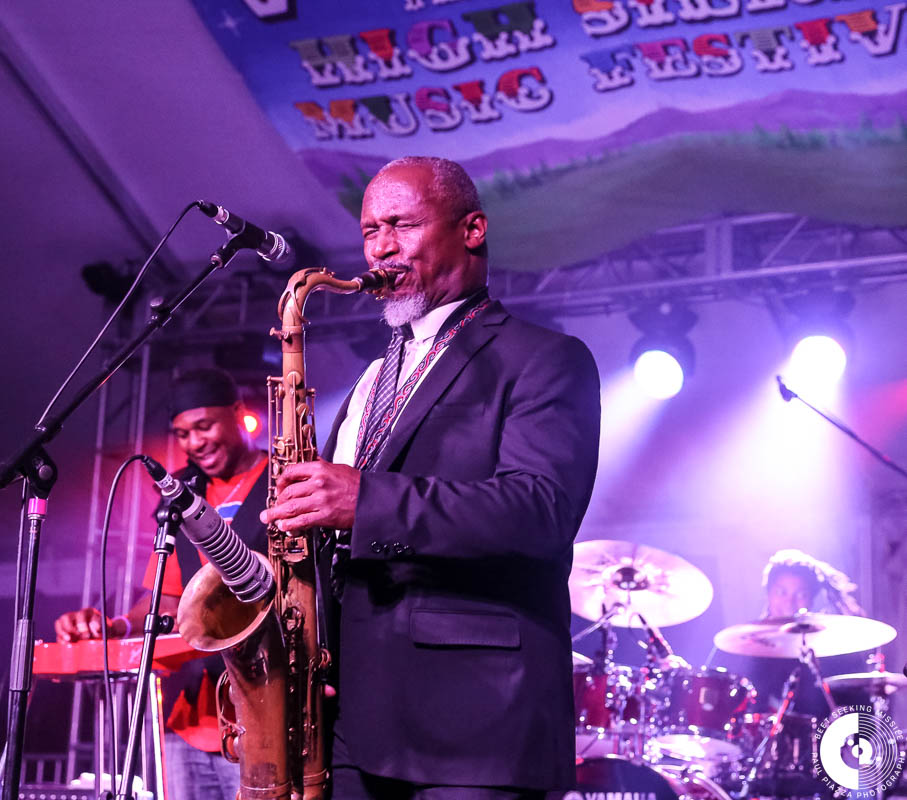
Last year, we converted the old Funk’N Jam House into what we named the Lagniappe Lounge (Lagniappe is the Cajun term for “a little something extra”), which had daytime and nighttime programming that was included with your festival ticket. Same thing for this year. We’re using the Tall Pines building in the same way we did our Lagniappe Lounge. There will also be an additional stage that we’re adding this year, located in the campground called the Community Stage. It will be super organic and run from noon until 7pm, Fri-Sun. We’re gonna provide a PA, and that’s it.
So, let’s say, if you and your friends were camping, and you guys always play music at your campsite, and you wanted to perform a set, you would apply to be able to do a set on the community stage. We will also curate that stage with some stripped-down sets from a few artists playing the festival. We’ll also have a few spots for semifinalists in the band contest to have the ability to come to the festival and perform.
Sometimes people say, My goodness, there’s just too much going on. How can you put such and such up against such and such band? That’s one of the things I love about High Sierra: you can wander anywhere on the grounds and always find something that pulls you in and captures your attention.
When you guys partner with someone to be an artist-at-large, what are you looking for?
Margulies: I’m pretty sure we were one of the first festivals to introduce the artist-at-large concept. A lot of festivals have adopted that over the years, and some have done it really tastefully. I’ve spoken with artists who have been hired as artists-at-large, and some festivals have mishandled the concept. Again, it comes back to having things happen organically, which is how most of these kinds of collaborations and sit-ins occurred that led us to include an artist-at-large. For instance, Skerik would always sit in with friends and he became an artist-at-large on saxophone, same thing with Lebo on guitar, Scott Pemberton as well, so we just decided to put a name to it.
But everybody who plays at High Sierra is kind of an artist-at-large. This year, we don’t have any official artists-at-large, because I believe that everybody playing at High Sierra is an artist-at-large, and we just encourage, and foster and nurture those collaborations.
That’s why we have our Playshop Stage, which is the setting for unique and intentional collaboration. That’s all curated. Lebo has had a playshop set for years called 50 Years in the Rear View, where he puts together a set of songs from 50 years ago from that year. This year, he’s doing songs from 1976. He knows so many of the musicians that play High Sierra, and so he’ll reach out to people and curate an incredible set. At High Sierra, we have a four-day festival where most artists play more than one day, which means there’s hang time for artists to get to know one another, and potentially get an opportunity to play together. Creating that container has resulted in a lot of great relationships through the years and that’s a big part of the magic of High Sierra.
For example, I was at a show recently in San Francisco, at The Independent, with Eggy and Taper’s Choice (both on the High Sierra lineup this year) and Eggy had Lebo sit in for two songs and it was great. The crowd loved it and Lebo mentioned that the next time he’ll be hanging out with those guys, it will be at High Sierra, which is the first time he ever met and played with Eggy. Lots of relationships like this one have been born at High Sierra over the last 34 years.
High Sierra is also known for the amazing tribute sets, can you tell us what is on tap for this year?
Margulies: We have a bunch of amazing tribute sets lined up this year. Karl Denson’s Tiny Universe is going to do a Jimmy Cliff tribute, and Dumpstaphunk will be doing a Sly and the Family Stone tribute on the main stage. Then both will also do a late-night set featuring their own music. There will also be Don Was (Wolf Brothers), who is doing a 90-minute set on the main stage with his group, The Pan Detroit Ensemble. The first half of the set will be the Grateful Dead’s Blues for Allah album, celebrating the 50th anniversary of that record’s release and the second half will be their own music. We’ll also have some other tributes on the Playshop Stage.
Another unique aspect of High Sierra is Grizzly Radio. Can you describe your partnership with Grizzly Radio?
Margulies: Grizzly Radio started with a passionate group of folks who were community radio DJs. They decided to hang low-wattage transmitters in the campground and began broadcasting the stages to the campground, so people could hang at their camp and not feel like they had to rush to get to a stage. As the festival grew, the number of stages increased and so did the number of transmitters to the point where each stage could be listened to from your campsite on the FM dial. Grizzly Radio created a whole different High Sierra experience for people.
It’s more relaxed. People get more hang time socializing with friends and can still take in the music. Everything is at your fingertips because the Grizzly radio folks make it all available with their multiple broadcast signals. It’s really special. I don’t know of many festivals where something like this happens.
First time performances by a lot of bands as usual. Can you tell me about the band lespecial?
Margulies: Lespecial, yeah, they’re a really cool band. A little harder-edged, but with great energy. They’ve been mentioned among people in the High Sierra community for years. A good friend of mine represents them, and has brought their name up through the years, and this year felt like the right year to include them. This is the same agency that represents The Rumble from New Orleans, who are really one of the best bands coming out of New Orleans right now. I think lespecial will go over really well. While I love listening to records, I also really love watching live video of bands, and with lespecial, I saw something on video that just clicked. I can totally see it working at High Sierra.
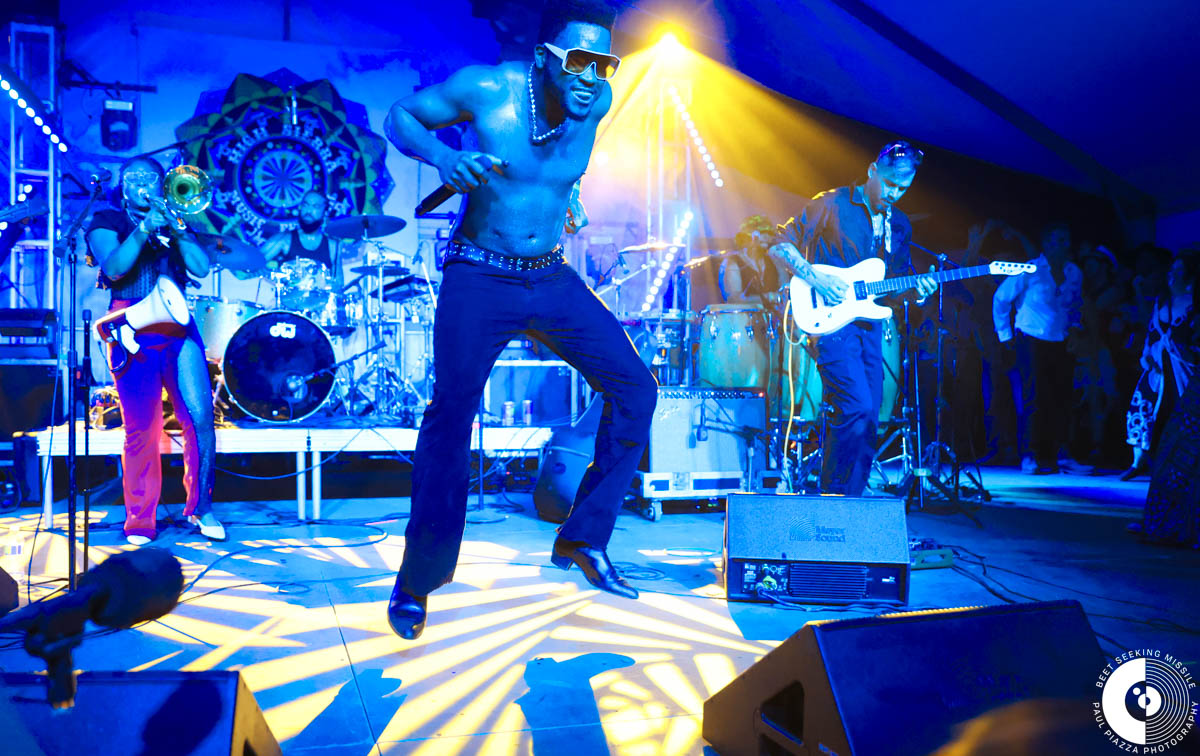
And that’s what it’s about. Introducing new acts to the music-loving members of the High Sierra community. I remember a few years ago when we featured Cimafunk’s high-energy Cuban funk and Mitchum Yacoub’s intoxicating Afrobeat grooves for the first time. People lost their minds over how good those bands were. Those were some epic High Sierra moments and there will be more epic moments made this year, too.
So you’re heading off to Jazz Fest pretty soon?
Margulies: I always spend two weeks down there. I’m there for both weekends. I’ve been doing that for 49 years. I had the good luck of going to school in New Orleans at Tulane. That was my introduction to New Orleans music back in the late ’70s. Back when people like Professor Longhair and James Booker were still alive, so that was my foray into New Orleans music. I love having New Orleans music represented, and we have a huge representation of New Orleans artists this year and that’s really exciting. We have 16-year-old piano protege River Eckert, who embraces and embodies the whole James Booker, Dr. John, Professor Longhair style, but he’s also a lot more than that. He could have the sort of larger appeal of a Harry Connick, Jr., and really be an ambassador for New Orleans music, but bring it further than that. We also have Dumpstaphunk, The Rumble, Stanton Moore (drummer for Galactic) with his new trio The Breaks, which includes Robert Walter and Eddie Roberts (New Mastersounds). Also joining us from New Orleans will be Anders Osborne, George Porter Jr (of Meters fame) as part of Lebo’s band, Anna Moss, Handmade Moments, and Kota Dosa.
What was your previous career in?
Margulies: I was in college radio at Tulane in New Orleans and my favorite band was The Radiators, who I worked for after I graduated. I got involved in High Sierra because the Radiators used to play High Sierra when it was in Leland Meadows and I’d go up to hang with them. There I got to see John Prine, J.J. Cale, David Bromberg, Ani DiFranco, and more, and fell in love with High Sierra. I was working as an A&R rep with Sony Music, which at that time was still CBS Records. I would always go out to hear music in San Francisco, and that’s where I met (HSMF festival founder) Roy Carter. He would hand out flyers for the festival outside the venues as shows would let out, doing the grassroots marketing. One night I told him how much I loved High Sierra and that I’d love to work with him someday and I gave him my card. He called me the next day and said, “If you’re serious about that, we should talk.” So, I met with him and another partner, Rebecca Sparks. The festival was run as a collective at that point, with small shareholders. We made a financial offer to the other players and that gave the three of us the majority ownership of the festival. That happened in 1995 and stayed that way for 30 years, until Roy passed away in 2024.
So going in the 34th year of the festival, what do you think the legacy of this festival will be and how does that connect to Roy’s original vision?
Margulies: Even though High Sierra started when the Grateful Dead were still happening, we kind of grew out of that culture. So much of the aesthetic and values of The Grateful Dead are embraced by our staff and our community. It’s based on a deep love for music and the connectedness that can come from these live music experiences. Really, we’re just a bunch of nature-loving, fun-loving, music-loving freaks who love to gather and celebrate while also being responsible, family and community-oriented people trying to make the world a better place. There’s so much incredible talent out there and we’re fortunate to be able to present a whole lot of great artists each year to a festival audience that appreciates it as much as we do.
We also spoke to Josh Clark of Tea Leaf Green and Jess Stoll of Boot Juice, both of whom will play this year’s festival.
Tea Leaf Green first appeared at High Sierra Music Festival in 2001 while Boot Juice made their first appearance in 2023. This will be Tea Leaf Green’s fourth appearance at the festival and the second appearance by Boot Juice.
Boot Juice is a six-piece, high energy rock ‘n’ roll Americana act based in Northern California. The hard-working band have averaged over 100 shows a year for the last few years. The band got the attention of many at the festival in 2022, when they showed up and did some renegade sets.
A renegade set at is an unofficial, pop-up performance, often held in the campgrounds. It often features bands that are local favorites. These sets are intimate, surprise performances occurring late at night or in the campgrounds, acting as a tradition that adds to the festival’s community atmosphere. And occasionally, if things go really well, the band may be invited to play in the future festival lineup.
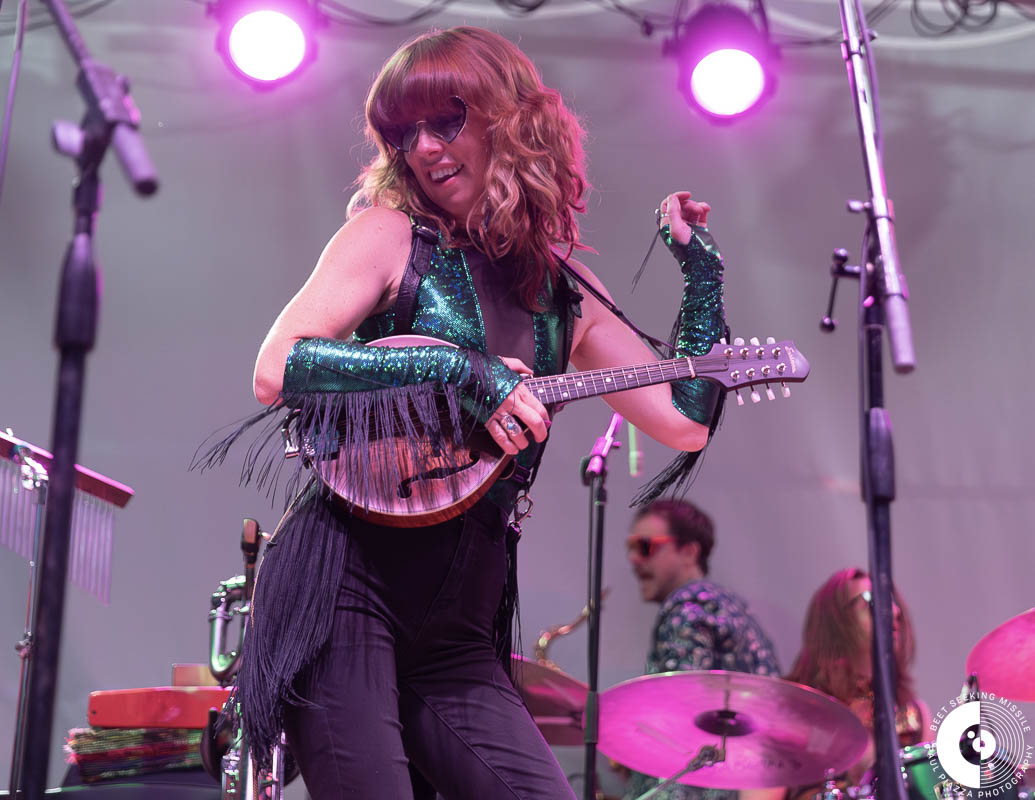
Jess Stoll: “After renegading at High Sierra, we were invited to play Hangtown. Then the following year, we got the invite to play High Sierra. High Sierra is one of those festivals that was like a dream, bucket-list for us. It’s pretty legendary. It’s one of those festivals that when you get into music and are playing anywhere in the jam world, the funk world or the bluegrass world, it’s one that everyone always talks about.
“Also, when you go there,” continued Stoll, “people are living their best life. It’s cool that as a festival, it has such a family-oriented vibe, but you can also get as weird as you want at it. It’s got this incredible balance of being so free and liberating for people, but also having kids and families there.”
Clark first played the festival with Tea Leaf Green in 2001. The band caught the attention of many in the jam world with a tasty blend of bluesy roots-rock, eclectic psychedelic influences and flavorful music.
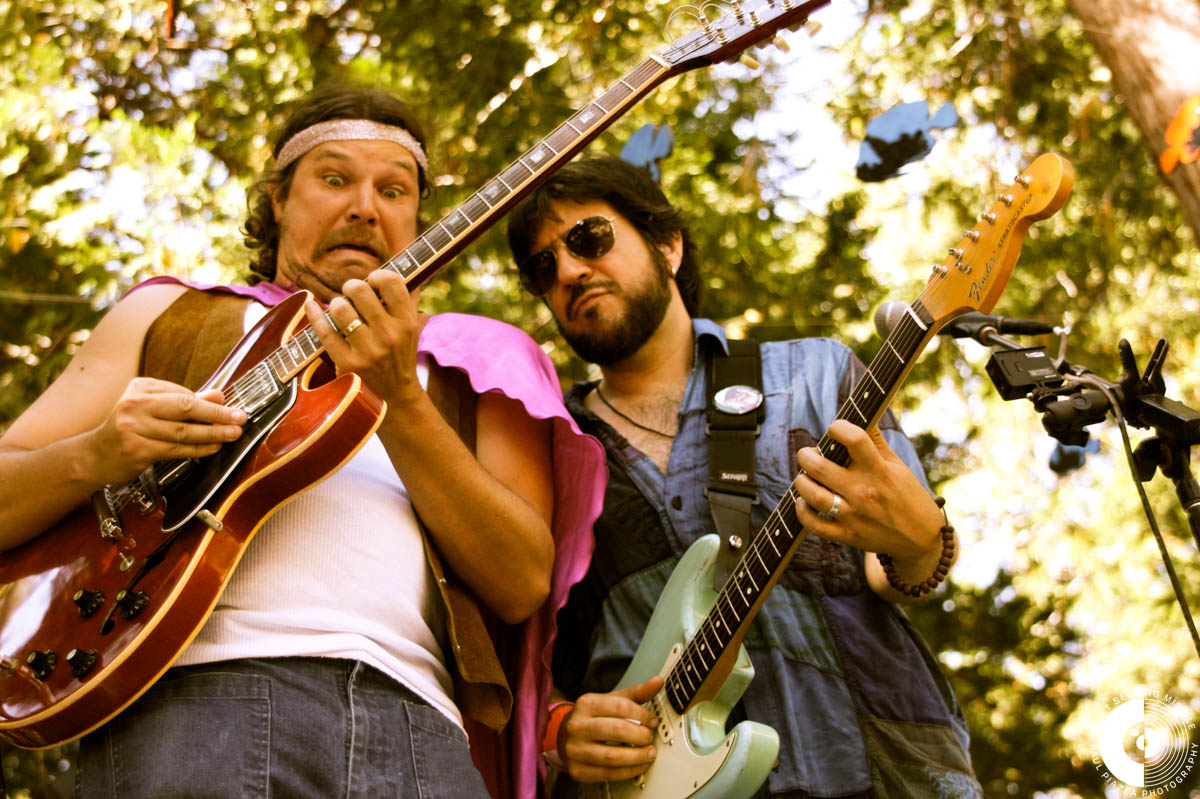
After the Clarks became four and then a family of five, touring wasn’t as much of a priority. The family relocated to Ashland, Oregon a decade ago, where Clark works as an animator. But the whole Clark crew, now five large, are always regulars at High Sierra. Tea Leaf Green have played the festival four times and the band members continue to remain close, although they live in different West Coast locations. They released a new record in April 2020 and were all set to tour, but the pandemic made it a long-distance release. Last year, there were a few live dates by the band, including one at the Warfield in San Francisco with Greensky Bluegrass.
Josh Clark: “We were in our early twenties when we got the call to play High Sierra. We knew it was a big deal for us. We knew Roy Carter had come out to a show and we were really hoping we left some kind of impression. I guess we did, we got a slot on the vaudeville stage and the big meadow stage that year.”
“It really turned out to be a big deal for us. The fans and relationships from being involved in the High Sierra community were and still are the foundation of whatever success Tea Leaf had. This is pre-social media and the best way to get a fan base was word of mouth and one show at a time, sometimes one fan at a time.”
One of the great High Sierra moments for Tea Leaf Green in the earlier years was when they were joined by a music world legend during their set. “We wrote a song called “Georgie P.” “A long time ago,” said Clark. “Georgie P. Is for George Porter Jr., the bassist of the Meters. The Meters were a huge influence for me on guitar. We got introduced to George Porter at High Sierra and we rearranged the tune and he came and sat in with us on the song. It was rad.”
“High Sierra was our gateway to being able to get gigs nationally and build a little buzz” added Clark. “After that first one Dave had us out on the East Coast at “Berkfest” and we built our first trip out east around that. We were fortunate to keep getting the invite back the High Sierra and growing every year. Not just growing the band, but growing as musicians. You’re exposed to a masterclass with every band Dave and company put on stage. You might even become best friends with one, go on the road with another.”
“I have decades long cherished friendships that are directly a result of HSMF. Dave Margulies and High Sierra have given me so many opportunities through the years, it’s impossible to overstate. Back then, in those early days, there wasn’t the boom of big time festivals, High Sierra was the Mecca. Still is. There is an undercurrent that is difficult to describe. A shared humour.”
“Seriously, just being amongst this collective crew of freak flag waving music loving dancing fools is all belly laughs and joy for four days. It’s been some 25 years since our first and even when Tea Leaf isn’t on the bill, my wife and kids and I try to make it.”
Clark started up one of the festival’s most talked about playshops, Guitarmaggedon in the early 2000’s. This began as an idea he hatched with Sean Leahy. The first one took place at San Francisco’s Last Day Saloon and also featured Dan “Lebo” Lebowitz and Ryan Smith. It was a tribute to Jimi Hendrix.
The jam was such a sensation, Clark was invited to lead the playshop at High Sierra. It has become a tradition ever since. Subsequent Guitarmaggedons have featured tributes to Led Zeppelin, The Cars and Tom Petty.
Josh Clark: “We try to keep it so people who are playing at the festival can just jump in and rip it,” said Clark. “It’s totally shameless, totally fun, just ‘Let’s Go for it’ kinda stuff.”
This year Clark plans to explore a San Francisco and greater Bay Area theme. “Last year, my son Calvin joined us onstage for Guitarmageddon and I got to play guitar with him in the most magical place on earth. Not sure how to top that….I guess by doing it all over again. So grateful to Dave for keeping this going. It’s so much more than a music festival. It’s a culture and space all its own and truly for four days the most magical place on earth.”
