


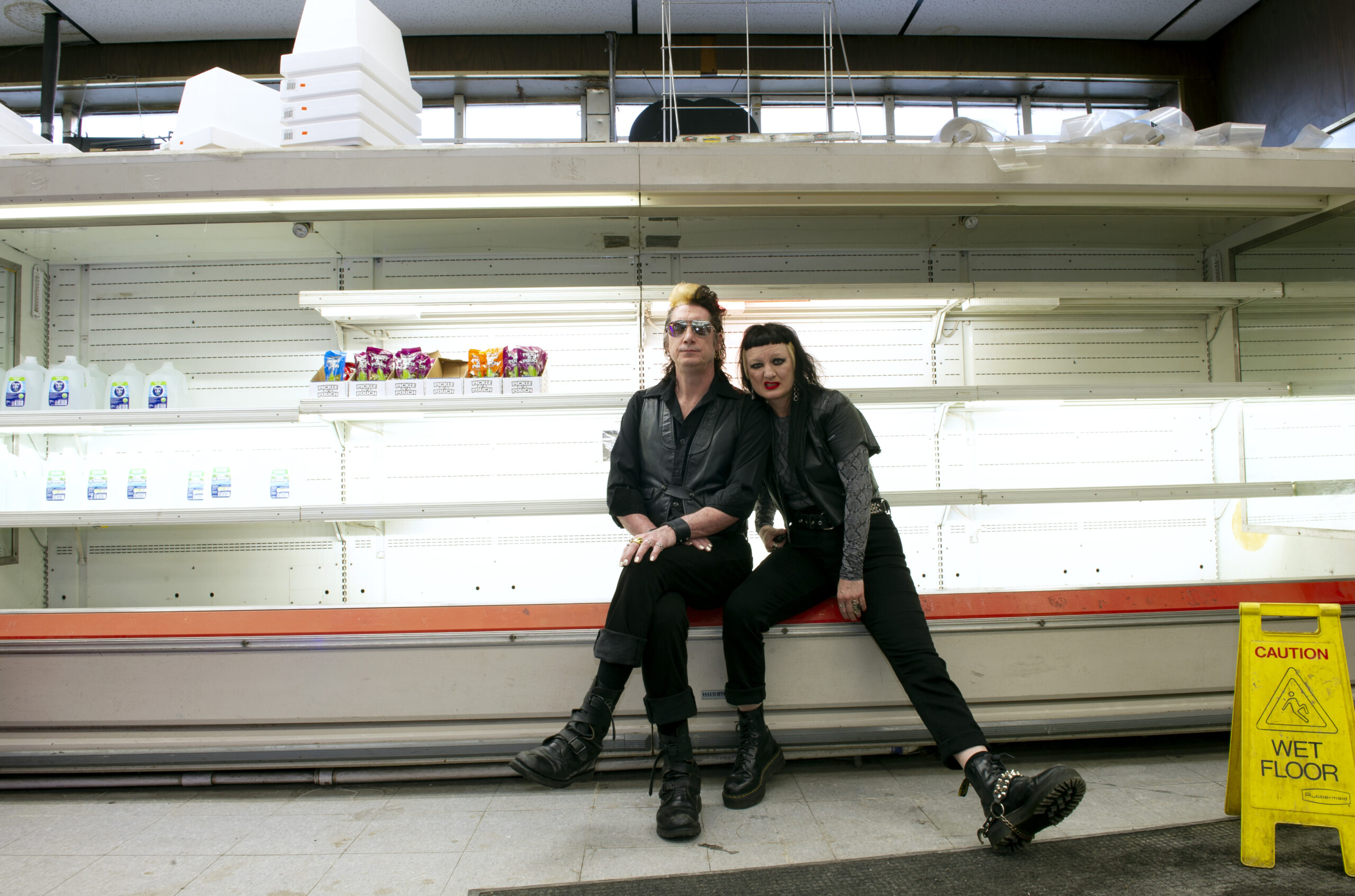
For nearly a decade I’ve been going out of my way to see the band ADULT. whenever I can. The synth punk duo, comprised of married couple Nicola Kuperus and Adam Lee Miller, has just released their most political and direct album, Kissing Luck Goodbye. In support of it, they are in the middle of a North American tour that will find them at the Rickshaw Stop on May 2nd. I had the opportunity to sit down with Nicola and Adam and talk about the new album, the creation of its striking artwork, and the power of resistance.
Tyler King: First of all, I want to say thank you for agreeing to do this interview. I’ve been a fan for a while, so this means a lot.
Adam Lee Miller: Well, thank you.
TK: I want to ask, first of all, how has the tour been so far?
Nicola Kuperus: Well, we just finished our eighth show in nine days, so we’re exhausted.
ALM: It’s one of maybe only two full days off on this tour, which are for organizing and doing laundry…
TK: Driving…
NK: Yeah. Clipping your toenails. Actually, as you guys were just getting going with this interview, I was just rubbing and slathering my shin up with some Arnicare! I have a giant bruise on my entire shin, so you know it’s going well.
ALM: It’s going good. This is our first tour where we have two crew members, and that’s been wonderful. I’d say the number one thing that’s blown my mind is that sometimes our record label will say, “You don’t need to tour so soon after the release of the record,” but for us we want to keep riding the energy of putting out new music, we like to do it that way, and I’ve been shocked that people are singing along to the new songs.
TK: I love the new album, I think it’s fantastic.
ALM: Thank you, thank you.
TK: Is there anxiety with playing the new songs for the first time?
NK: Oh, God. It’s terrifying. The set is just, it’s full on. And of course, we start the set with three songs we’ve never played. So that’s really smart. You know, that’s what you want to do. You want to play an old song that you’ve never, ever played live before. And then play two songs off the new album that you’ve never, ever played live before. It’s so stupid the way I made the set, but that’s just the way that the set needed to be.
ALM: Then on top of it, we usually pick Cleveland or Pittsburgh to start our tour. That’s usually a smaller show and good way to ease into it. There’s two promoters in Pittsburgh that realized that they had had two shows overlapping on the same night that also were similar. It was Container. Do you know Container?
TK: Yeah
ALM: Container and Expensive Shit, which is a guy from the O.C. It was two big shows, and then they made it into this huge festival night. And we’re like, “Oh my God, it’s our first show, we’re playing nine songs we’ve never played. This was supposed to be the ease-in.”
TK: Trial by fire!
ALM: Yeah. So we really went in the deep end. We just dove in. And I think it took me about five shows, and then I started being like, okay, people are singing all. Also, I’m cognitive enough to understand that we’re a very dichotomous band where we are kind of a legacy band where people want to come out and hear “Hand To Phone” and this and that. We’re also constantly creating more and more new material. So we didn’t know, will people make it to the encore? There’s only maybe a couple songs in the main set that people of that group would like. But it also all has to fit together. The guy in Donzii, one of the support bands on this tour, was like, “With so many albums, how do you pick what songs to play?”
TK: That was actually a question that I had for you guys.
NK: I think we just basically pick all the stuff that nobody knows. [laughs] If you go to any of the streaming platforms like Apple Music, Spotify, etc., the number one thing is “Hand To Phone” or “Nightlife” and then “Tonight We Fall” for some reason. And I love that song, but it’s just not the vibe I want to present.
ALM: That’s what she does. She really just goes for vibe over expectations or requirements, meaning the most popular and played songs on those services. A song like “This Behavior” is in our main set, but it has that same dirty edge that the new album has. But something like “Nightlife” is just not going to fit. But we also just don’t play that song. We were asked to do a song outside of our character and try to emulate Italian disco. And to us, there’s no veneer between us and our music. It’s very personal and real. So that song to us just doesn’t feel like us. And a lot of people don’t understand that, they’re like, “But it’s good.” And it’s like, yeah, but it’s not us. We were given a task, which was fun.
NK: But we were also making fun of nightlife, which is fine, but that’s not really my message, as far as what I want to be saying right now.
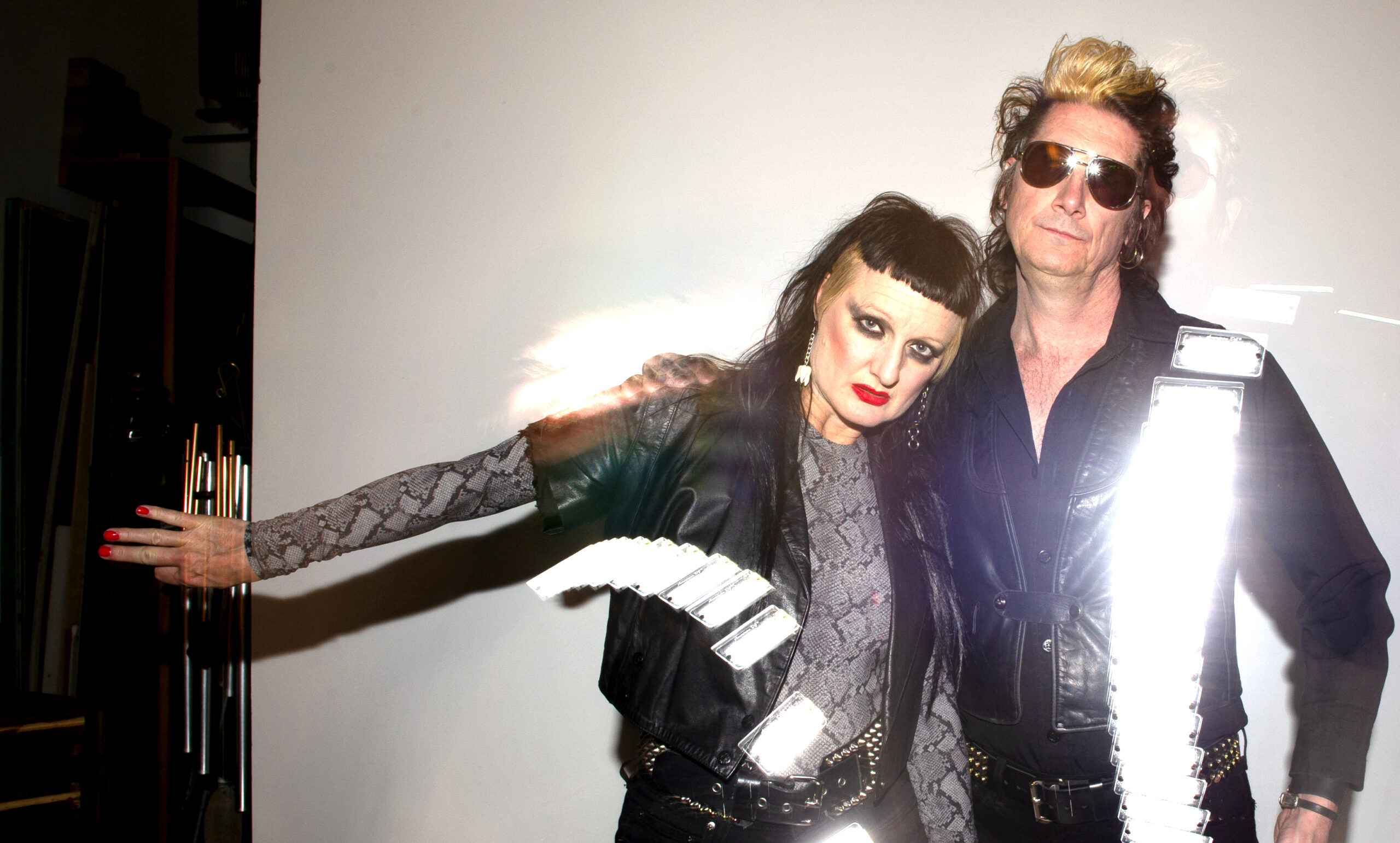
TK: On the new album specifically, it sounds like a lot more of the lyrics and the messaging is about more external forces. It’s a bit more political than the last album was. Did you set out with that intention in mind, or was that just a coincidence?
NK: When we start an album cycle I have one of those black notebooks that don’t have any lines and I just start daily writing words. Not sentences, but just words I like. If I read something in the news, maybe it will be two words, and then it becomes pages and pages of words. Then when we start working on a song, we’ll be making the music and I’ll connect the words together into phrases. Sometimes it’s just the day and what your energy is and what’s going on, what you’re seeing in the news, so of course it’s going to have to be political because it’s been fucking awful.
ALM: We write the music together. It’s not just me, but people think that. And what I brought to the table was, I really wanted to make a protest record. But what she’s always been good at lyric-wise is having lyrics from twenty years ago still be relevant today.
NK: I can’t remember who wrote it, but I thought it was the best thing. Someone said basically that we’ve always had this apocalyptic vibe in everything we’ve done, but it’s almost like we’ve been working our whole career for this very apocalyptic time and record. I was like, “Yeah.” There’s always been this idea in our music of banality and absurdity in purpose and the futility of task and all those things, and I feel like this is really a culmination. I feel like this record is the most solidified album we’ve made.
ALM: One example is “R U 4 $ALE” was written the day after the inauguration. We’ve been glued to the news unfortunately, and I think it’s extremely important, especially for knowing what’s coming for the LGBTQ community, what can we do, etcetera. But what’s interesting is, I remember Nicola had posted something on Facebook, and it said, “Nazi Elon’s fuck off.” And more than one person wrote, “Can you just keep the politics out of the music?”
TK: I saw that. And I was like, “Have you listened to this band before?”
NK: Yeah, exactly!
ALM: Well, we decided not to engage because that’s what they want. And then they ended up removing their own comment a couple months later. And I’m not going to be that person that preaches. But like, it’s coming. This is important. You’ll figure it out later. And they did. So once the new record came out, it has been all praise that it’s political. In Jacksonville, some guy had on the Nazi Punks Fuck Off t-shirt in the front row.
NK: Sadly, when writing this record, I didn’t know it was actually going to get as terrible as it is now. It’s just like, every day is crazy.
TK: It’s like the song says, none of it’s fun.
ALM: Yeah, exactly. None of it’s fun.
TK: The album is called Kissing Luck Goodbye. The song is called “Wishing Luck Goodbye.” Why was there a difference between the song title and the album title?
NK: I have no idea. [laughs] Why not?
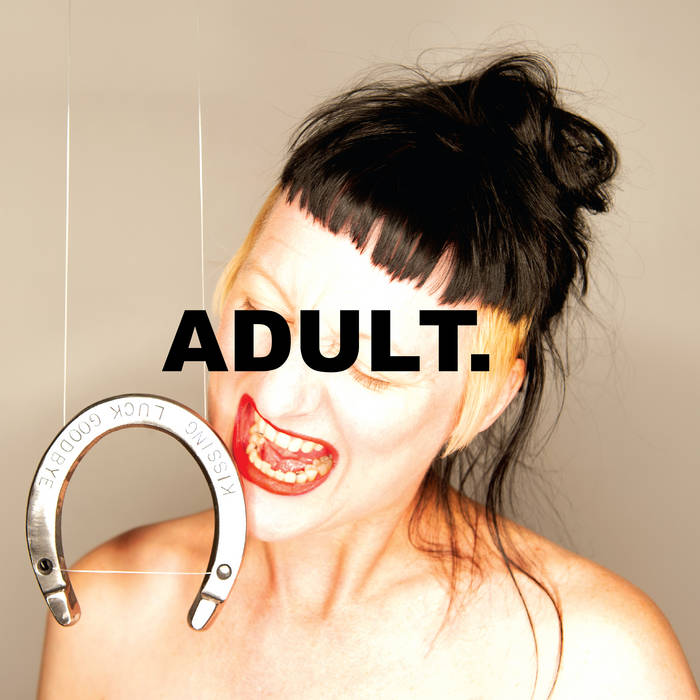
ALM: Well I partially was to blame because I really liked in the song how she just kept singing the word “wishing,” but in the very last line she goes “kissing.” Those are both so beautiful. So then the image of the horseshoes coming together on the back cover say both, and we really couldn’t decide between the two. We’ve never had a word like “kissing” in a title of an album or song, and it’s got more pizzazz than “wishing.”
TK: Where did the idea of the album cover come from? One of the things that I’ve always enjoyed so much about your band is that the visuals, whether it be an album or a single or an EP, are always so striking.
NK: I don’t know. I had written down “kissing luck goodbye.” And then I drew this image in my notebook, it’s just like a horseshoe and a face. I just immediately thought of that idea, I don’t know why.
ALM: Showing the fishing line that’s holding the horseshoe was a definite statement about AI. This is just all in camera, a real photo. We could have easily taken that out. One of the things Nicola is incredible at is not drawing. Not that. Her drawings are hilariously crude. But she went to school for photography. So every time she draws this crude sketch, she makes it exactly like it. It’s wild. You’re like, “Oh, now I see it.”
TK: What was the experience like making the artist edition of the album with the actual horseshoes and the recipe card?
NK: Oh God, the recipe card was, like, the dumbest thing I’ve ever done.
ALM: I teased her so much. I’m like, “Really? We’re getting ready for tour and you’ve got 50 recipe cards you have to do by hand?”
NK: And somebody who bought one was like, “Oh shit, I didn’t realize there was a backside to it.” I was like, “Oh yeah, there are instructions, it’s not just the ingredients!” By the end of writing them all out I felt like I was losing my mind. I have cervicogenic dizziness, which is basically where I have to be really careful with my first and second vertebrae, so sitting at a table looking down writing recipe cards out before tour is not a smart idea! I found this master blacksmith on Etsy and he made the initial horseshoes for the album. He’s making these horseshoes that are like, “Dana and Chad – 2006,” these wedding horseshoes, so when I sent him mine, I can’t imagine what he was thinking when it said, “kissing luck goodbye” and the other horseshoe was “wishing love goodbye.” But we were able to get a big order made for the artist edition of the record. And they’re beautiful. Every letter is hand-carved, it’s truly a labor of love.
ALM: And then he obviously looked us up and messaged us saying, “The horseshoes are on the way, good luck on tour!”
TK: You talked a little bit about the process of making the setlist earlier. As you record new songs, how much of the live performance of those songs do you have in mind?
ALM: None.
NK: We tried that once. What record was that?
ALM: Well the record became a whole different record because we kept throwing everything out. I think it was Perception.
NK: Yeah, it was Perception. Which is funny because there’s a lot of those songs I actually just don’t even like playing live. We were trying to make them so we could play them live. I think you just have to make the song that you want to make, and then you’ve got to figure it out later.
ALM: Like for this tour, I had to completely rebuild my rig. You know, the Becoming Undone and Perception are very percussive-based albums. So I was playing tons of pads live. And now this album is a lot of bass guitar, but then the other songs are really just sample manipulation and modulation. And so I just took the percussive part out of the set and built a pedal board for my hands, as I call it. I have a pedal board for my feet and a pedal board for my hands. But one of the reasons this album went so bass guitar heavy is we were going to go do these shows, like one was Cruel World, that big festival in LA.
TK: I was there.
ALM: Sorry about that.
NK: That sucked! [laughs]
TK: I actually talked to you very briefly about it after Substance Fest in San Francisco.
NK: Oh yeah! That’s funny because I kept looking at you and I’m like, “We’ve met before.”
ALM: It is total chaos after a show for my brain. But the night before we were doing a show with TR/ST at The Fonda, Nicola hands me the setlist and I go, “You know that you’ve got like five bass guitar songs in here.” I hadn’t played bass guitar onstage for 13 years. And she goes, “Okay?” And I’m like, “Well I’m gonna have to resurrect these and build a pedal board,” and I’m talking about the logistics of it all, and she goes,” Okay, that’s not my problem.” We used to make the setlists together and we would just fight and fight and fight and I would pick songs that were about logistics because I’m the IT department of the band. But there’s a freedom in it where you’re just like, “I don’t get to decide, and now I have to make the set work.” For about a year we were just doing one-off shows where I was playing the bass again.
NK: But then when we toured Europe, which is where I felt like we were really starting to write the record, people were really enjoying the hard bass guitar songs more, myself included. It’s just the vibe. I don’t know. I’m getting kind of bored with the whole darkwave thing. Everything sounds the same.
TK: I don’t want to get too into it because I don’t want to name names, but my wife and I, we went to the first three Cruel World festivals. We go to a lot of those kinds of shows. And we have this joint note document between us called “Bands With Ian Curtis Voice.”
NK: [laughs] That’s hilarious.
ALM: Listening to most of that music, I know exactly when it’s going to go into the chorus, and everything’s just straight out of the machine. There’s no interesting production. There’s no experimentation. We’ve been doing this almost 30 years. We have been called everything under the sun. Old school electro was the first thing. And of course, that bad word “electroclash.”
NK: Which seems to be having a revival. Oh Jesus.
ALM: But then things start making sense. People start calling you dance punk, techno punk, electro punk, synth punk. All that stuff is fine because there’s a history. Like synth punk, you’ve got The Screamers, but you can also do it today. Whereas I think darkwave is always going to be known as this little moment in time like electroclash and other certain genres.
TK: I find it to be a very limiting descriptor.
NK: Yes, it’s limiting for sure.
ALM: I love when young kids come up to me and they’re like “You are so industrial” or “You are so darkwave,” and you’re like, “That term never even existed for half of my life!”
TK: You mentioned the popularity of the song “Nightlife” and how that tends to be one of the more streamed songs. Not only do you have a lot of studio albums, but you just did that Tuxedomoon cover for a compilation. You have so many more obscure songs that don’t make it to your “big” releases. Are there any more obscure releases or songs that you guys have done that you wish more people were aware of?
ALM: I was just happy to see that when we put out the song “This Behavior” that it actually made it into the top five songs on Apple Music. And we’re starting to see more things like that now. The new album is already charting on streaming services. It’s really exciting for us.
NK: I feel like the things that are popular on the streaming platforms are not necessarily super representational of our total sound. That’s the thing that just bums me out.
ALM: But I just wish every club, every staff member, everybody working at our shows was making a sustainable living. But I do feel like the fans that we have are so adamant and they know the whole catalog. And our fans are just really, really wonderful. A fan in New York brought us $200 in gas cards. Just really sweet stuff like that. Someone gave us a hat they made last night. These are really nice gestures. But I think why we tour so much and have for so long is the sense of community.
NK: And to get hats.
TK: That’s the whole reason for touring, yeah.
ALM: It’s the community of outsiders coming together. And right now it’s more important than ever for us all to be together and show the love and connectedness. And, you know, when I get depressed that I don’t think we can overthrow this fascist regime, I’m like, “They don’t have any idea how close real people are.” Our network, it’s like mycelium. You can’t break that. And once you’re about to do something that you will regret, there will be no turning back. And they’re about to fuck around and find out we’re real. The drummer for Donzii has a tattoo of this character I wasn’t familiar with, which is Charlie in the Box, which was the Jack in the Box from the old animated Rudolph The Red Nosed Reindeer, the one that was like…
TK: Oh, the misfit toy.
Yeah! The guardian of the weirdos. So the drummer has a tattoo on his arm and I was like, “That’s such a good symbol for right now. We all have to be the guardians of the weirdos.”
TK: You see that tattoo and if you know you know, as much as I hate that phrase.
ALM: Yeah. So that’s what keeps me going.
TK: On the last headlining tour that I saw you guys on you had Spike Hellis and Kontravoid with you, who were amazing. What made you want to bring Donzii and the Treasury on the road with you for this tour?
NK: We’ve seen Donzii in Detroit.
ALM: Donzii was on tour with Riki who’s on Dias Records. We had never heard of them before. It just blew us away. And it’s weird because we usually tour with bands and groups and people that we already know.
NK: And then we’d also never met The Treasury, but I just really loved his whole aesthetic. He’s got like a super kind of Detroit electro kind of old school vibe. I think we try to make a musical arc. We don’t want every band on our tours to sound the same music, but we want it to all jive together. You’re just really trying to curate something that musically makes sense, which is really difficult.
ALM: On the selfish side, I need something that when I’m in the venue and I’m in the dressing room and I’m hearing the night progress, I need something that really gets me excited.
TK: I write for a San Francisco Bay Area based publication. I’m wondering, do y’all have any connections with the San Francisco Bay Area at all?
ALM: Yeah, I mean, did Bottom of the Hill just close?
TK: It’s closing at the end of the year.
NK: Oh, shit, that’s too bad.
ALM: They were the people that gave us our first platform. They’re just wonderful people, and I loved playing there. But when we did the show at Great American Music Hall last year for Substance Fest, when I was breaking down my stuff, one of the guys there gave me his card and said, “We’re your place from now on. Please always play with us.” One of our first shows ever was at a bar in San Francisco called The Rawhide, a gay bar. The owner lived up top and he sunbathed on the roof of the building.
NK: He came down during our set and was like, It’s too loud!”
ALM: He actually walked over to the mixer and turned it down. He said, “I’m not in the mood for this tonight!” [laughs] And then Numbers from San Francisco, they toured with us. Gold Chains toured with us a lot. Jesse from Subtronics. There’s been so many bands that started there or ended up there that have been a part of our orbit.
TK: Tuxedomoon are from San Francisco!
NK: Oh right, yeah! Years and years and years ago one of the guys from Tuxedomoon came up to us, this is when we were doing the “No Tears” cover, and he’s like, “I know the song, let me come on onstage and sing it!” And it was a disaster. Because we didn’t even have a chance to rehearse it, we just did it!
TK: If anybody, for whatever reason, ends up at the show and they don’t necessarily know who ADULT. is, what are they in for?
ALM: They’re going to be getting energy. Togetherness in resistance to what’s going on. Inclusion. Aggressive music with a really good intention behind it.
Tickets to see ADULT. at Rickshaw Stop on May 2nd can be purchased here.
