


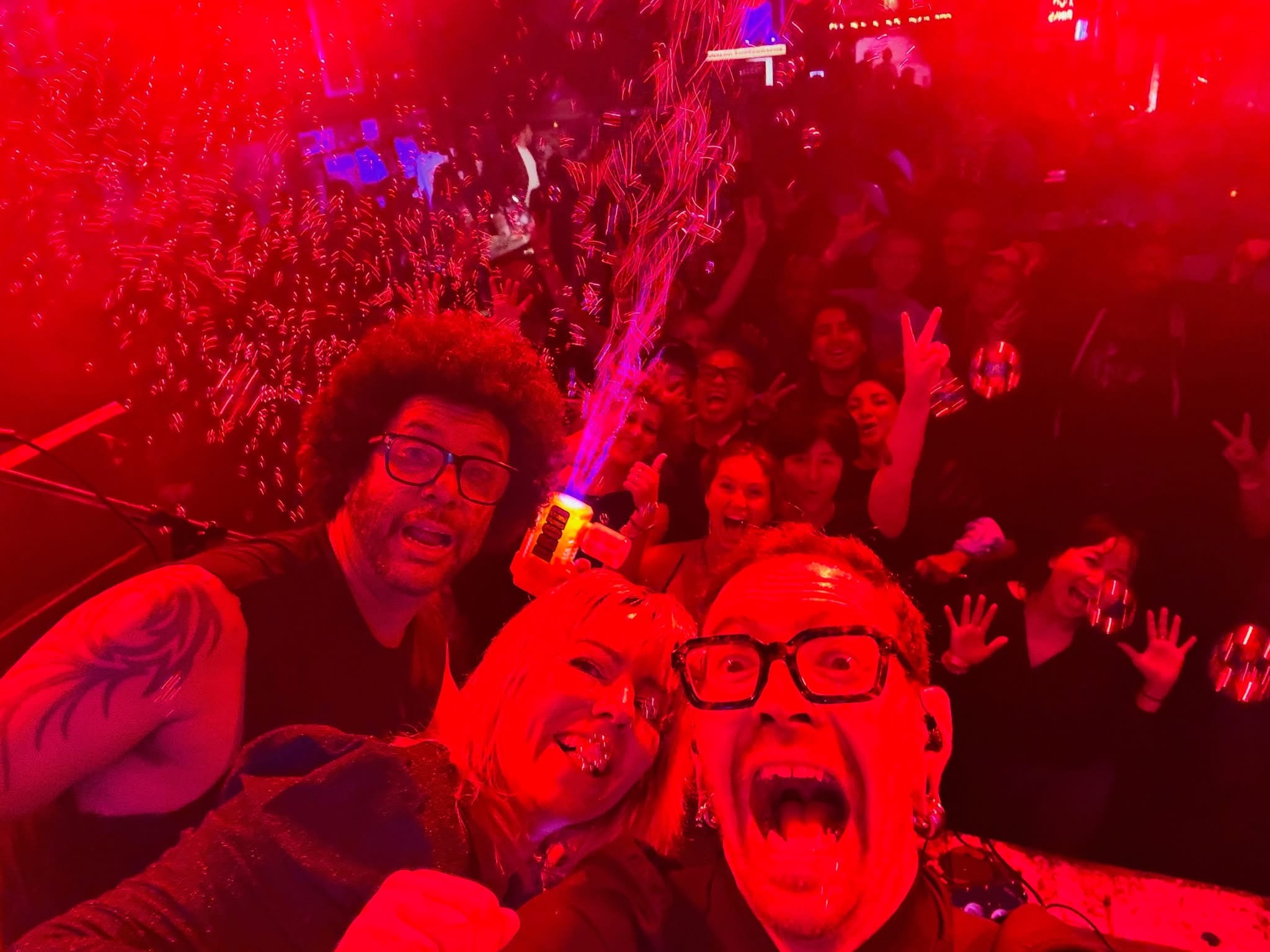
LANDROID
Kilowatt
November 4, 2026
Photos by Wendy Golden
Who needs a time machine when you’ve got three bands, a Mission District dive bar, and a city haunted by its own musical past?
We were headed to Kilowatt, a fixture of SF’s ’90s underground music scene, to catch a night of distortion-drenched shoegaze, post-punk swagger, and psychedelic space rock courtesy of LANDROID, Fake Your Own Death, and Misandrist.
But first, we sat at a wobbly sidewalk table under the neon glow of the Roxie Theater sign, sharing a shawarma from Truly Mediterranean, just like we did in the ‘90s. The hum of the city was our soundtrack: sirens, streetcars, the swish of a jogger running by, while Frank Sinatra crooned through a muffled speaker next door.
We cheersed our ginger beers and laughed as multiple dogs did their business within a few feet of our table. No, it wasn’t elegant, but it still had charm. And in this economy, a tasty 14-inch food log that can feed two for just $13 is just our speed.
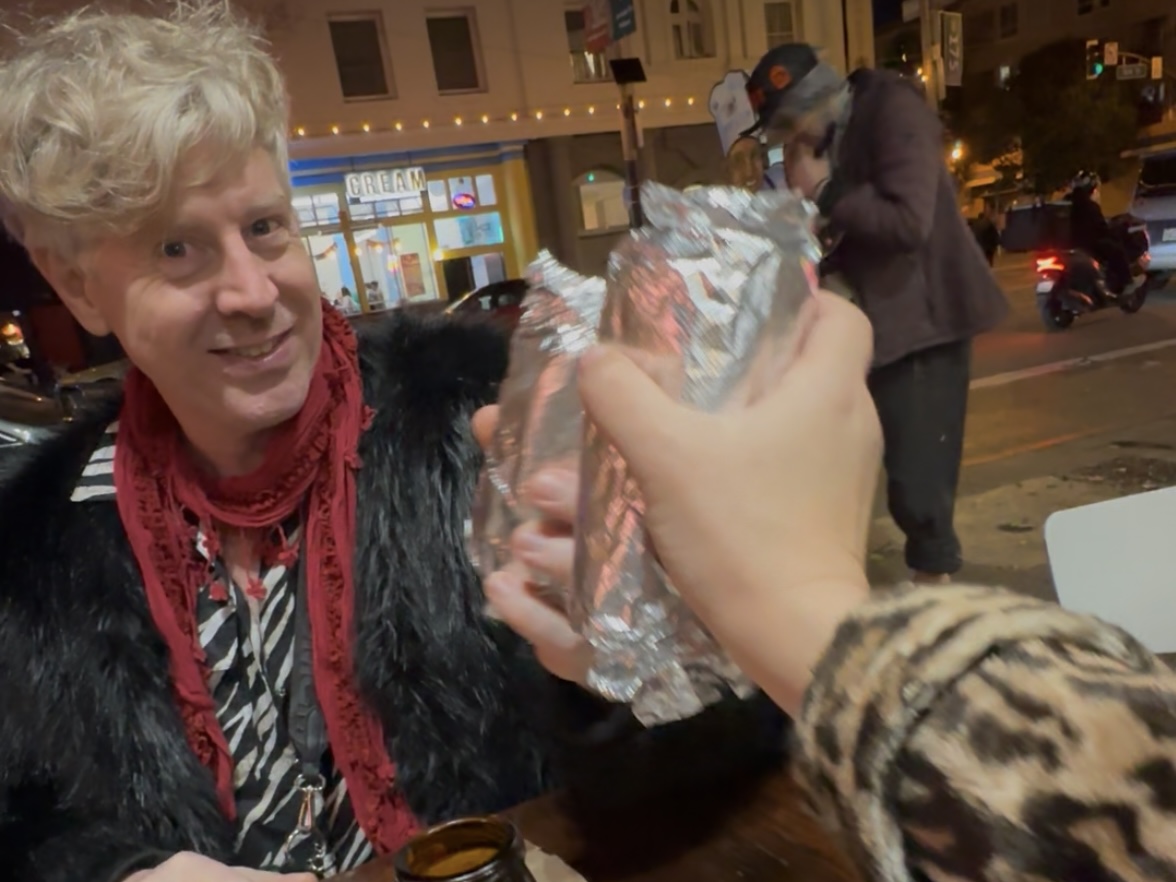
This is how we did it in our 20s, eating on the cheap, living with multiple roommates in unconventional art warehouses all over the Mission. Why not now as two fifty-something casualties of the latest tech bust, trading the dot-com crash for the AI apocalypse?
Across the street from Kilowatt, we stopped at Dalva for a quick cocktail while waiting for the doors to open. They’d remodeled it into something far cleaner and more modern than we remembered, but thankfully, their hidden back speakeasy, The Hideaway, was still giving brothel-red walls, worn leather booths, and the candlelit, haunted ambience from the old days, like a Backrooms version of a shared history we both remembered but hadn’t actually experienced together.
Excited to see what the night had in store, we told the bartender to “make it interesting,” enjoying a mezcal Old Fashioned infused with chiles and aromatics beneath Farrah Fawcett’s incandescent grin before jaywalking over to the venue.
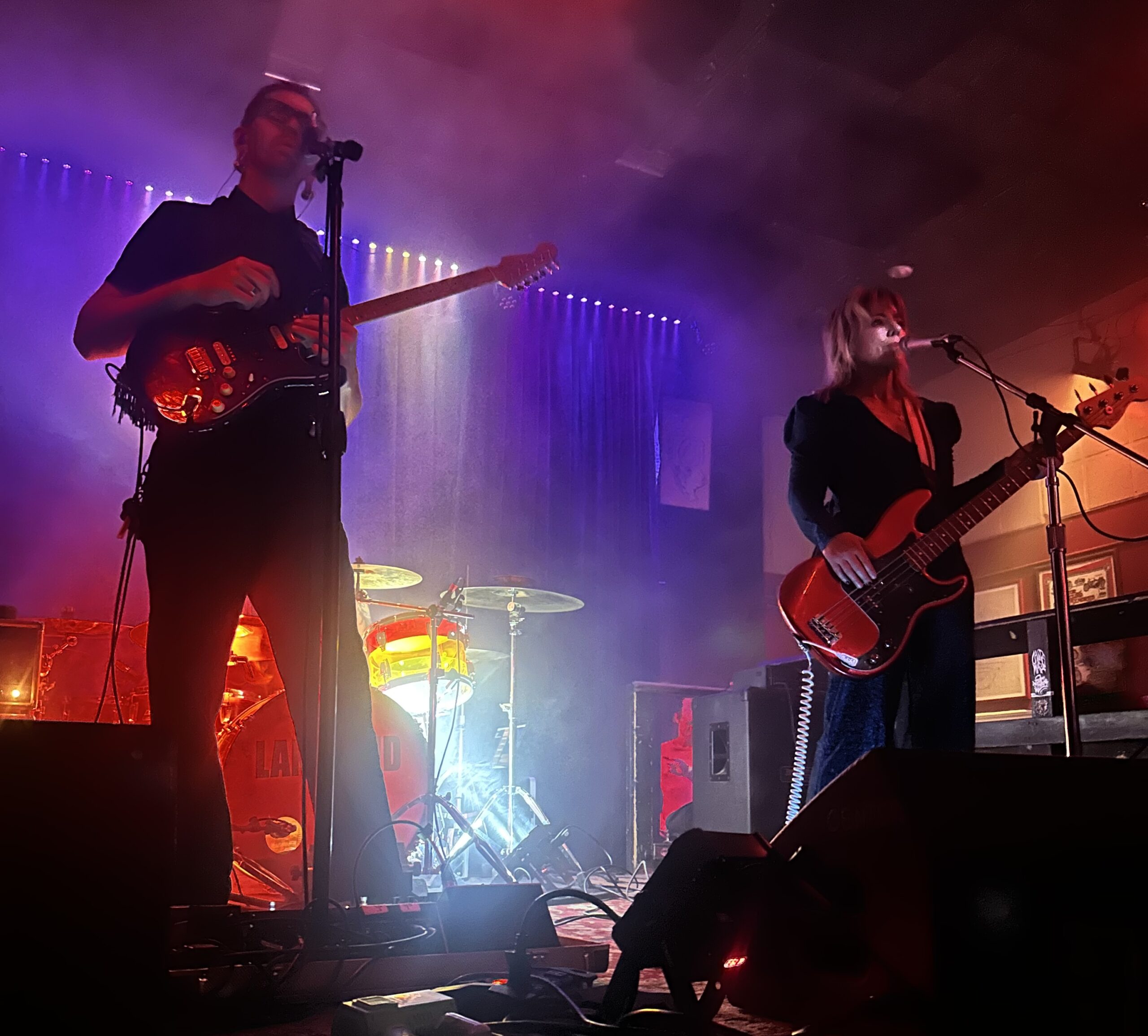
Headliners LANDROID launched into their first number with a burst of glam-rock energy. Guitarist Nigel Roman urged the stage managers to work the fog machines overtime, giving the entire stage an otherworldly quality. I loved the effect, even though drummer Greg Gordon, with his cool afro, embroidered jacket, and acrylic Ludwig Vistalite kit, disappeared into the fog like a missing person for the rest of the show.
Perfect for a band from Landers, a tiny Mojave Desert town near Joshua Tree, where UFO lore and alien abduction stories are practically part of the local culture. LANDROID, founded by veteran musicians Cooper Gillespie and Gordon, has embraced this desert weirdness, creating cinematic dreamwave steeped in science fiction and mysticism.
As purple, green, and blue lights shifted with the music, the theatricality of the band really came through. Roman was giving psychedelic preacher in his short-sleeved black button-up, stretched lobes, and heavy tribal jewelry flashing as he worked himself into a spirited pulpit.
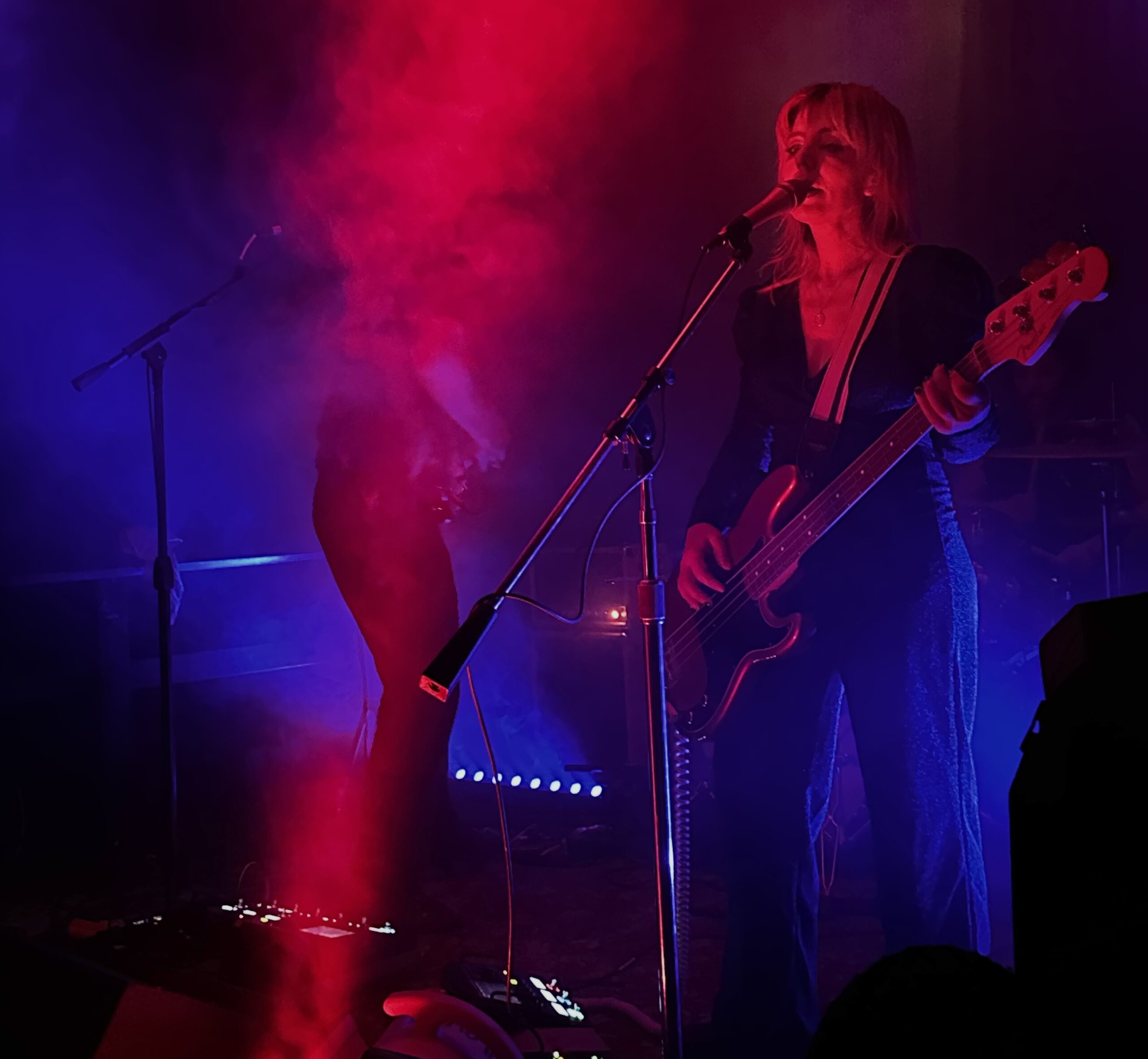
The sound was epic and tribal, reminiscent of Pink Floyd and Black Celebration-era Depeche Mode, with some of the lush dreaminess of Beach House. Driving beats and slow minor-key progressions were both hypnotic and psychedelic. Gillespie’s haunting vocals conjured Laura Palmer herself, crooning from somewhere on the dark side of the moon. It felt like a space-rock séance.
The Twin Peaks connection felt especially apt, as LANDROID’s music inhabited that same unsettling territory between beauty and menace.
But what began with such energy eventually gave way to something like a mermaid’s lullaby — beautiful, but increasingly difficult to stay awake through. Still, there was no denying the ambition of a band determined to turn a dive-bar stage into another dimension.
Fake Your Own Death
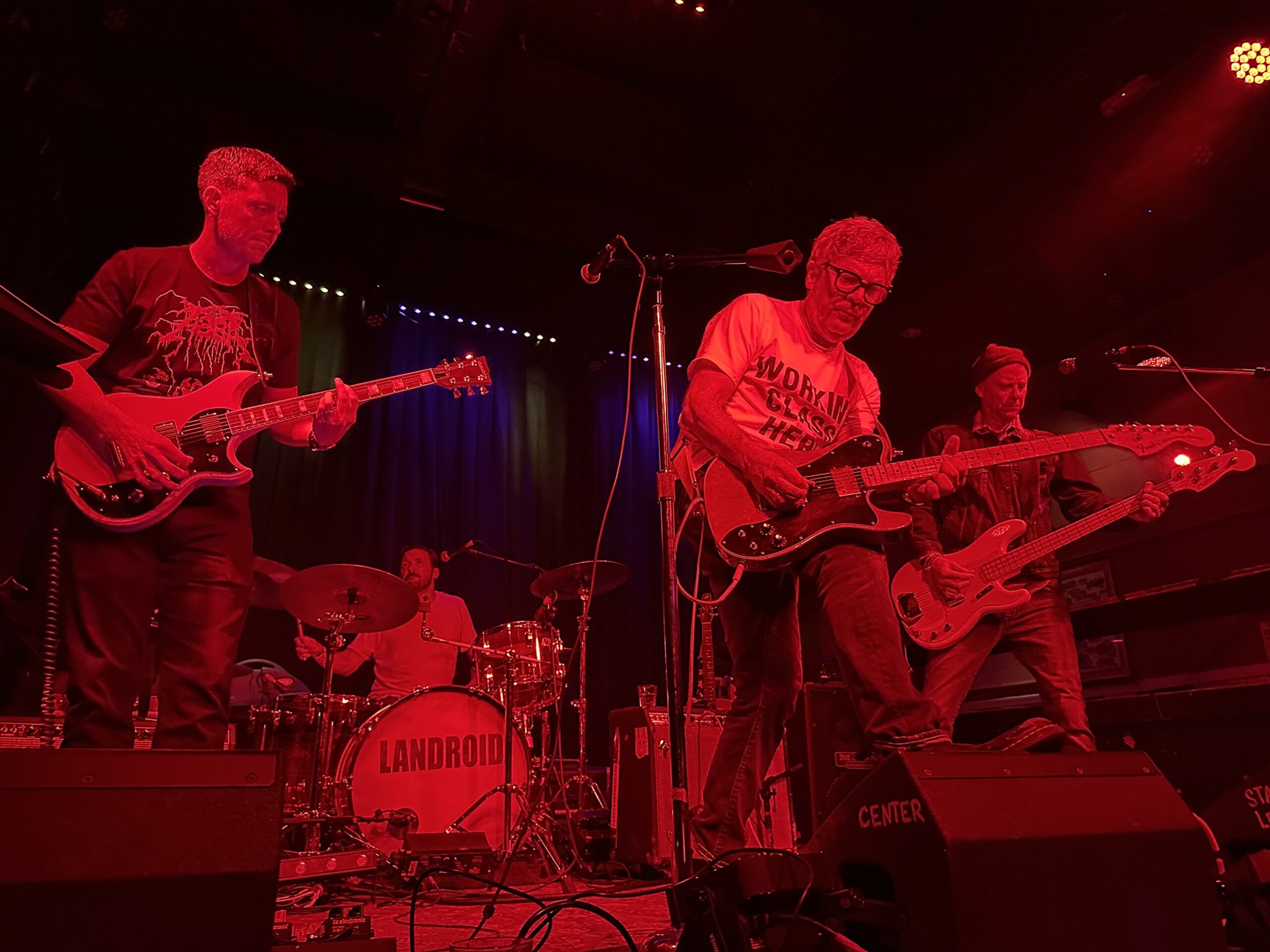
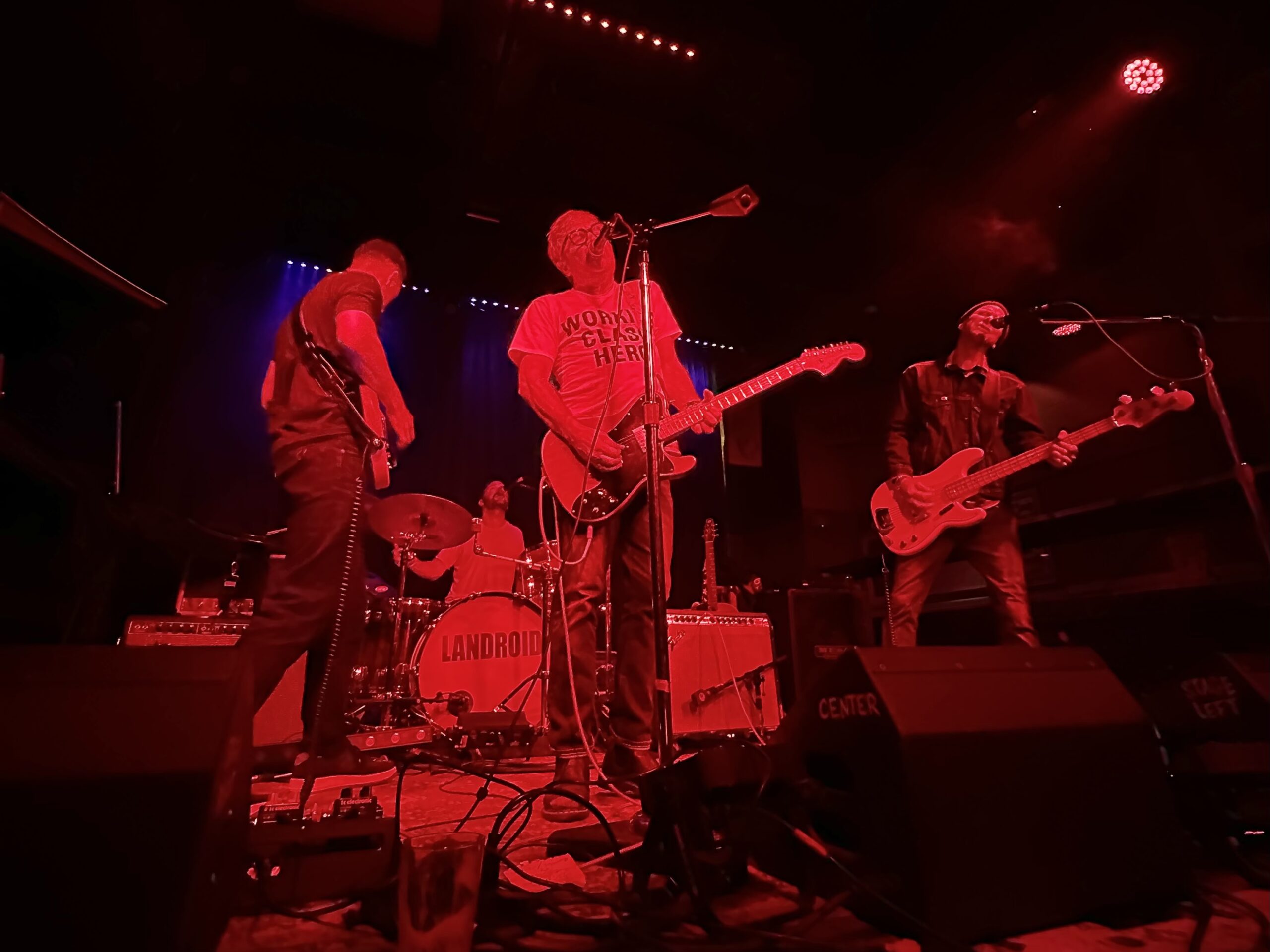
Priming the crowd for LANDROID was Fake Your Own Death. I’d noticed a guy in the audience who appeared to be around my age. Turns out, he was the lead singer. Taking the stage in a T-shirt that read “Working Class Hero,” frontman Terry Ashkinos channeled the swagger of Iggy Pop and Peter Murphy’s deep, soulful wail — godfathers of a post-punk sound carried forward today by bands like Fontaines D.C.
The SF quartet delivered driving drumbeats and sharp guitar riffs, with a sound both defiant and playful. Did I hear something optimistic there? Something that predated internet information overload? Guitarist Shane Ryan, bassist Adrian McCullough, and drummer Scott Eberhardt played with the easy chemistry of musicians who’d been around the block together. Spirited, tight, and clearly having a good time.
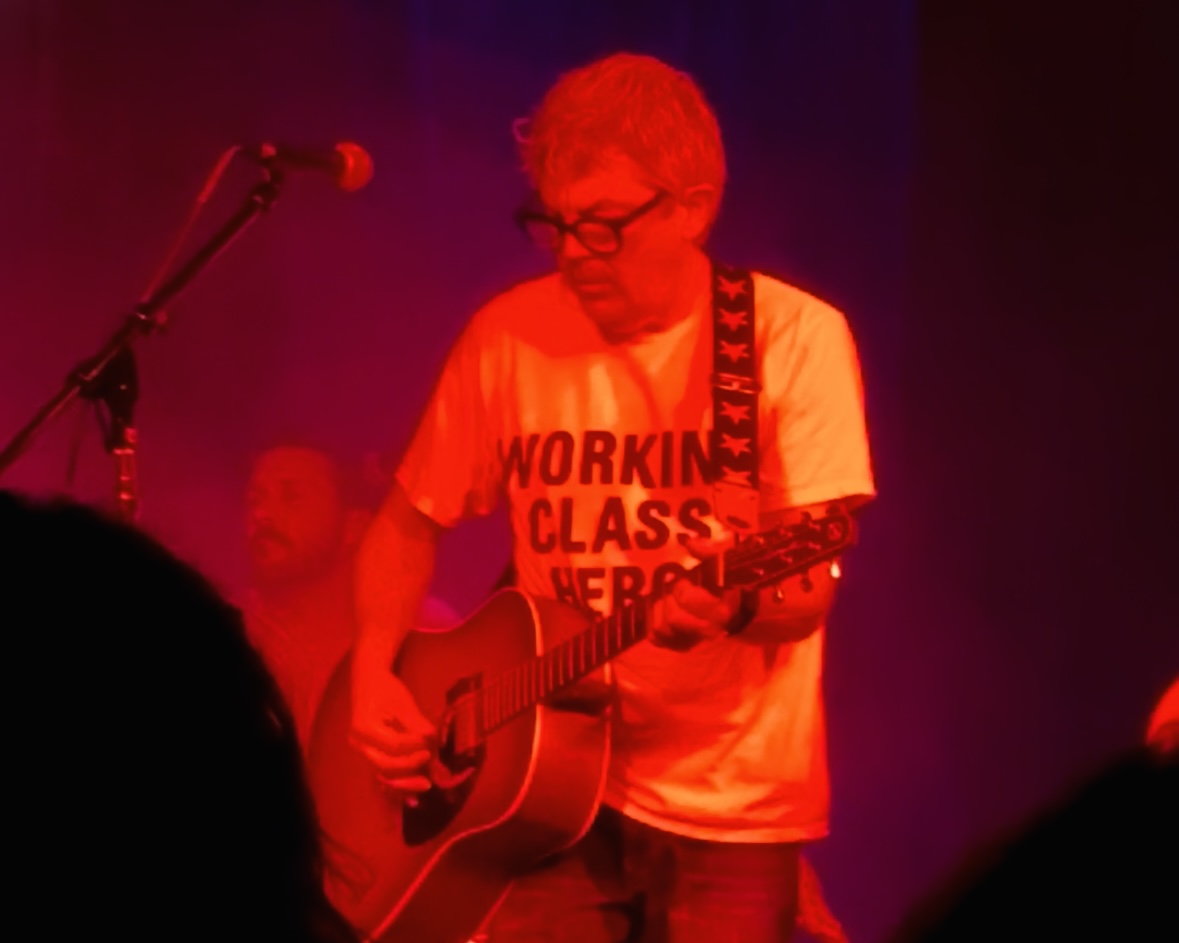
Their long set seemed to build as they went. Of all the performers that night, they had the strongest connection with the audience. A guy in the corner sang every line, and as the tempo picked up, people finally began to dance. There was a familiarity to their sound, but that was part of the appeal. They weren’t reinventing rock and roll, just reminding us how much fun it could be.
As it turns out, reinvention is central to the band’s identity. Formed in 2010, Fake Your Own Death takes its name from the romantic, if impractical, fantasy of walking away from your old life and starting over.
For Billy and me, navigating our own unexpected reinventions in our 50s, the sentiment hit home. We’re all conditioned to believe that at some point we’ll arrive, fully formed, with our lives figured out. But the truth is, there is no final destination. We’re always learning, reinventing, becoming.
Ashkinos has described the band as deeply rooted in the Mission’s DIY culture, with influences stretching back to the ’80s and ’90s. Another band keeping a piece of San Francisco’s musical past alive, while refusing to leave it in the past.
Misandrist
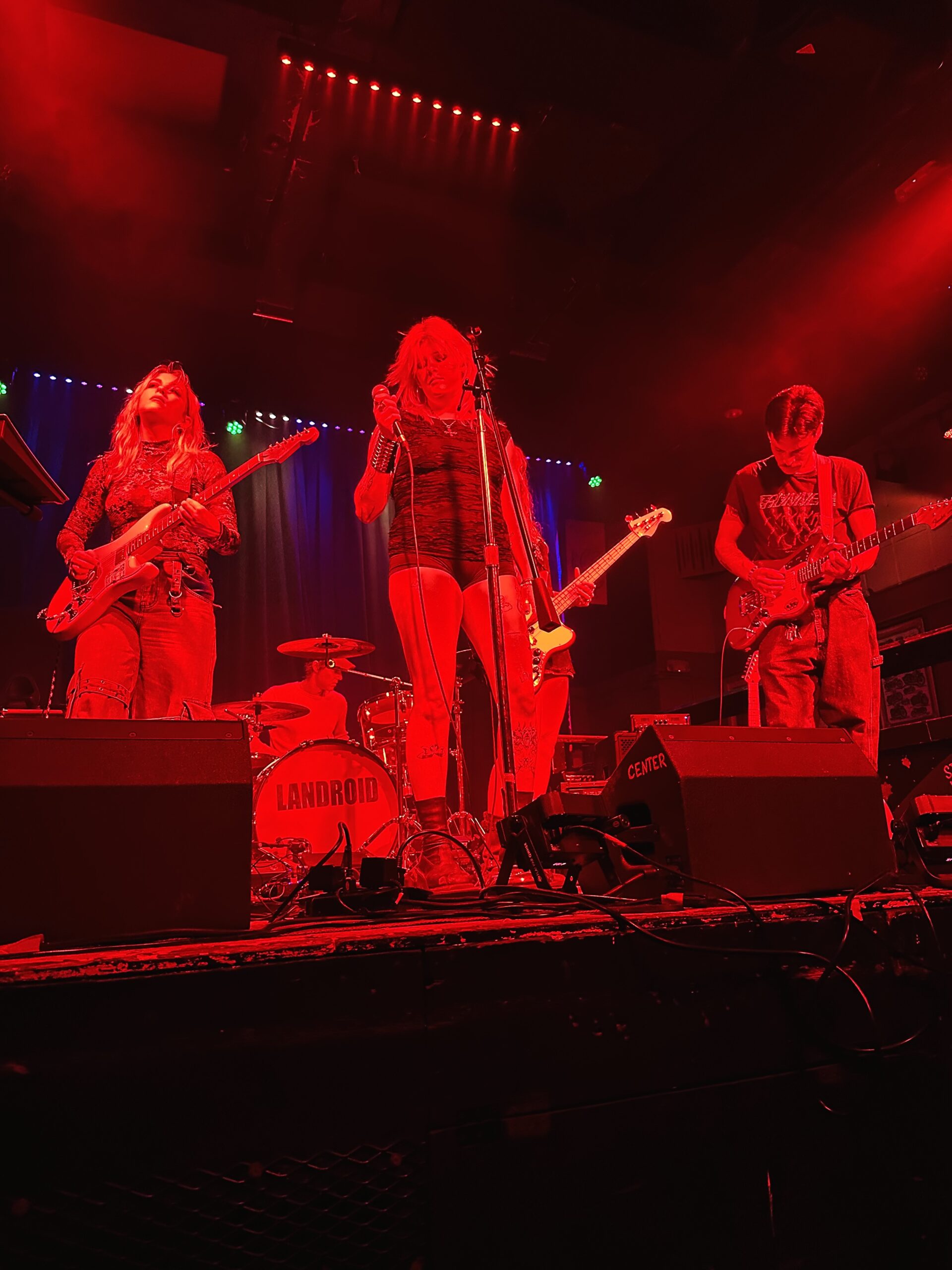
Opening the night was SF’s rising shoegaze provocateurs, Misandrist. Frontwoman Erp Phillips stomped around glumly in black booty shorts, all Cherry Bomb attitude and shaggy-haired swagger. Guitarist Izzie A. Clark wore see-through lace paired with ’90s-style pocketed baggies. Maybe we really did travel back in time.
The band whirred to life with angular, dissonant crescendos reminiscent of My Bloody Valentine, while Erp’s high, ethereal vocals conjured the dreamy melancholy of the Cocteau Twins. But their collision of fragile vocals and abrasive guitars also placed them squarely in the current shoegaze revival, alongside bands like julie and feeble little horse.
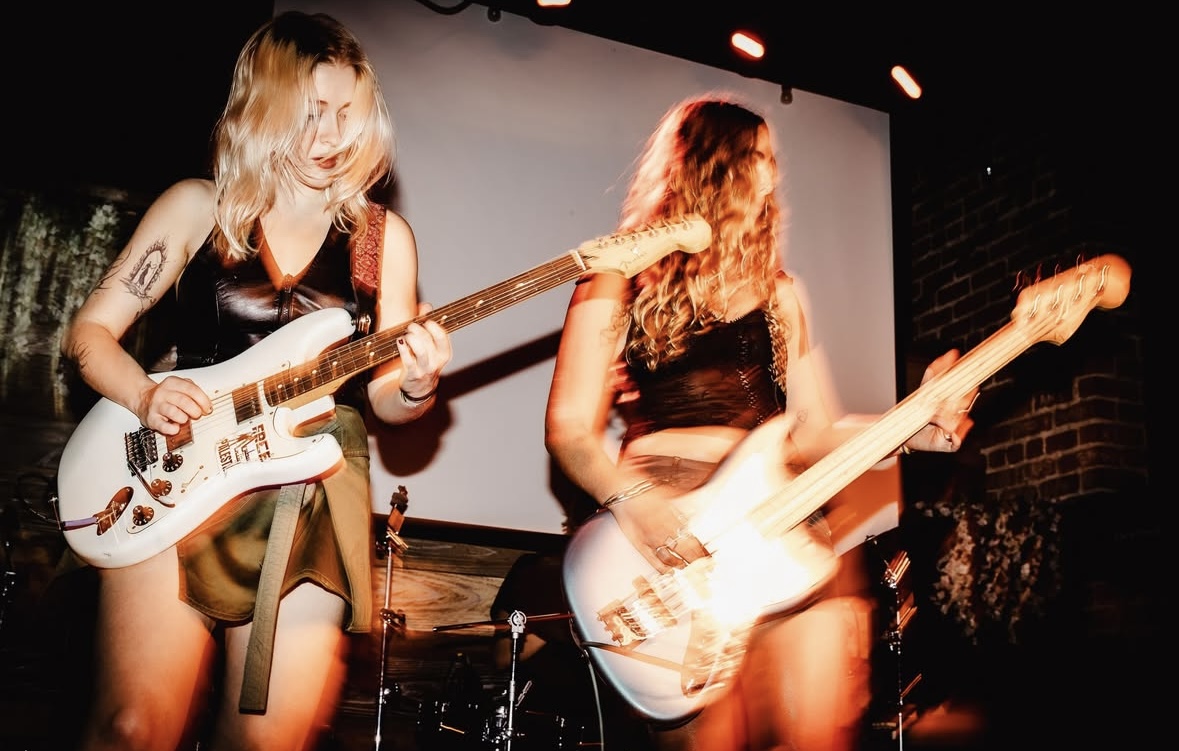
Erp channeled fuck-you energy, even as her voice floated over the echoing distortion of guitars and bass, propelled by drummer Jason Shegoleff’s driving percussion. She seemed barely there, sleepwalking through heartbreak. Izzie and bassist Lailee Connell, draped in sheer layers, disappeared behind curtains of hair as they played. Guitarist Willis Plowman dropped to his knees in front of Erp as her airy vocals crashed into screams.
They never acknowledged the audience, but still managed to pull us into their hazy, emotionally charged world. Their musical ambition was unmistakable, and Erp had a commanding presence that suggested this band was only beginning to discover what it could become.
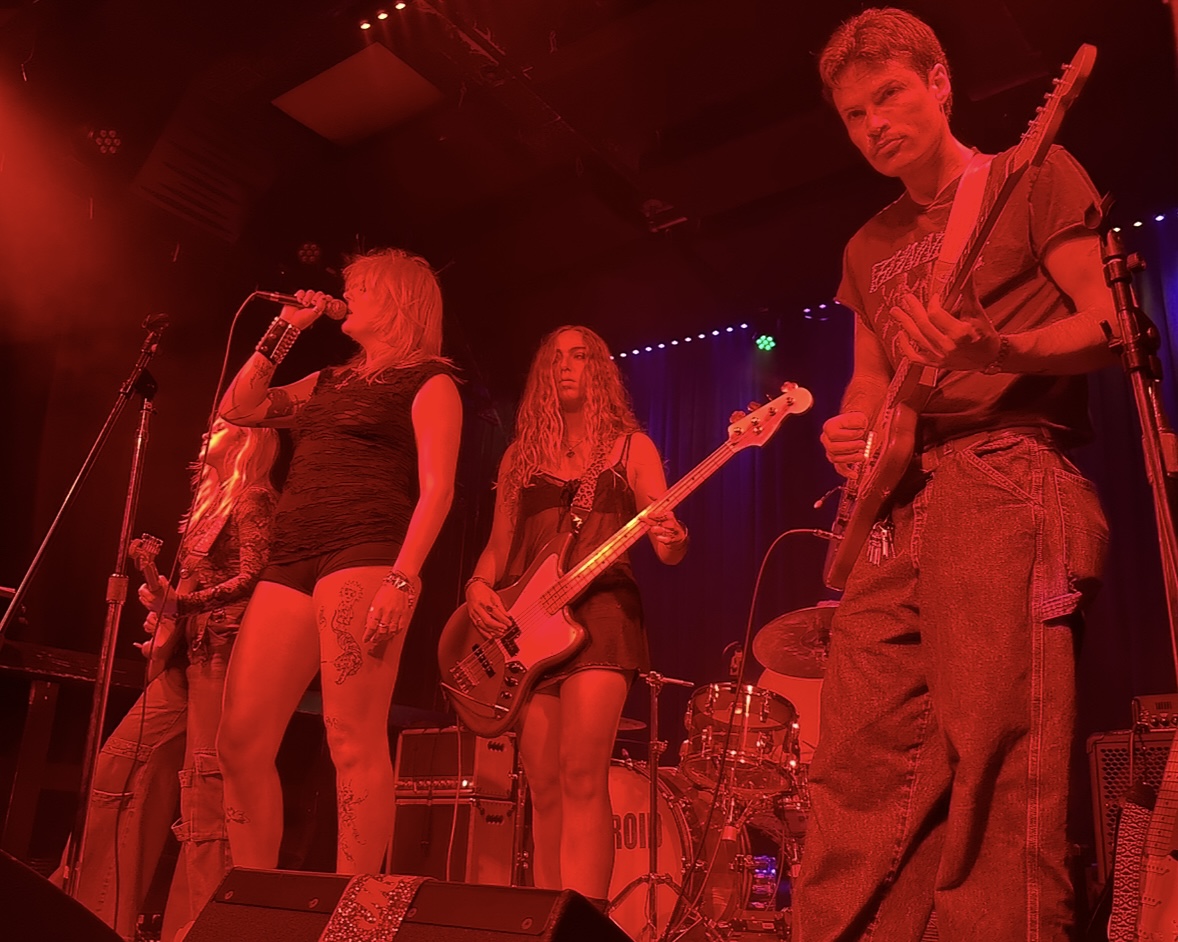
More exciting still, Misandrist is part of a new generation of musicians breathing life back into SF’s underground scene, playing house shows, staging impromptu performances on Mission sidewalks, and building a community around their music.
Maybe the scrappy, DIY spirit of the San Francisco we fell in love with isn’t lost after all.
The hallowed halls of Kilowatt still held the vibrations of so much musical history. A time capsule of local music excellence, resurrected for a new generation. Stepping inside felt like opening a portal. Billy immediately spotted a poster for Steel Pole Bathtub on the peeling red walls, dated February 17, 1996, scrawled in Sharpie. He’d been at that very show.
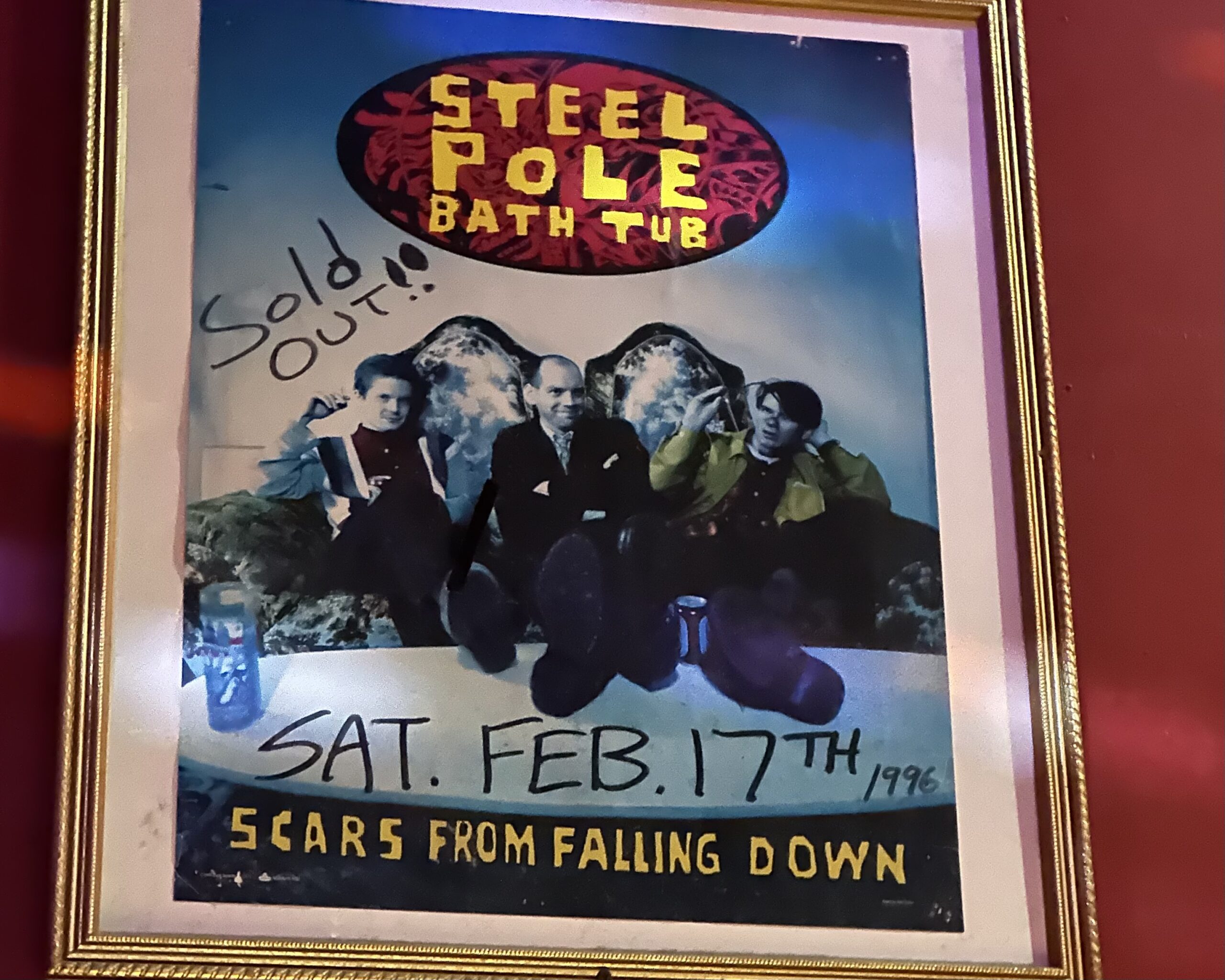
One of the most influential post-rock art bands of the era, Steel Pole Bathtub was part of a scene that pushed musical boundaries with dissonant guitar lines, unusual chords, and complex, math-rock arrangements. Billy was flooded with nostalgia, feeling lucky to have witnessed that pivotal moment in SF’s underground scene. And here we were, three decades later, about to hear some of those same experimental impulses.
Between sets, I ran into someone I knew in the audience. He was looking for two new roommates for his art collective — truly one of the last spaces of its kind in SF. He told me that rooms in places like this were once hot commodities, but these days, finding people to fill them was surprisingly difficult. As someone who spent most of my 30s and even early 40s living in bohemian, often not-up-to-code collective living experiments, this really took me back.
Once upon a time, there was no shortage of people willing to sacrifice privacy, comfort, and the occasional functioning toilet for the chance to live among artists and misfits. Had the city changed that much, or had the dream itself fallen out of fashion?
Going back to Kilowatt after all these years, and revisiting places that felt almost haunted by our former lives, these three bands made the perfect soundtrack. Misandrist represented a new generation finding its voice; Fake Your Own Death, the enduring spirit of SF’s post-punk scene; and LANDROID, the theatrical, psychedelic weirdness that transcends generations.
Billy and I hadn’t met yet when we were both living in the Mission in the ’90s, but here we were, decades later, retracing our old stomping grounds together. And while so much of the neighborhood is different, we found that some of its best qualities are still very much alive.
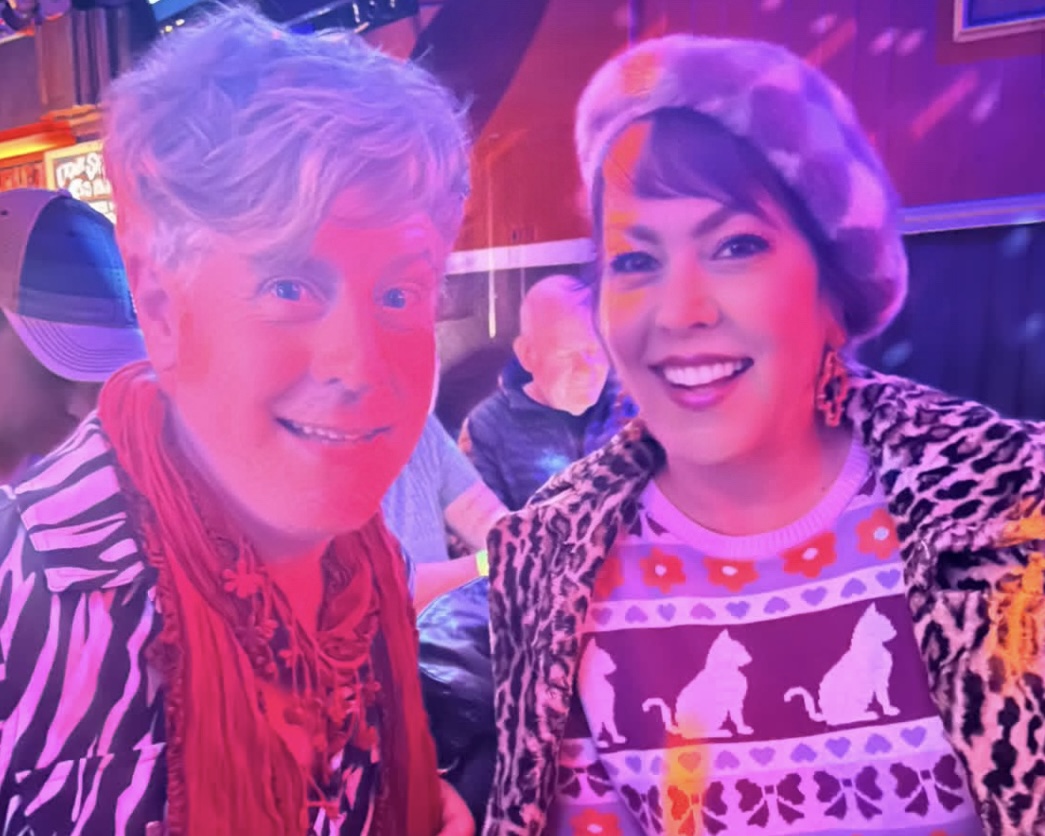
What struck me most was how much ambiance, good food, and solid entertainment we enjoyed for a fraction of what we’d spend on a mainstream concert, where tickets can run into the hundreds.
So do yourself a favor. Venture into the backrooms of San Francisco. Seek out the newcomers and the veterans who are keeping the city’s independent music scene alive. Support the venues, the neighborhood businesses, and the communities that make this city worth living in.
Yes, money is tight. Yes, the city has changed. But we don’t have to spend a fortune to feel alive in it. And we certainly don’t have to leave the best parts of ourselves — or San Francisco — in the ’90s.