


Masayoshi Takanaka
The Masonic
April 9, 2026
Photos by Greg Chow
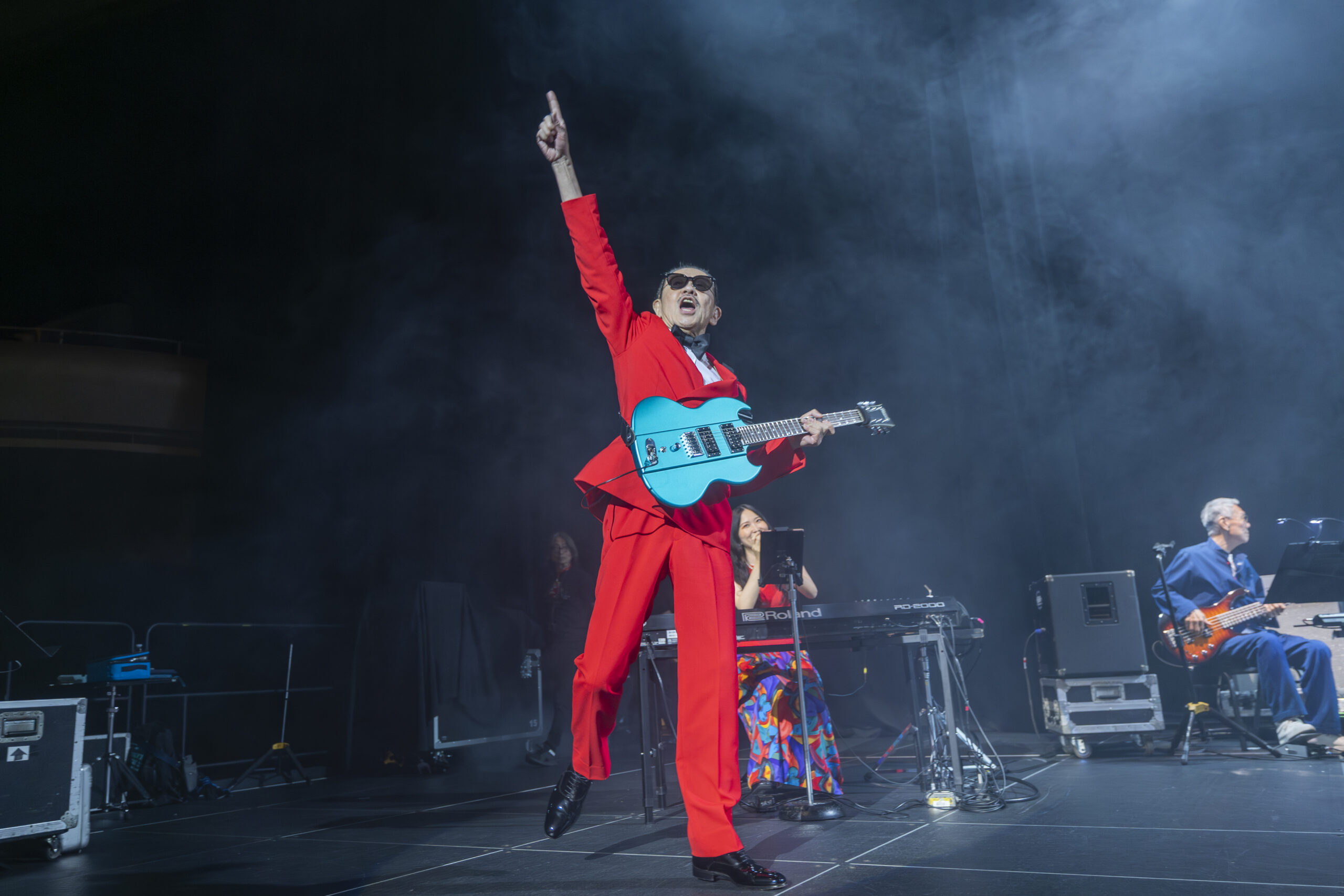
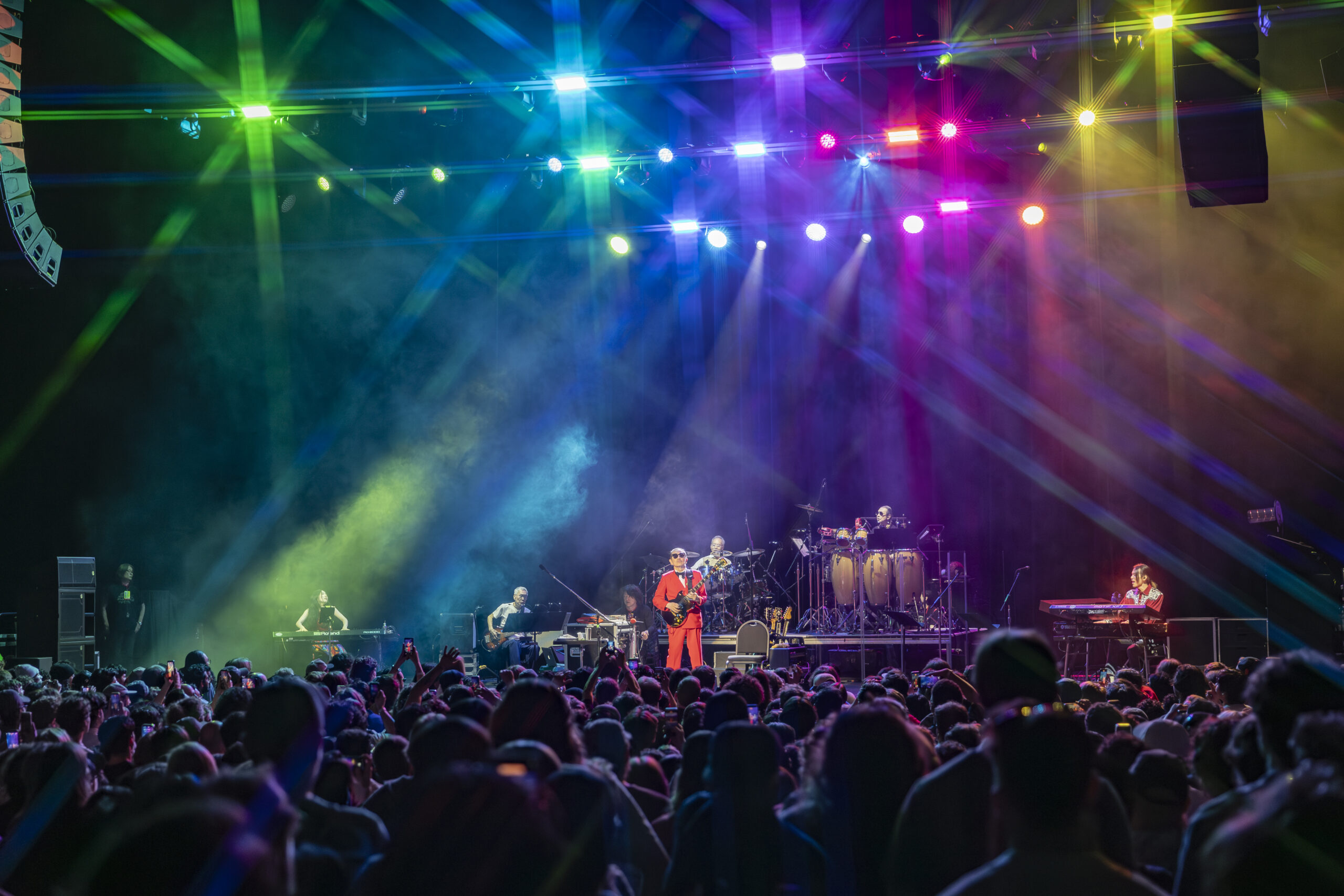
It was 8:00 p.m., and after a short introduction over the PA, the lights dimmed in The Masonic and five musicians took the stage behind their instruments: bass, drums, percussion, and two keyboards. The crowd, which filled the venue, give a roar of applause knowing what was to come, and of course once Masayoshi Takanaka took the stage the applause was deafening. Wearing his trademark bright red suit, he strapped on one of his guitars and the band began playing the intro of “Blue Lagoon.” The crowd erupted again, cheers and shouts being launched into the air. Anyone who might have been at the wrong show was probably asking themselves, “Just who is Masayoshi Takanaka, and how does a 73 year-old Japanese guitarist who plays mostly instrumental music end up selling out an entire North American tour?”
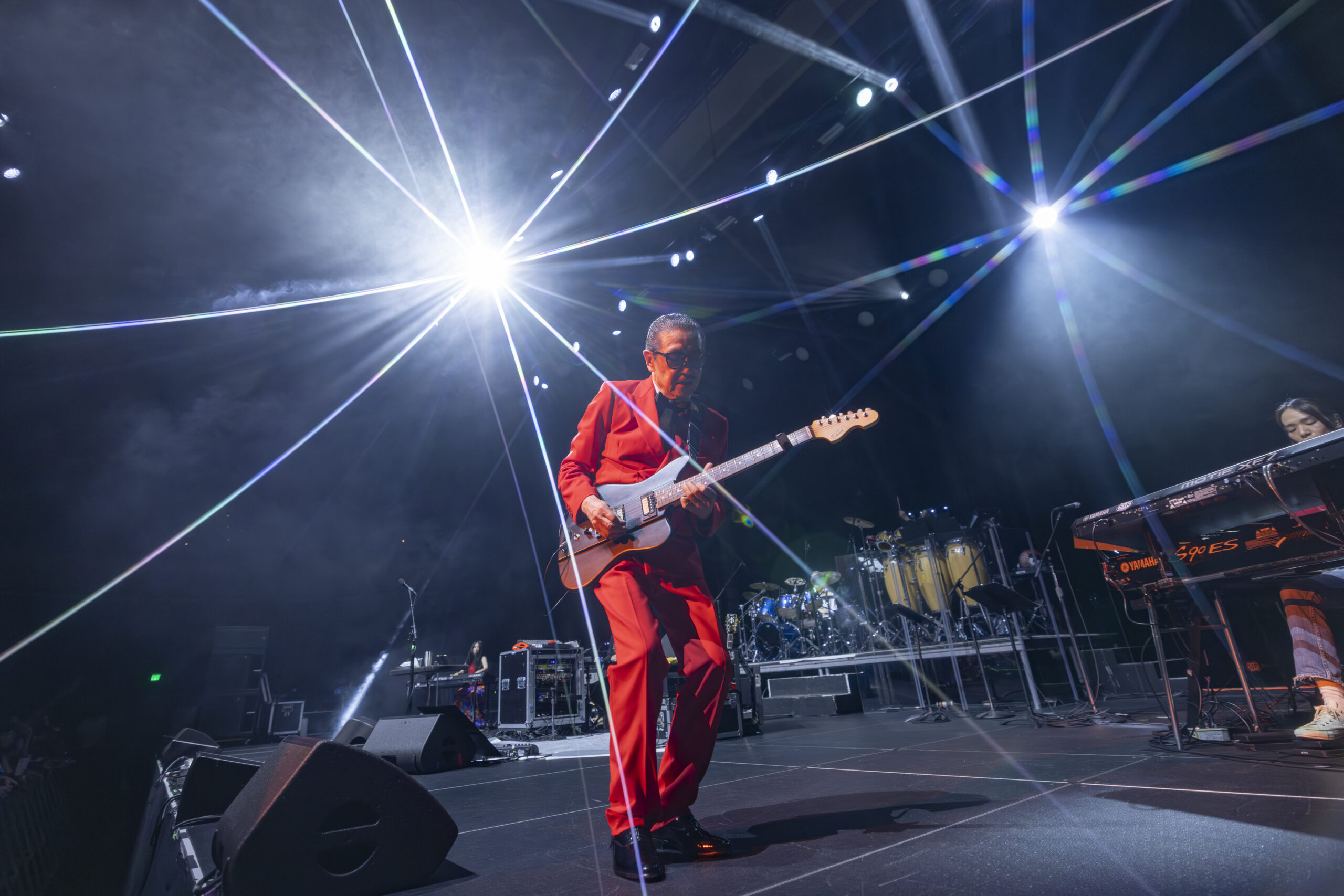
North America has had a deeply held fascination with Japan, and Asia as a whole, for centuries. It was made even more intense as technologies advanced to help those in the Western and Eastern worlds began to more easily communicate with each other. Whether it was the VHS anime boom in the 1980s, onwards to the influx of J-horror films in the late 1990s, to peer-to-peer programs like Limewire helping to give American teenagers exposure to Japanese bands like Malice Mizer and Dir en grey in the mid-2000s, those in the United States have always looked at Japan with a mixture of fascination and curiosity. All of this seemed to culminate into the perfect storm when, in 2019, algorithms on various streaming services began to recommend the song “Plastic Love” by city pop artist Mariya Takeuchi. This led listeners to go down a rabbit hole of discovery of similar artists as well as those who were architects of the genre. Enter Masayoshi Takanaka, whose work helped pave the way for the genre throughout the 1970s.
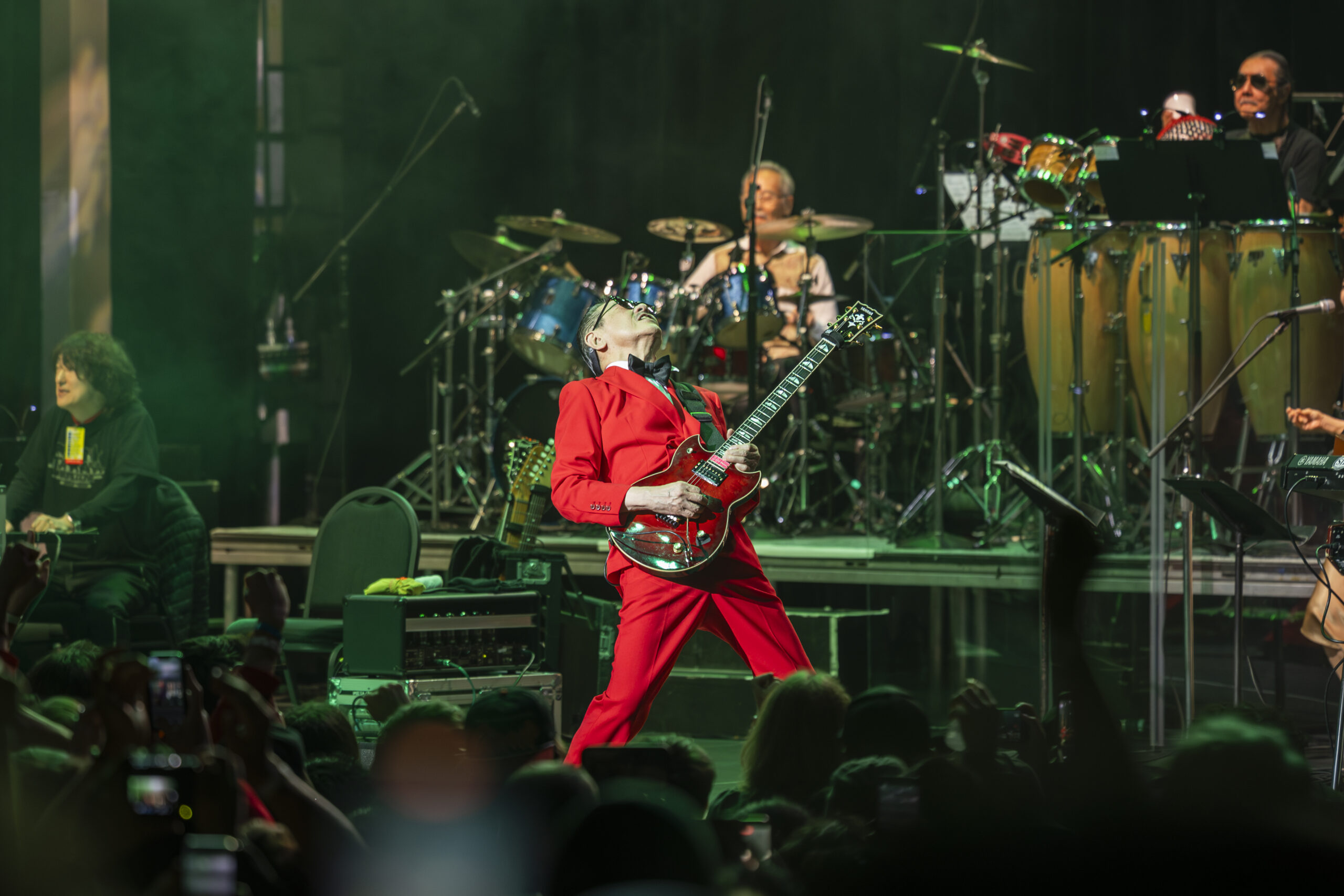
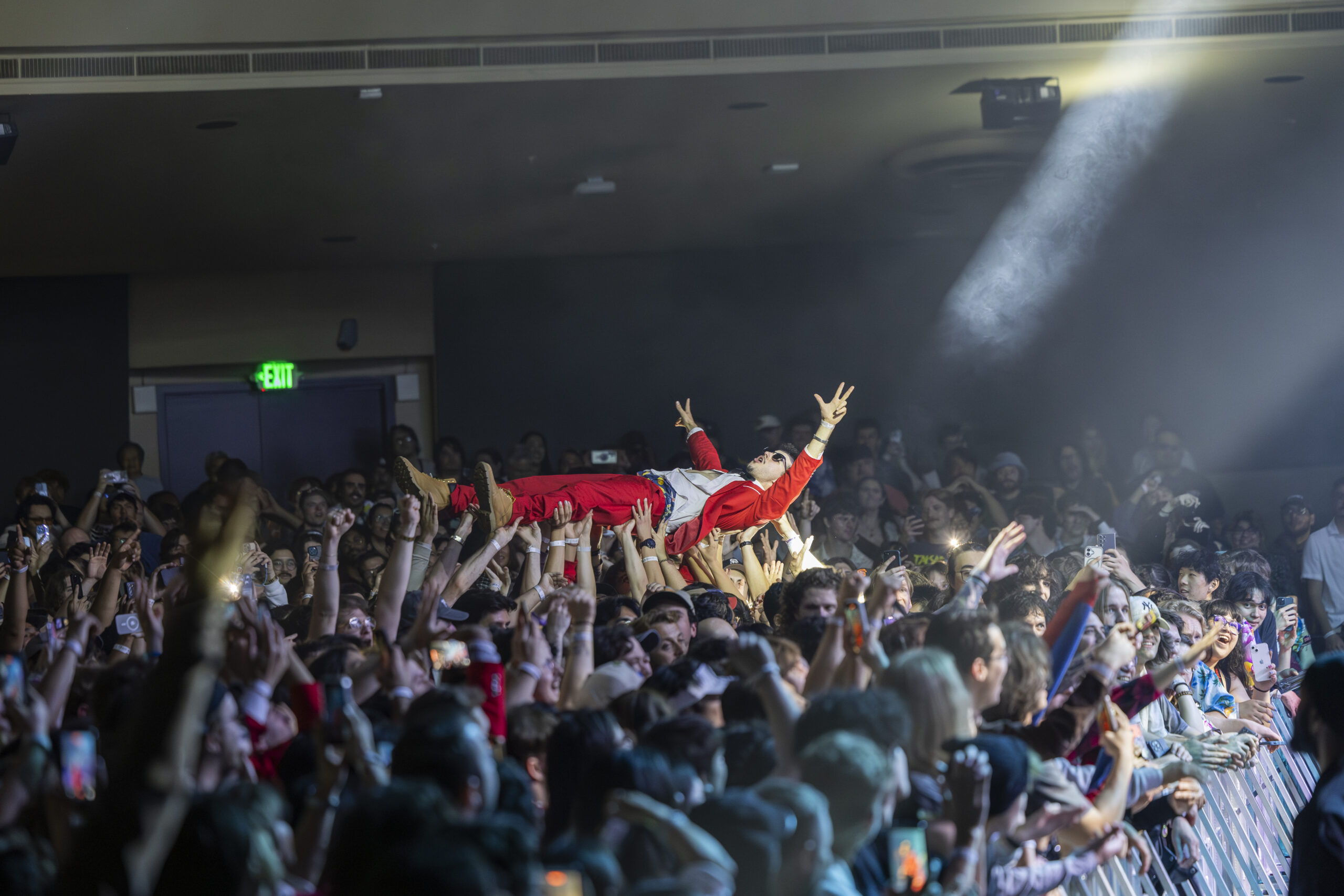
So that begs the question: why Masayoshi Takanaka and why not any of his contemporaries? Surely the general fascination of Japanese culture and music is a factor, but at the end of the day Takanaka’s music is just great. It’s impossible to listen to his music and not want to hop in the nearest convertible, put the roof down, and fly down the Pacific Coast Highway while blasting “Brasilian Skies” or “Tokyo Melody,” both of which he performed to his adoring fans in San Francisco. Despite the fact that those two songs are some of his most popular, every song that Takanaka and his band performed throughout the evening gained the same rave response from the audience. He could have taken the easy way out and only performed material from his most listened to albums, but even cuts from albums like Jungle Jane and Saudade were met with as much enthusiasm as his most popular songs. Hell, there was even more than a few crowdsurfers throughout the evening, all of them donned in identical red suits to Takanaka’s own.
Special mention has to be given to Masayoshi Takanaka’s band, who were each given multiple solos throughout the evening. On bass was Akira Okazawa, who’s played the instrument on nearly 200 albums since the early 1970s. Masahiro Miyazaki played drums on Takanaka’s albums T-Wave and The Rainbow Goblins, and he and percussionist Nobu Saito, who played on the Takanaka album and hundreds more, kept the groove going with Okazawa. On synths was Kaoru Inoue, who came out from behind his multiple keyboards at one point to join Takanaka in the middle of the stage playing a keytar. Unfortunately I can’t find the pianist’s name, but her solos were just as expressive as Takanaka’s. For the songs that featured female vocals like “Oh! Tengo Suerre,” singers Yuko Ohtaki and Kumi Saito would join the band onstage.
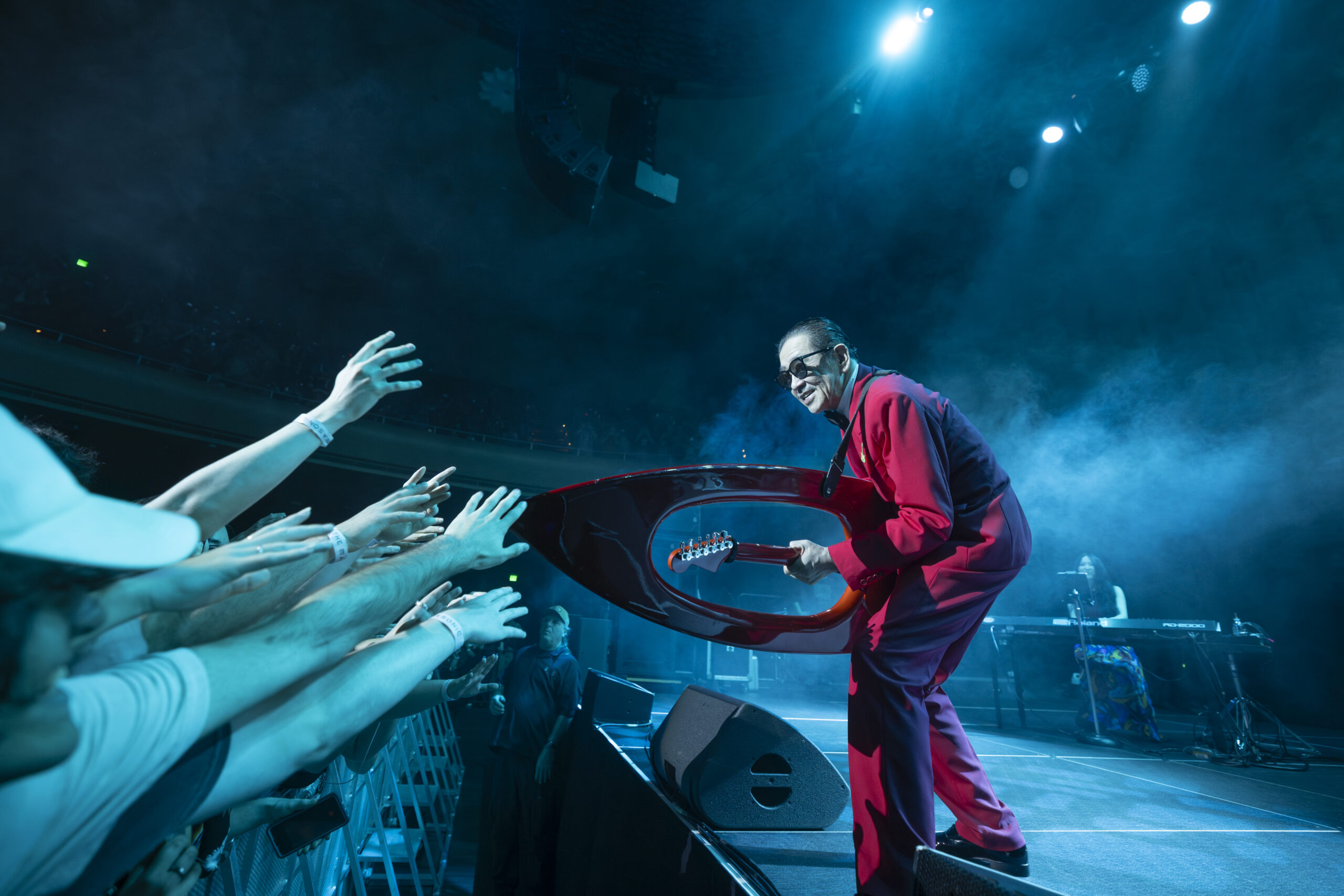
After a set that concluded with a cover of “Kurofune (Kaei 6-nen 6-gatsu 4-ka)” by Takanaka’s early band Sadistic Mike Band, which featured future Yukihiro Takahashi of Yellow Magic Orchestra on drums, fans were waiting for one thing and one thing only; the trademark surfboard guitar. After the rest of his band came back onstage and began playing the intro of “Jumping Take Off,” Masayoshi ran onstage with the guitar in question strapped on to the loudest cheer of the entire night. People pulled their phones out, fists were thrown in the air, the sight of Takanaka playing this nearly sacred object in person being the highlight of most of the fans in attendance. Once the song ended, he handed his surfboard guitar over to one of his techs and strapped on another famous guitar in his arsenal: the rainbow guitar. This was the instrument he used to play the last song, the ballad “You Can Never Come To This Place.” At over eight minutes long, it’s a song that squeezes every emotion out of you as you listen to it, Takanaka’s solos bringing tears to the eyes of many of the people around me.
Once the show ended, there was a realization that what I had just witnessed was a potentially once-in-a-lifetime experience. Masayoshi takanaka is 73 years old, and this was the first time that he has ever toured the United States. Given the success of the tour, what with every show being sold out, I would hope that he takes that as a sign to come back again soon (and hopefully some other classic city pop artists will see his ticket sales and follow suit). The show that Takanaka and his band put on was a testament to the power of music, and how it can transcend language and cultural barriers to bring people together, young and old. Whether you waited decades to see him or just a couple of years, there was nobody in that venue who didn’t have a huge smile plastered across their face at some point throughout the evening, and I’m sure that everyone felt like they were witnessing something special. And isn’t that what live music is all about?
