


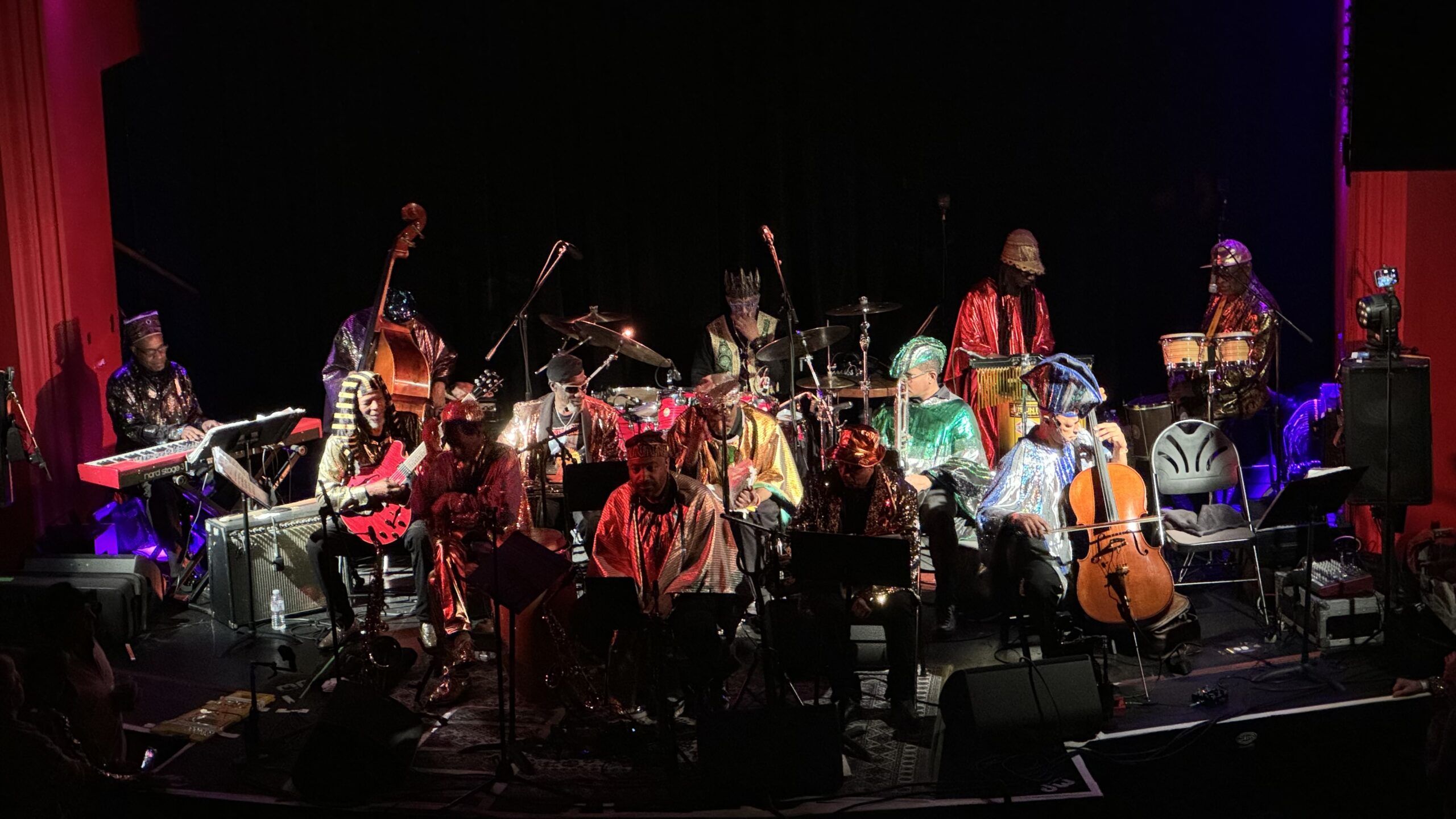
Sun Ra Arkestra
The Chapel
March 1, 2026
Photos by Dragonfly da Luz
The annual Noise Pop Festival has always prided itself on adventurous programming, but few acts embody the spirit of musical exploration quite like the Sun Ra Arkestra. On March 1, day two of their headlining performance, the legendary Afrofuturist space jazz ensemble brought its interstellar sound to The Chapel in San Francisco’s Mission District for a performance that kissed the stars, warped the space-time continuum of jazz, and launched the crowd into a way hipper dimension.
Noise Pop, now in its 33rd year as a pillar of the Bay Area’s independent music scene, is known for mixing indie rock, experimental music, film, and art across venues throughout the city. Placing the Sun Ra Arkestra within that context felt fitting. Few groups in modern music history have pushed boundaries as boldly as the band originally formed by the late cosmic philosopher and bandleader Sun Ra.
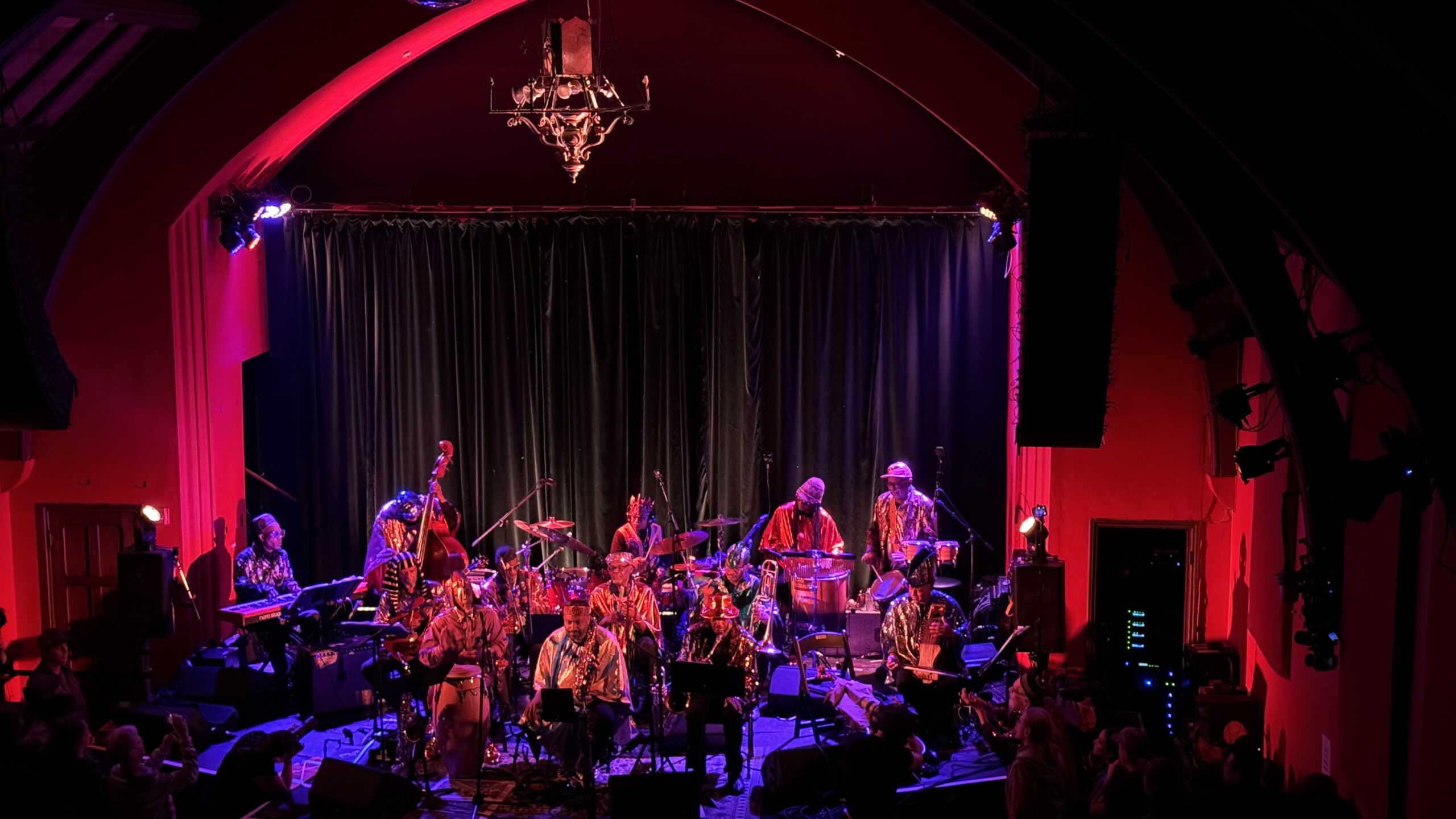
Since Sun Ra’s death in 1993, followed by the death of subsequent bandleader, John Gilmore, the Arkestra is officially led by Marshall Allen, the ensemble’s legendary saxophonist who’s been in the band since 1958. But at 101 years old, he limits touring, so the band is often led by Knoel Scott, who’s been with the band since 1979. Scott plays baritone, tenor, and alto saxophone, in addition to djembe and flute, and functions as the group’s primary vocalist and storyteller. He led with quiet authority, steering the ensemble through passages of swinging big-band jazz, free-form improvisation, and shimmering cosmic textures that have defined the Arkestra’s sound for decades.
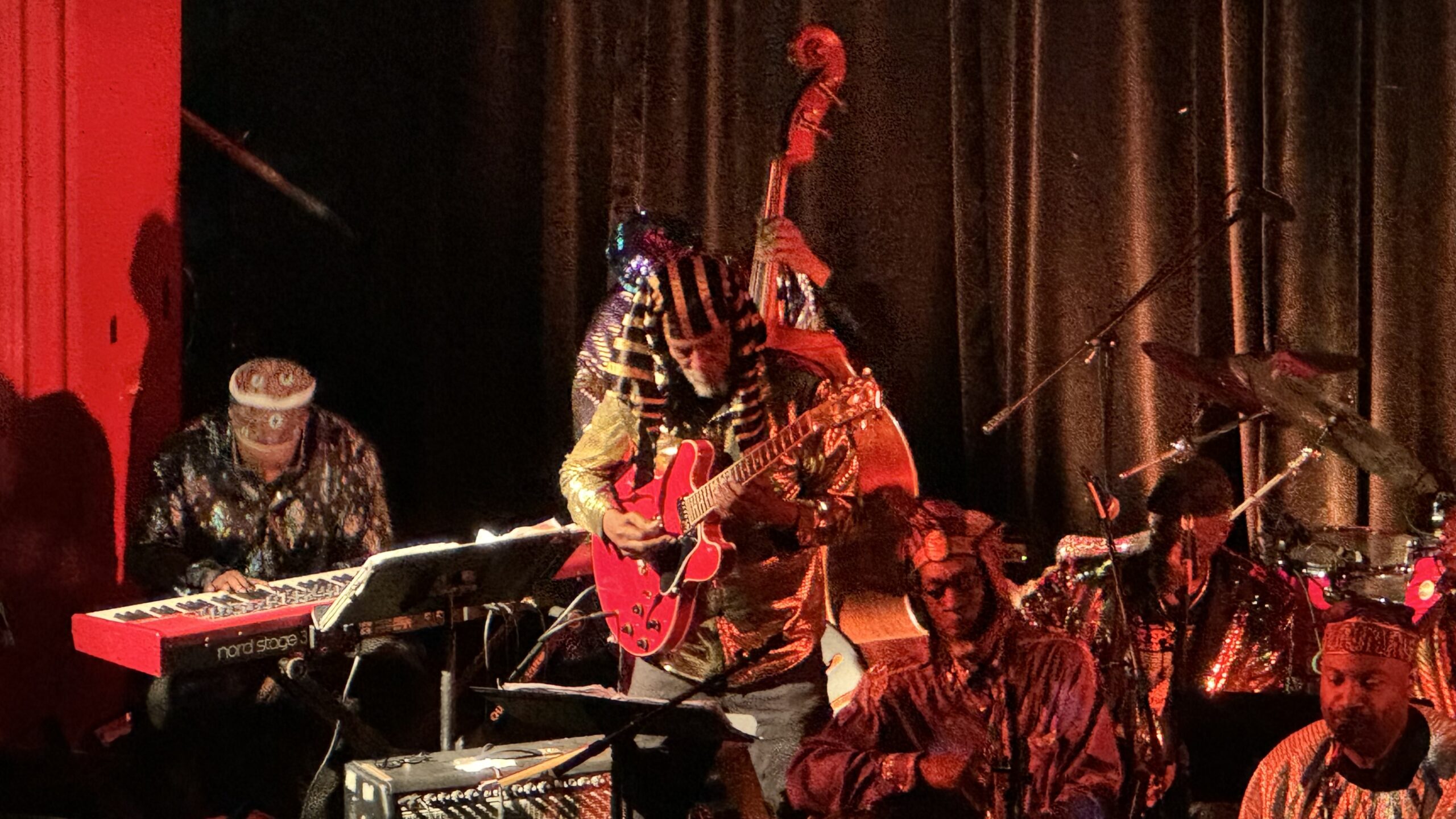
The Chapel proved to be an ideal, intimate setting. The place was packed — possibly due in part to the recent critically acclaimed documentary release of Sun Ra: Do the Impossible on PBS. Brass blasts felt immediate, percussion rippled through the room, and the collective energy between band and crowd created the sense that something communal, almost ritualistic, was taking place.
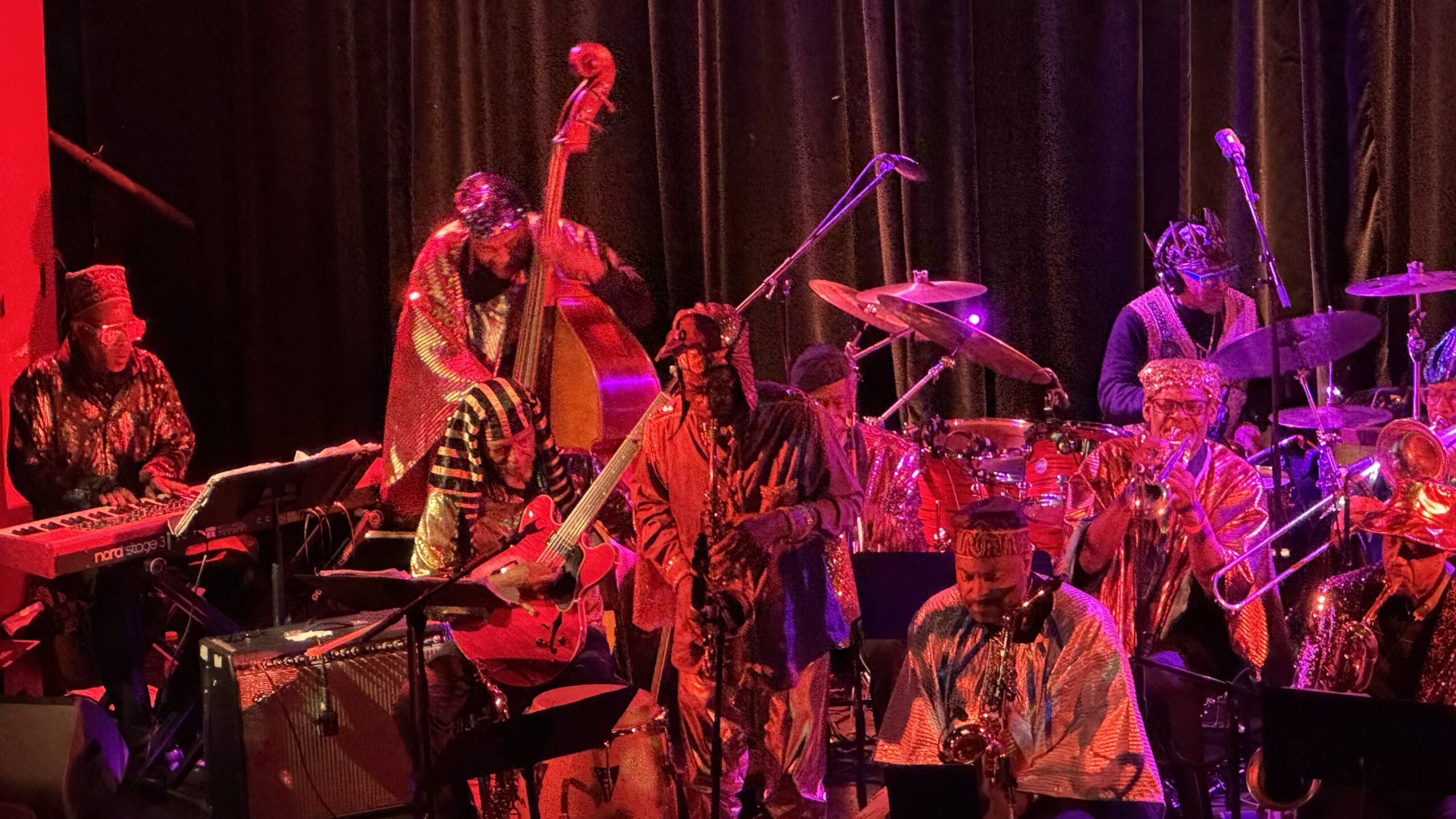
The band navigated through a vast repertoire of material, grooving, chanting, and launching into improvisational flights that carried the same interstellar spirit it was born into. The presentation itself was somewhat stripped down compared with some past Arkestra shows. There were no dancers and none of the female vocalists who often join the ensemble’s theatrical performances. Instead, the spotlight remained firmly on the musicians. Horn sections stacked rich harmonies, percussionists layered rhythms, and soloists erupted in bursts of improvisation that felt like sonic comets streaking across the venue.
That focus underscored something essential about the Arkestra: behind the mythology — Egyptian imagery, cosmic philosophy, tales of Saturn — lies a band of deeply skilled musicians. The ensemble can pivot seamlessly from tightly arranged swing to cosmic chaos and the outer reaches of avant-garde jazz and back again. One moment evokes the grandeur of Duke Ellington; the next dissolves into shimmering abstraction before locking back into a groove. That elasticity is part of what has kept the Arkestra alive for more than 70 years, making them the longest-running group in music history.
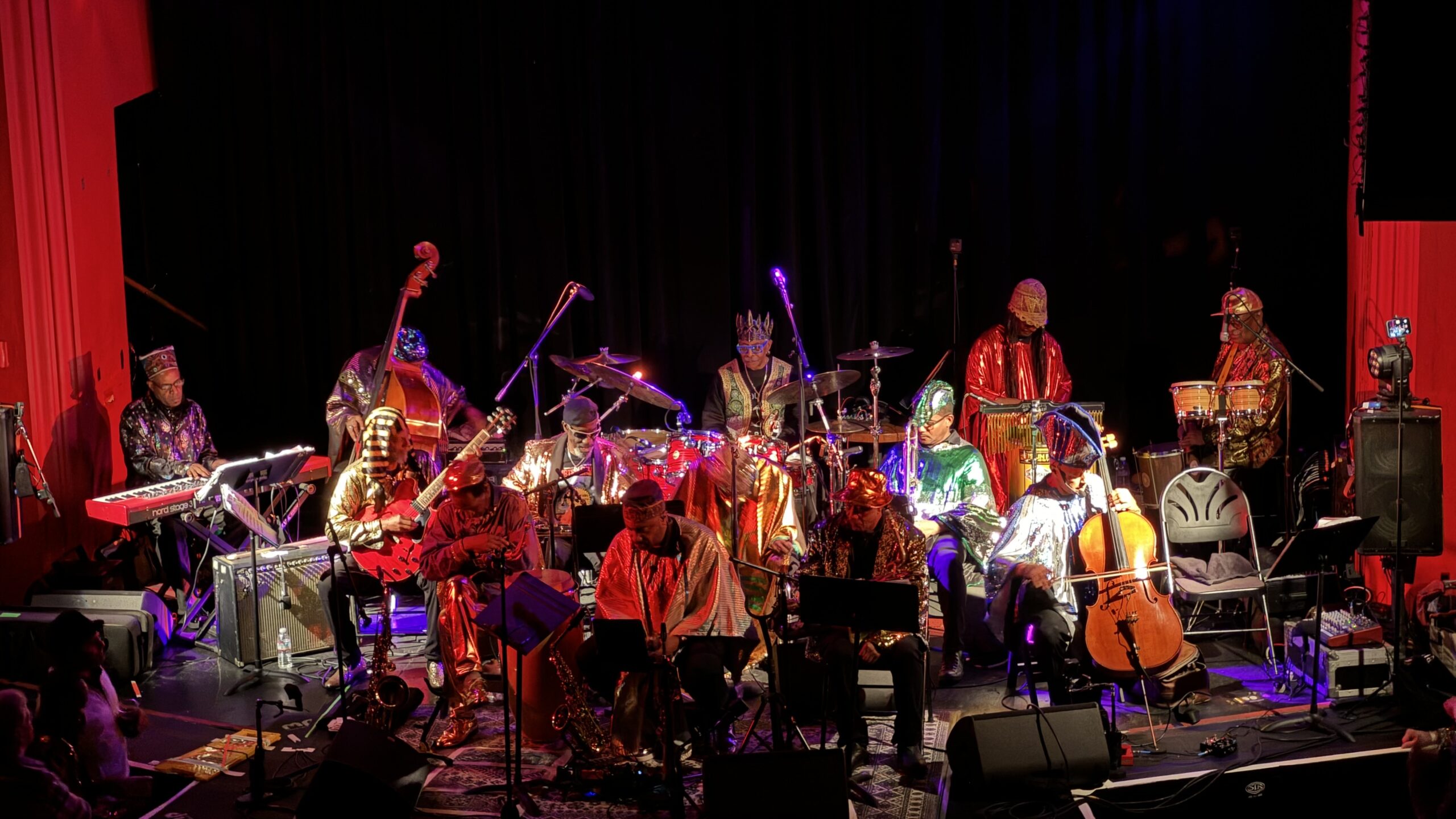
When Sun Ra formed the ensemble in the mid-1950s, he presented it not simply as a band, but as a complete artistic philosophy. Claiming extraterrestrial origins, he used cosmic mythology to challenge audiences to imagine new futures, particularly for Black music and culture. Long before the word “Afrofuturism” became widely used, Sun Ra was actively building that vision through music, poetry, costumes, film, and communal living.
Watching the Sun Ra Arkestra at The Chapel, it became clear how the band functions almost like a musical relay across generations. Veteran players who once performed with Sun Ra share the stage with younger musicians who grew up studying the Arkestra’s recordings. The result isn’t nostalgia, it’s a living tradition that keeps evolving, with the group approaching the material with the perfect balance of discipline and fearless experimentation that honors the compositions while leaving room for the unknown — where the Sun Ra Arkestra thrives.
In an era when much of the music industry revolves around algorithms and predictable genres, the Sun Ra Arkestra remains gloriously uncategorizable — part big band, part avant-garde collective, part philosophical experiment. And at The Chapel, they reminded the audience that the Arkestra is still traversing the “spaceways,” as Sun Ra was known to say, both outward and inward, exploring new sonic galaxies while carrying forward one of the most radical visions ever introduced into American music.
