


Gagged by Goth
The Roar Shack
November 11, 2026
Photos by Wendy Golden and Billy Mowery
Who knew a show called Gagged by Goth would turn out to be one of the most joyous things I’ve seen all year? For a girl who came of age in California’s Central Valley wearing black eyeliner and buckled boots, it brought together three things I love — drag, dark wave, and community.
At the rescheduled November 11 show, a packed house descended on San Francisco’s hottest little creative incubator, The Roar Shack, for the fourth installment of Rock Out — a live music series created by drag icon, filmmaker, producer, and self-proclaimed cult leader Peaches Christ and Edwin Outwater, the genre-defying conductor who famously led Metallica alongside the San Francisco Symphony.
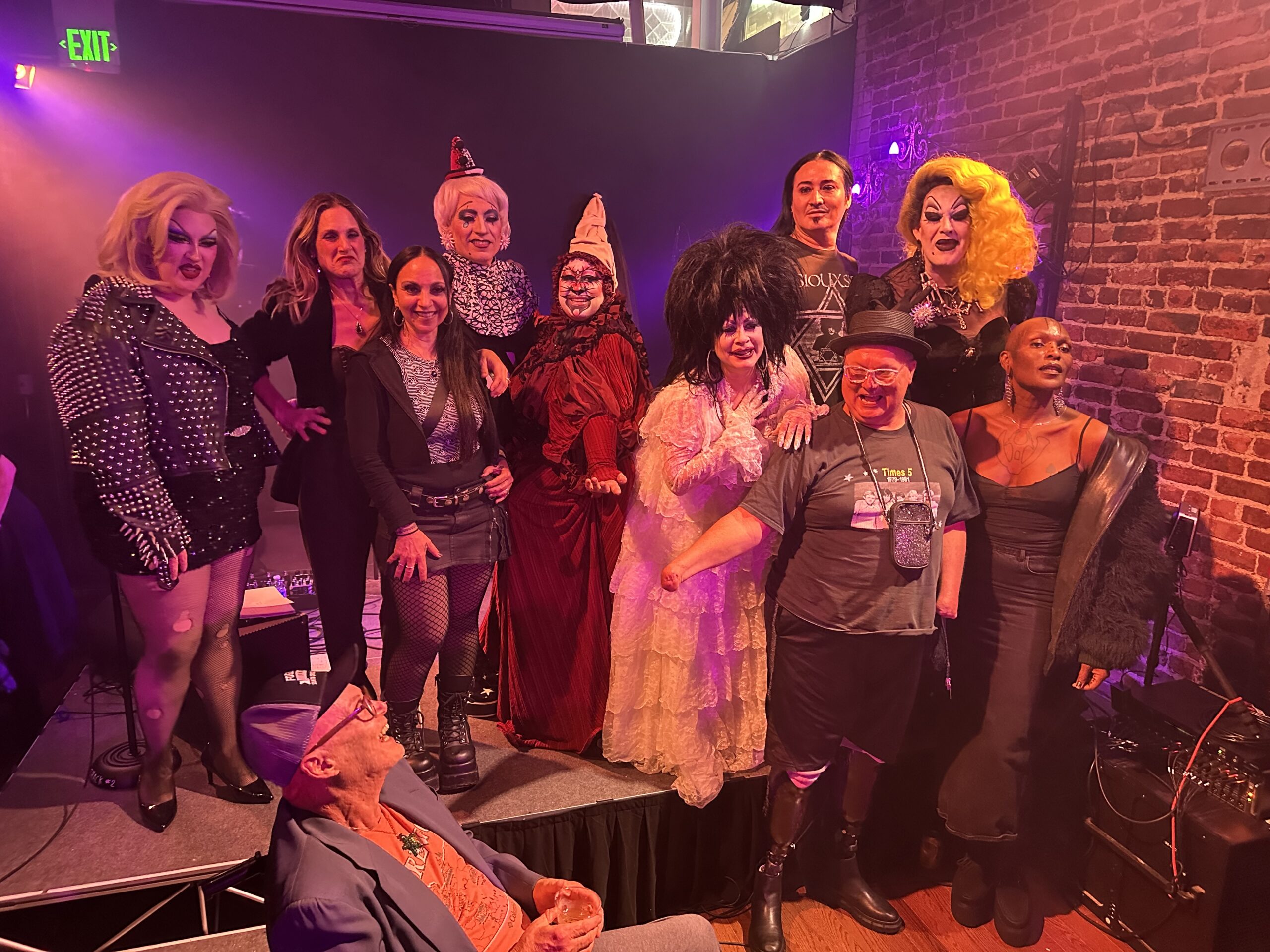
The series previously brought Punk Pride to Oakland’s Mosswood Meltdown, and has done experimented with ’90s grunge with Smells Like Queen Spirit and ’80s hair bands with Wig Metal. Gagged by Goth, promised an evening of death rock, dark glamour, and drag experimentation. And did it ever deliver!
The twist? No lip-syncing. Every performer sang live, backed by musicians from experimental ensemble and Roar Shack founders The Living Earth Show.
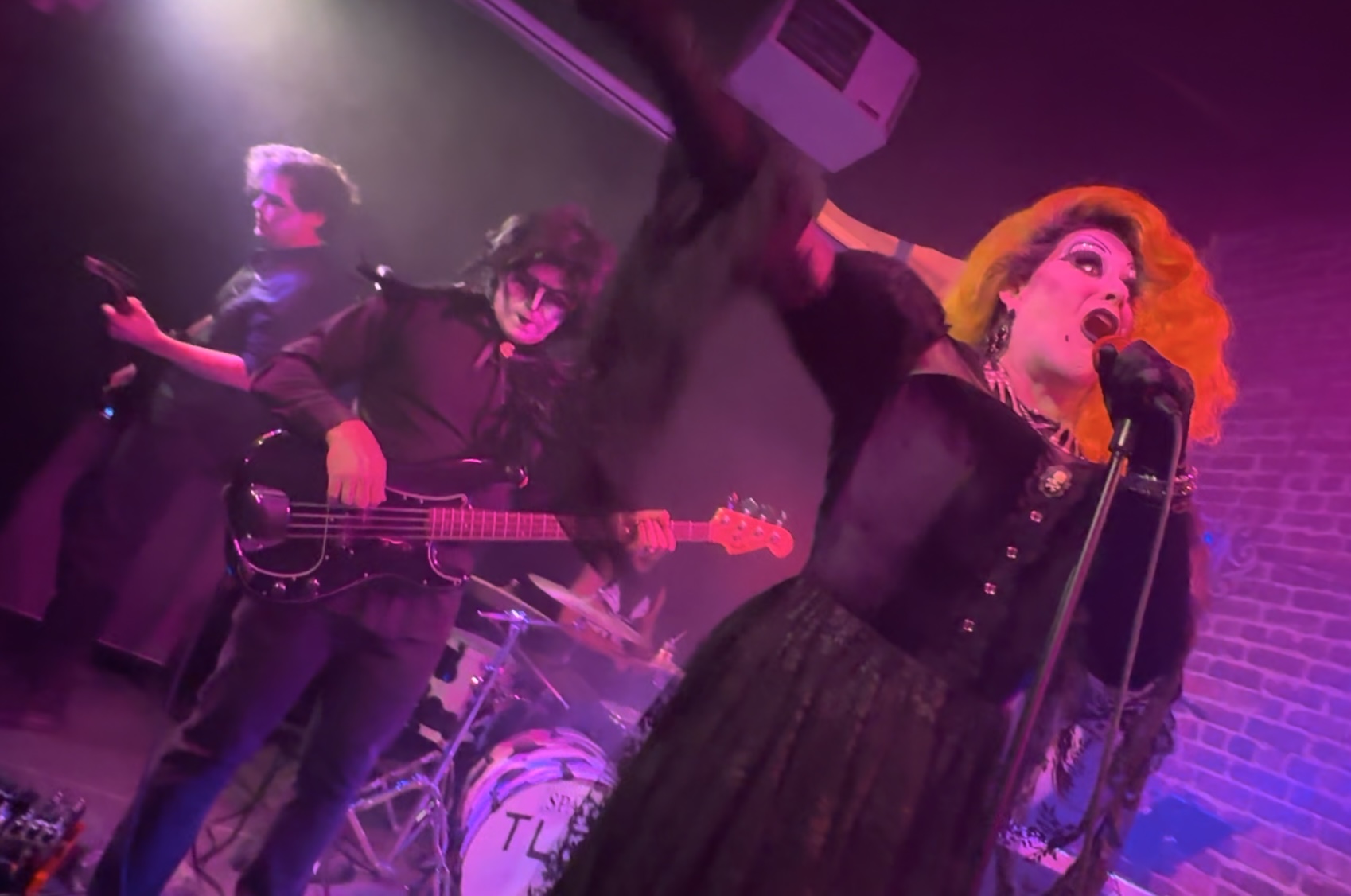
Peaches took to the stage in black velvet and lace, corseted for the gods in a Victorian dress with witchy Stevie Nicks sleeves and a bright orange bouffant, launching into Specimen’s electrifying 1983 Batcave classic “Kiss Kiss Bang Bang.”
As she riled up the crowd, she expertly set the stage for a special night.
The evening was a who’s who of San Francisco nightclub royalty, both onstage and off. Peaches repeatedly paused to acknowledge drag legends such as Timmy Spence and Pippi Lovestocking from the old Trannyshack days, calling them out by name. It was clear the late Heklina’s showcase at The Stud had been a crucible for the punk-influenced drag we were about to see.
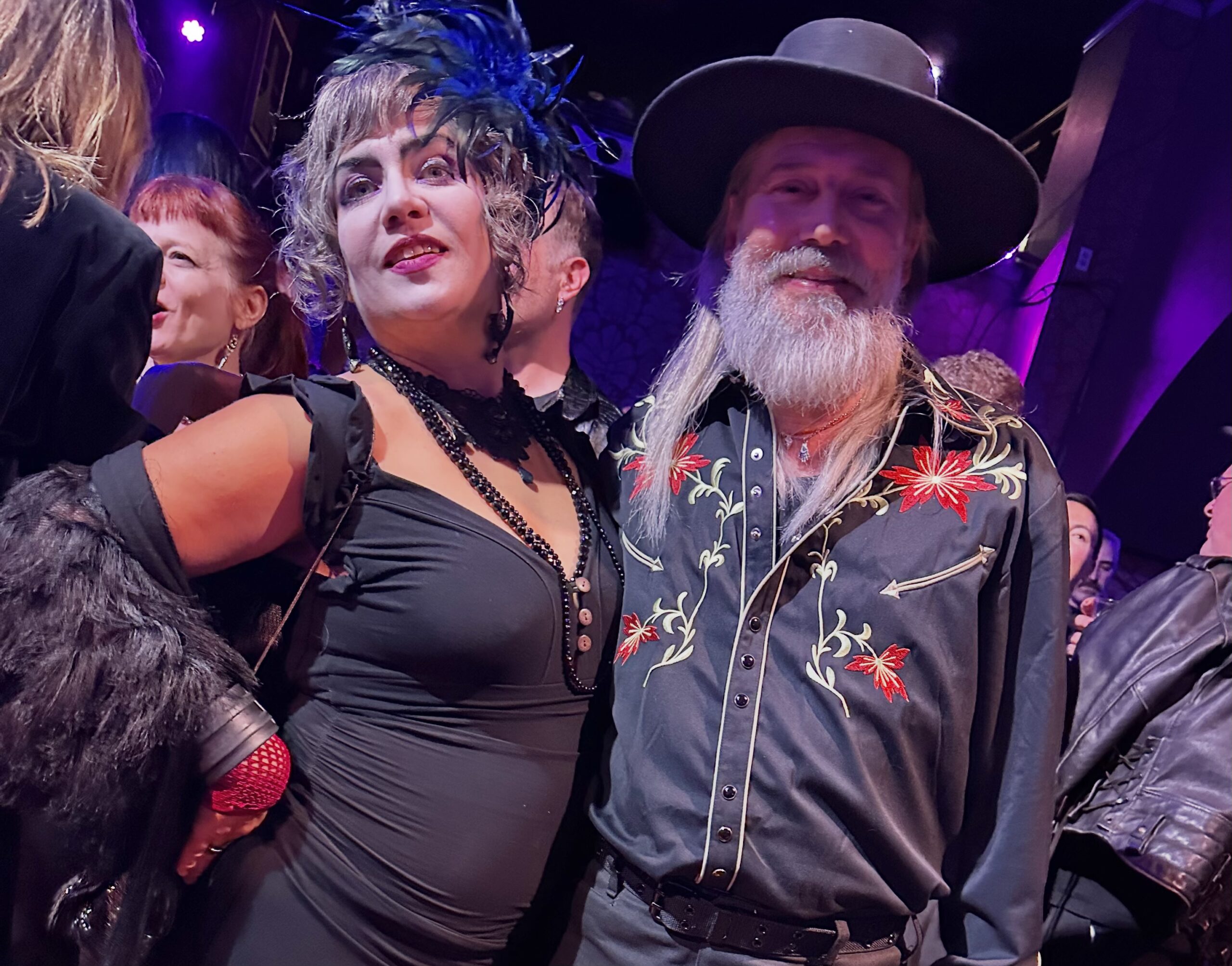
There’s something beautiful about a subculture growing old enough to have its own elders and making a point of honoring them. These are the people who helped shape San Francisco’s underground drag scene, and it was wonderful to see them celebrated.
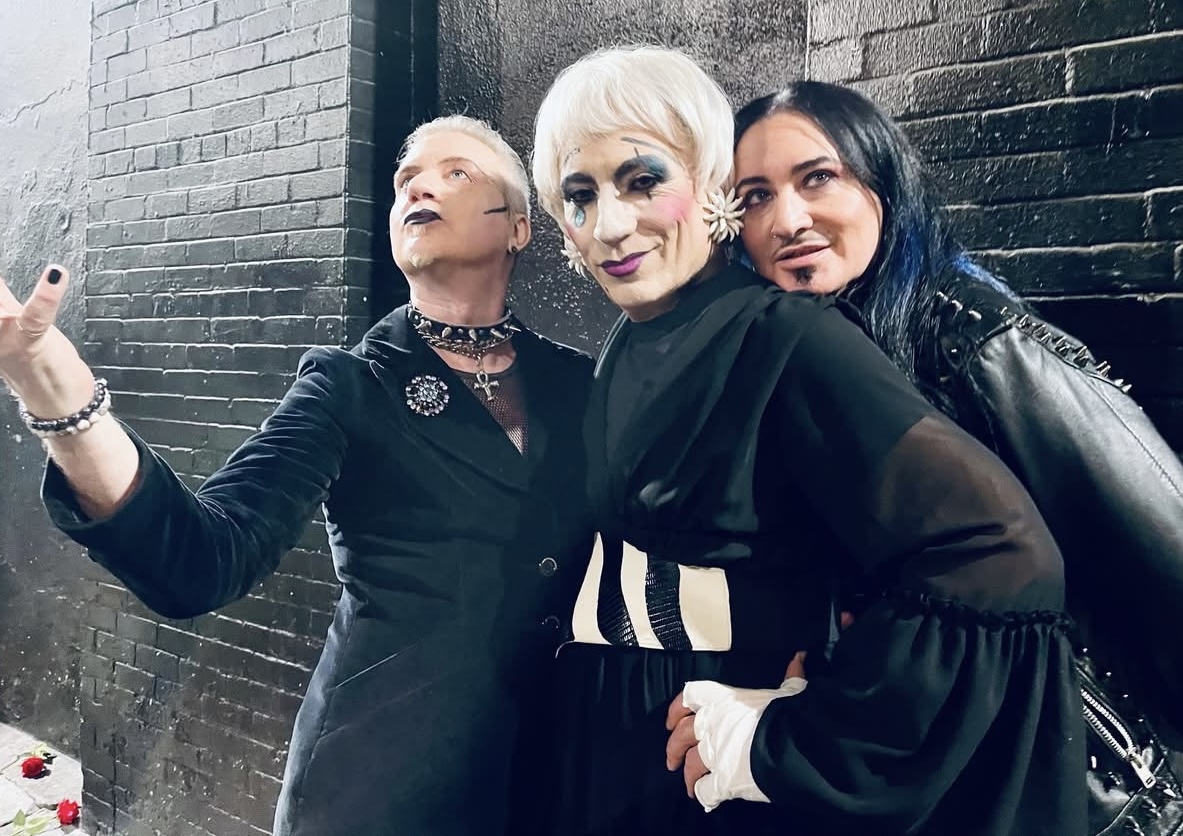
As a longtime member of this community, Nina Stavinga commented, “It really felt like a family reunion,” adding, “but I liked that there were also new performers I hadn’t seen as much. Everybody brought something different.”
And she was right: the performances were as eclectic as the community itself.
The minute Trixxie Carr appeared in her Elvira-meets-rock-goddess ensemble, belting out a song by The Glove, I knew we were in for a ride.
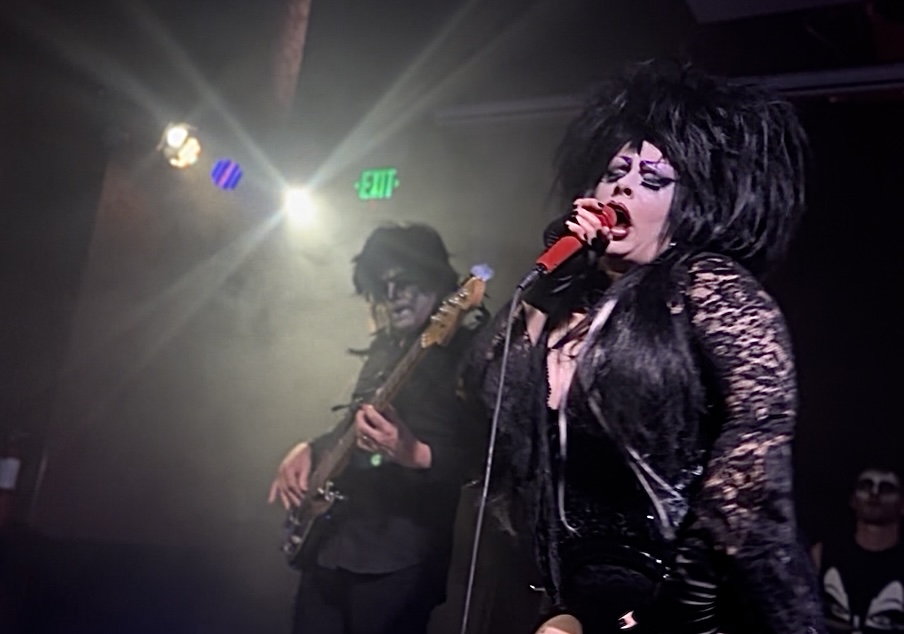
“It was a total dream to actually sing that song live with a band,” she told me, delighted that so many audience members recognized the relatively obscure group. “So satisfying.”
The short-lived collaboration between The Cure’s Robert Smith and Siouxsie and the Banshees’ Steven Severin produced just one album, 1983’s Blue Sunshine, making it a particularly delicious deep cut for the goth faithful.
Co-creator Edwin Outwater went even deeper. Trading his conductor’s baton for a bass guitar, he delivered “Riboflavin,” a deliciously campy horror novelty song from the 1960s later resurrected by deathrock pioneers 45 Grave.
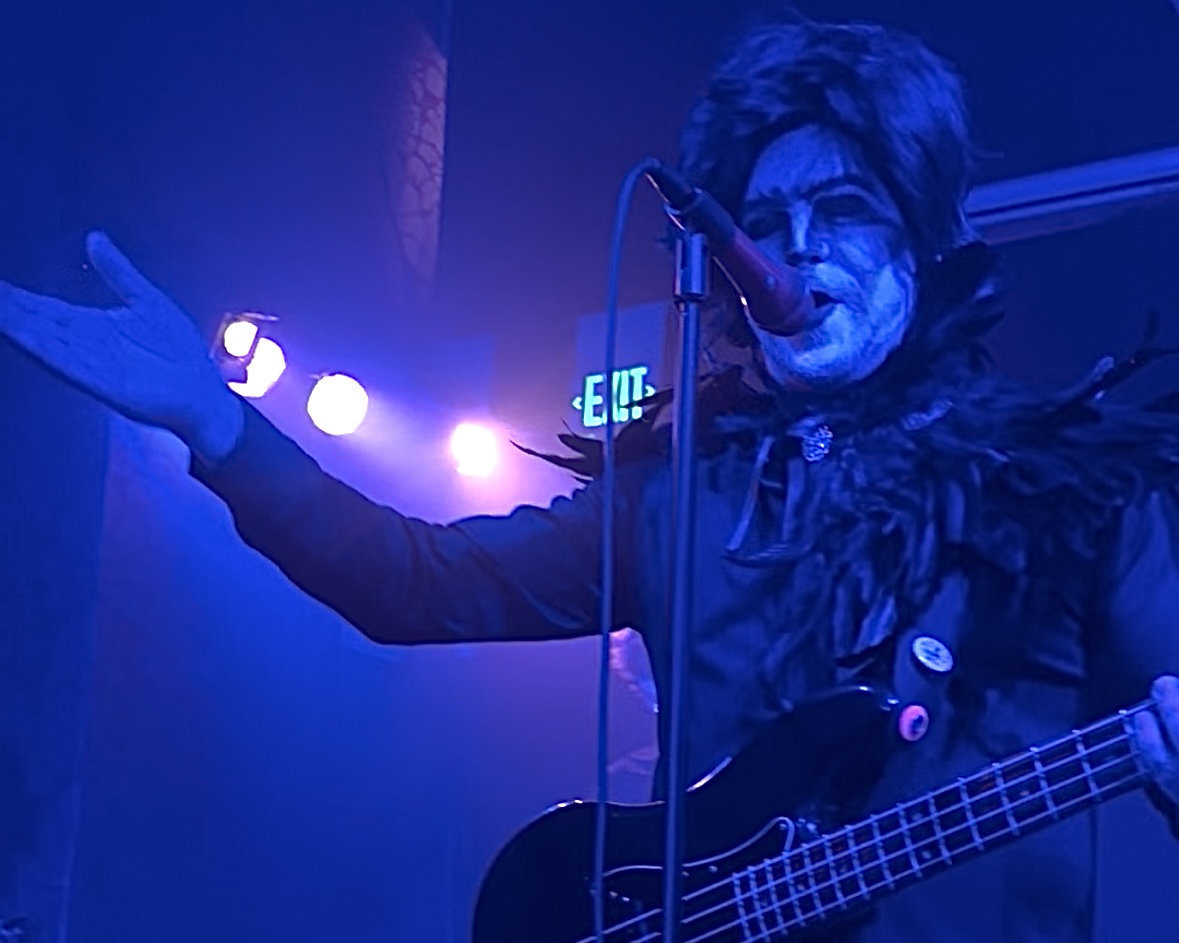
As a Halloween girlie in November, still mourning the passing of my favorite holiday, this Dracula-chic surf-rock rendition hit my sweet spot.
Keeping the ’80s goth nostalgia alive, Vinsantos took to the stage looking like a lost member of The Cure, with a powdered face, rouged lips, and hair straight out of my 1988 yearbook. Their beat poetry-style story about getting ripped with Peter Murphy made for a mesmerizing introduction to the Bauhaus deep cut “Crowds,” which they hilariously claimed as their own.
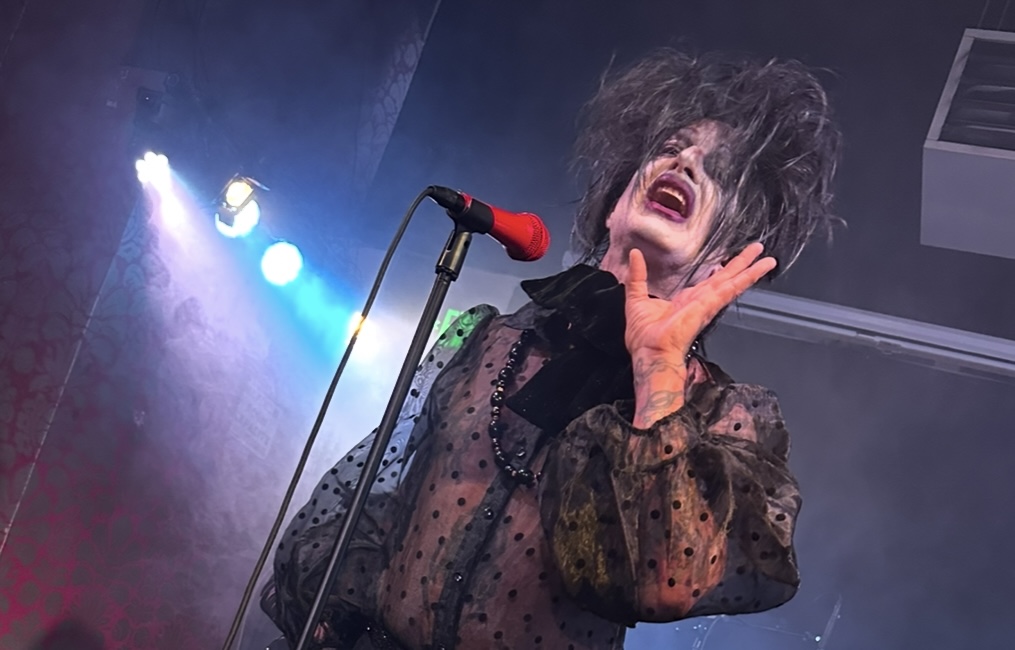
As Vinsantos recounted, Murphy had told them, “I never do that song live,” to which they replied, “Good thing I do!”
Reflecting on the evening, Vinsantos shared, “Growing up deathrock in San Jose in the 1980s, I didn’t think it would be possible to make a career out of wearing too much makeup, but several decades later, here I am.”
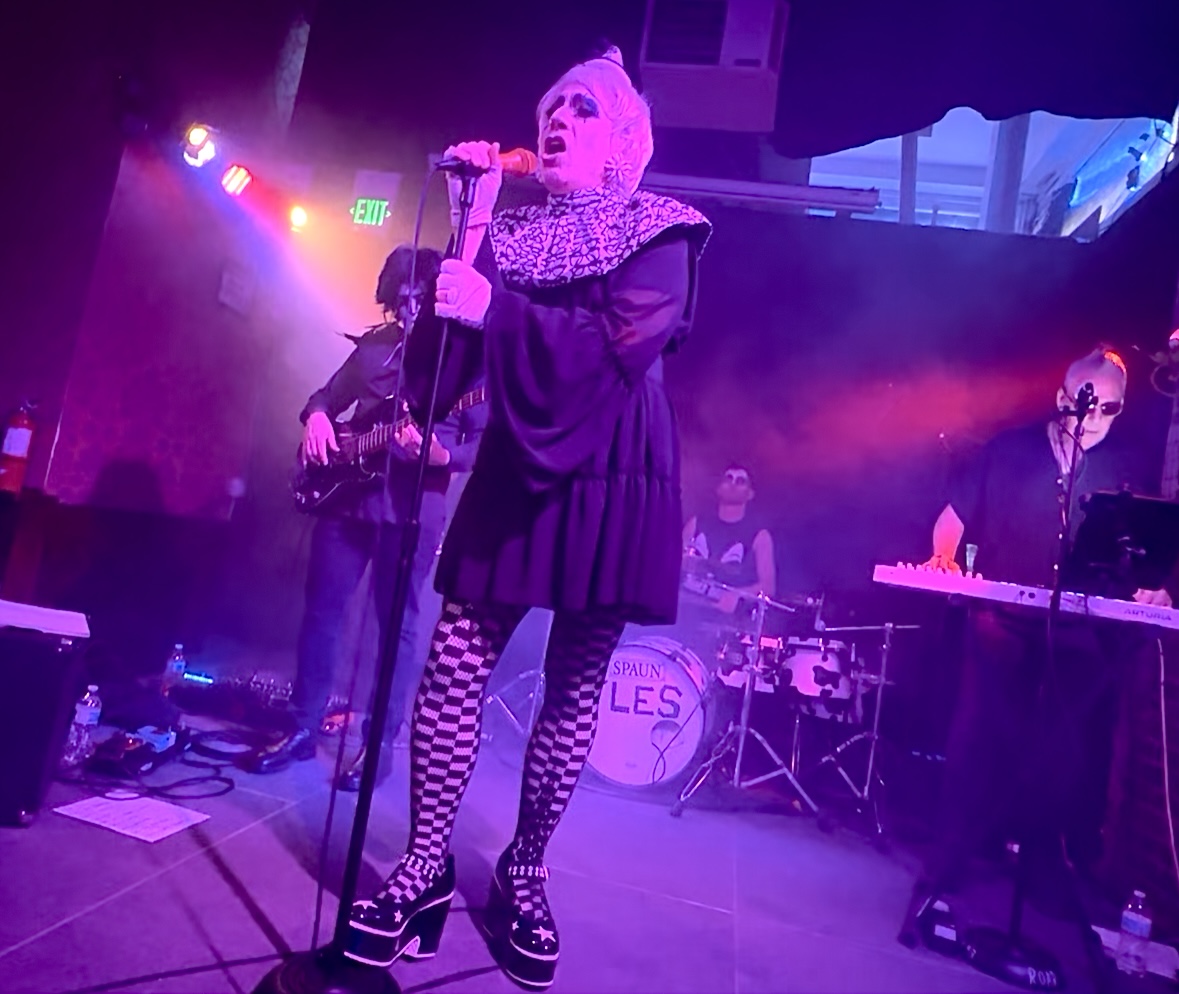
Nobody knows more about making a career out of wearing too much makeup than shapeshifting character actor and celebrated Grinch, J.A. Valentine. Their rendition of Joy Division’s “Love Will Tear Us Apart” had the audience cheering. Dressed as a sad clown, Valentine illustrated the absurdity of human relationships and the bravery it takes to throw ourselves into them anyway. And they came out swinging!
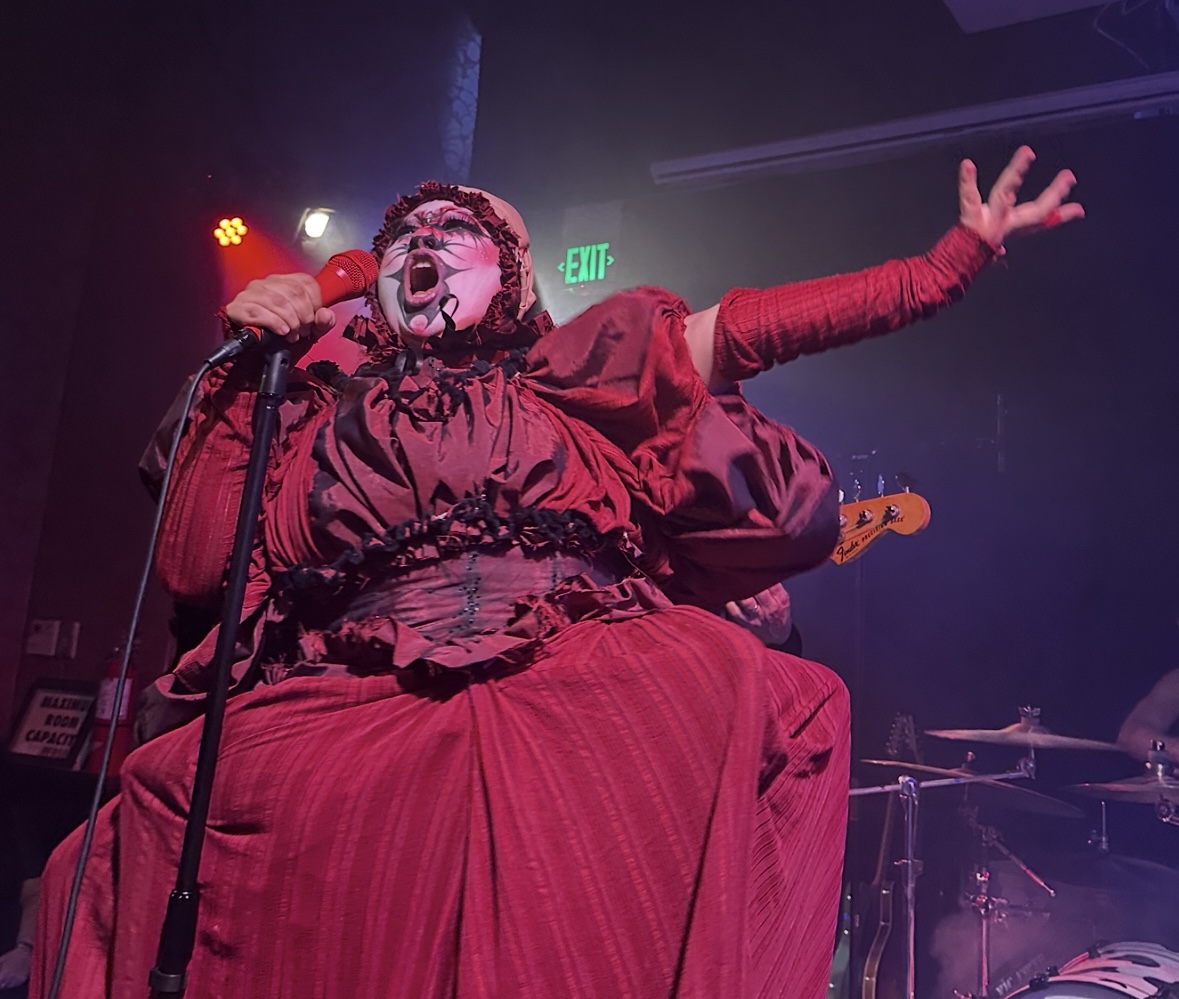
Speaking of bravery, a real highlight for me was Obsidienne Obsurd’s cover of Siouxsie and the Banshees’ “Happy House.” Peaches revealed it was their first time singing live, but you never would have known it from their masterfully deranged delivery, which perfectly captured the idiocracy of our times.
Dressed in their iconic drag-clown makeup and a baroque-esque garment, they looked like a jester from a techno-feudal future. When they pulled out a violin and began playing feverishly, the crowd erupted.
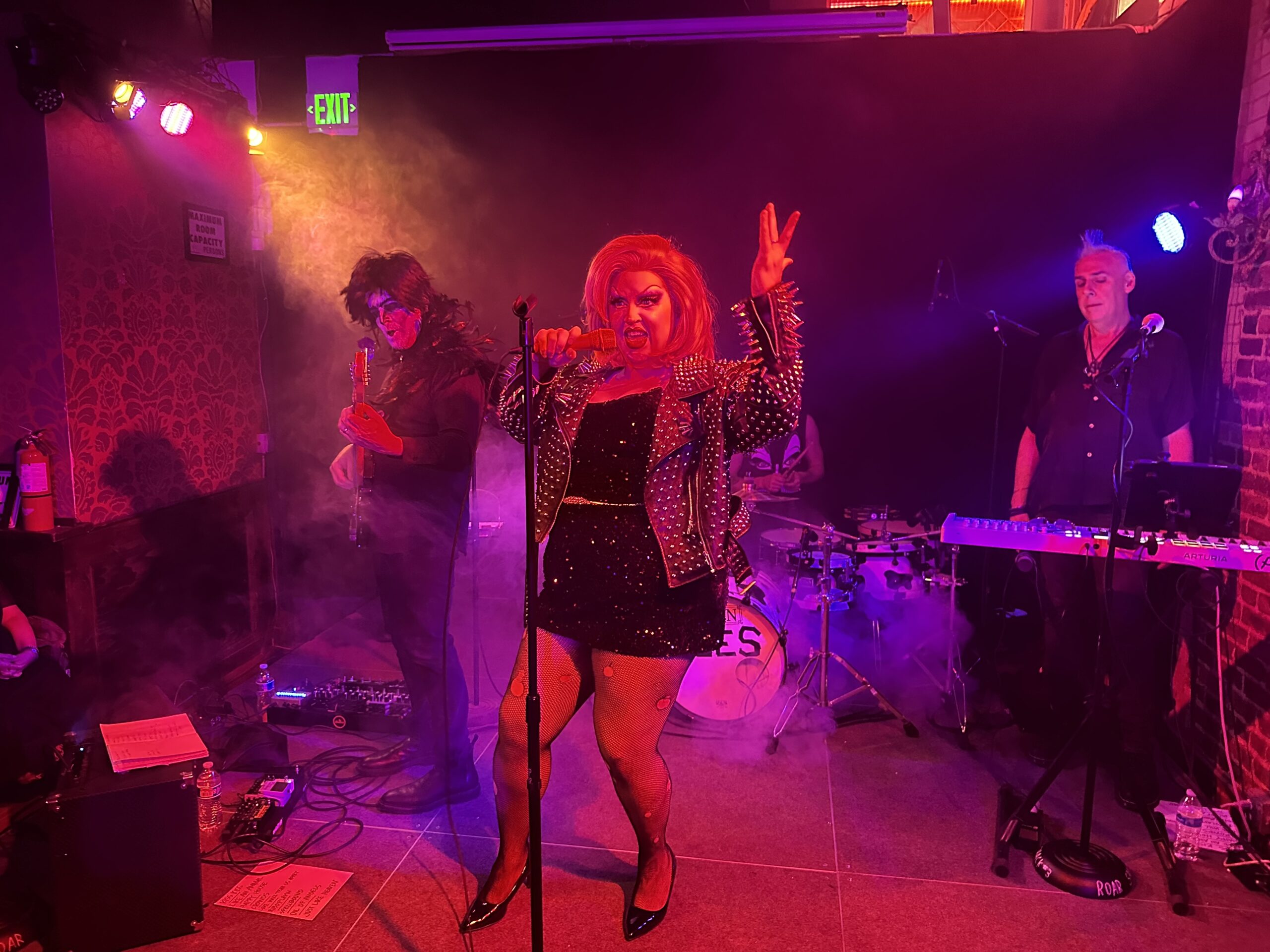
Several performers spoke about the importance of reconnecting drag with its underground, defiant roots. As Vanilla Meringue put it, “With the commercialization of drag in recent years, it’s so refreshing to have shows in San Francisco that feel connected to the more rebellious nature of the art form.”
There was even something to celebrate beyond the walls of The Roar Shack that night, and Kylie Minono rallied the witch coven with Siouxsie and the Banshees’ “Spellbound.” Given the blue wave we’d just experienced in the midterms, and the milestone victories we’d collectively manifested, it was a bruja-ha (pun intended) for sure.
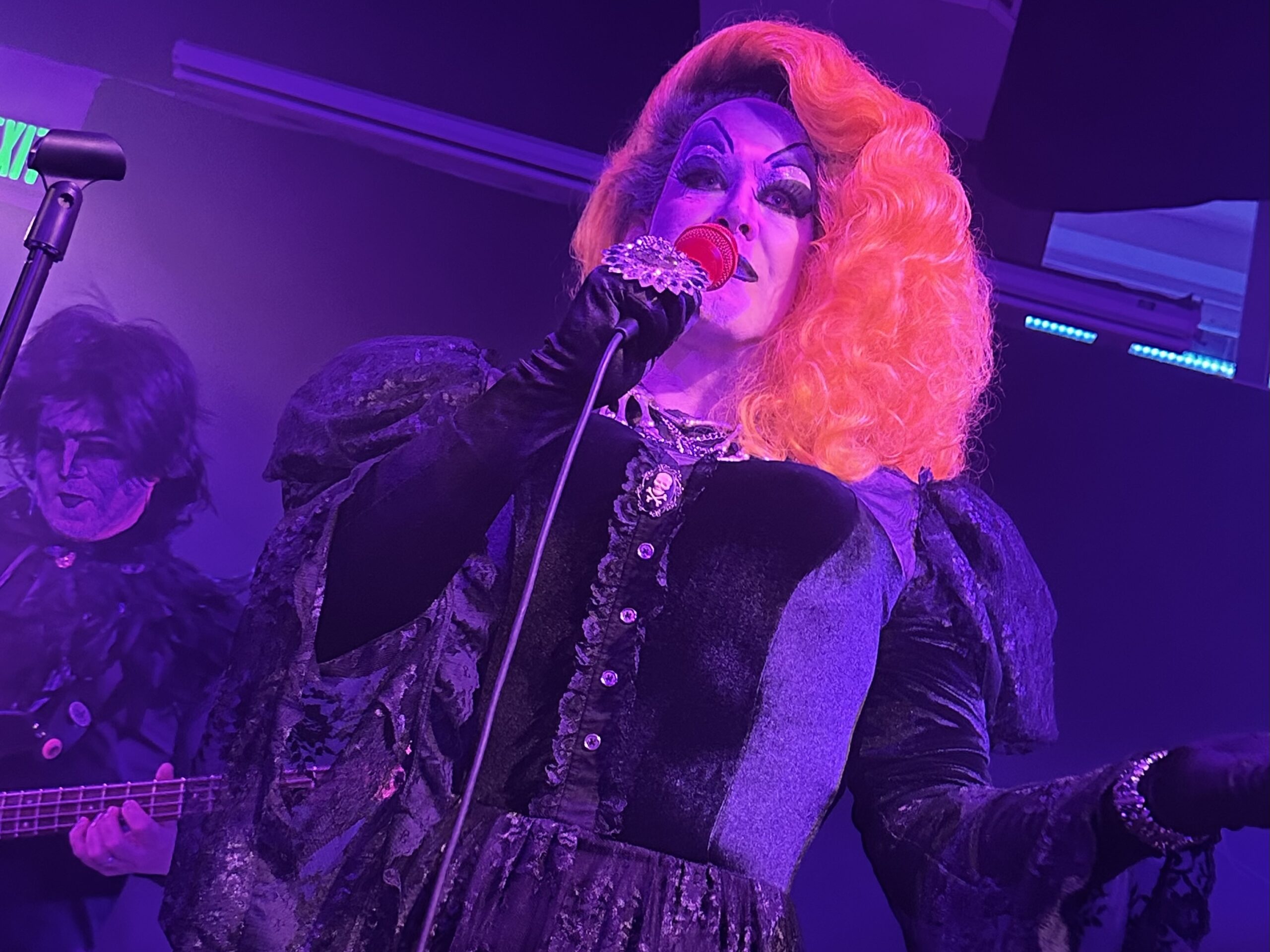
Peaches called out the breaking news that Mississippi had elected Democrat Scott Colom to the U.S. Senate, flipping a Republican seat and sending the state’s first Black senator to Washington since Reconstruction. Magic at play for sure.
And the historic wins kept coming. Keisha Lance Bottoms became the first Black woman elected governor in U.S. history. Chris Pappas became the first openly gay man elected to the Senate, and Abdul El-Sayed, the first Muslim.
Meanwhile, Allison Montgomery in Alabama, Bentley Hudgins in Georgia, Joanna Whaley in Michigan, and Jaelynn Scott in Washington made history with groundbreaking transgender representation in their state legislatures. Sarah McBride, the first openly transgender member of Congress, won reelection.
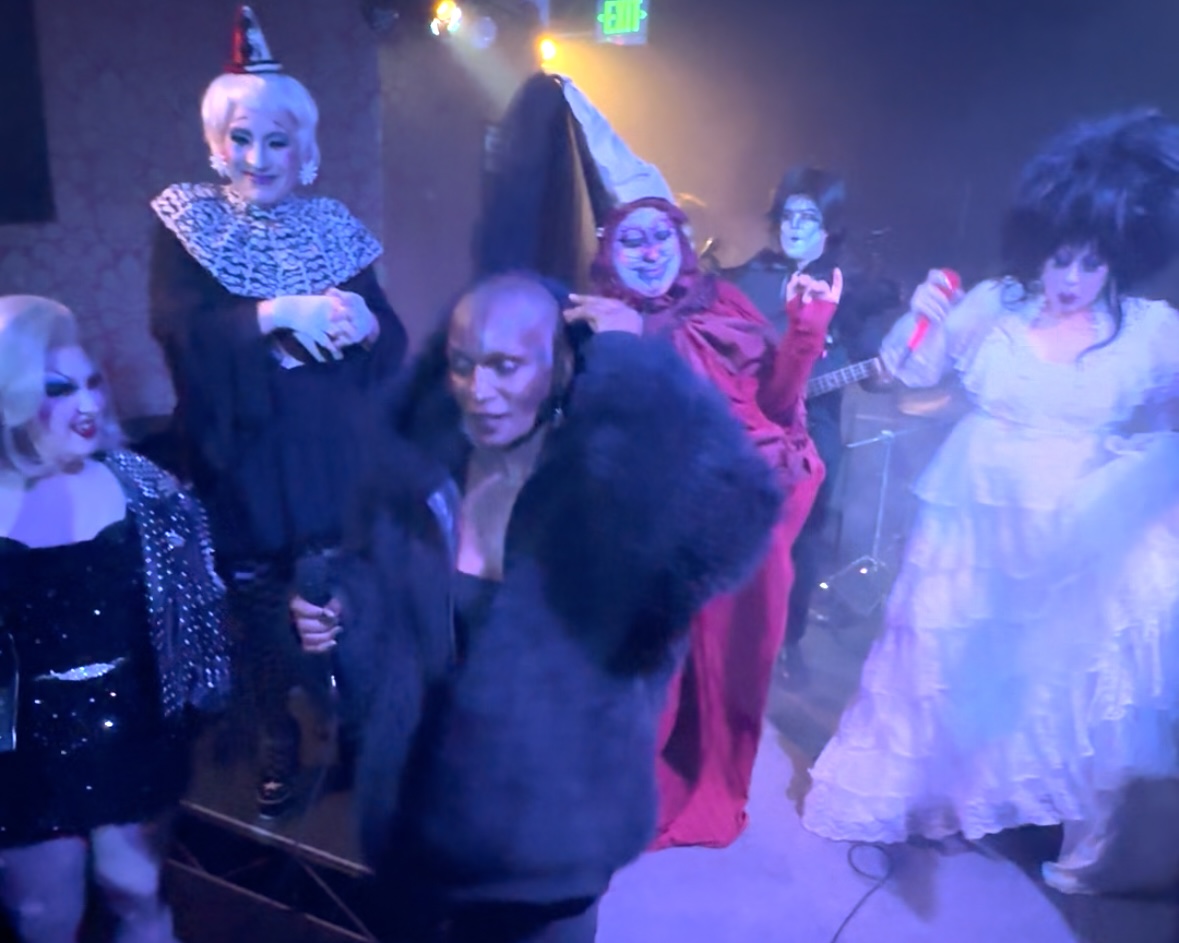
Against this backdrop, Krylon Superstar’s moody Cocteau Twins number centered on trans visibility felt especially poignant. Stripping away wig and dress to reveal a bald head and body marked with black tape, Krylon met the moment with vulnerability and triumph.
The night culminated in Trixxie Carr’s rendition of The Cure’s “Just Like Heaven.” Peaches invited the entire cast back onstage to dance while the audience took over the vocals. I relished in the irony that a goth-themed evening ended in collective joy.
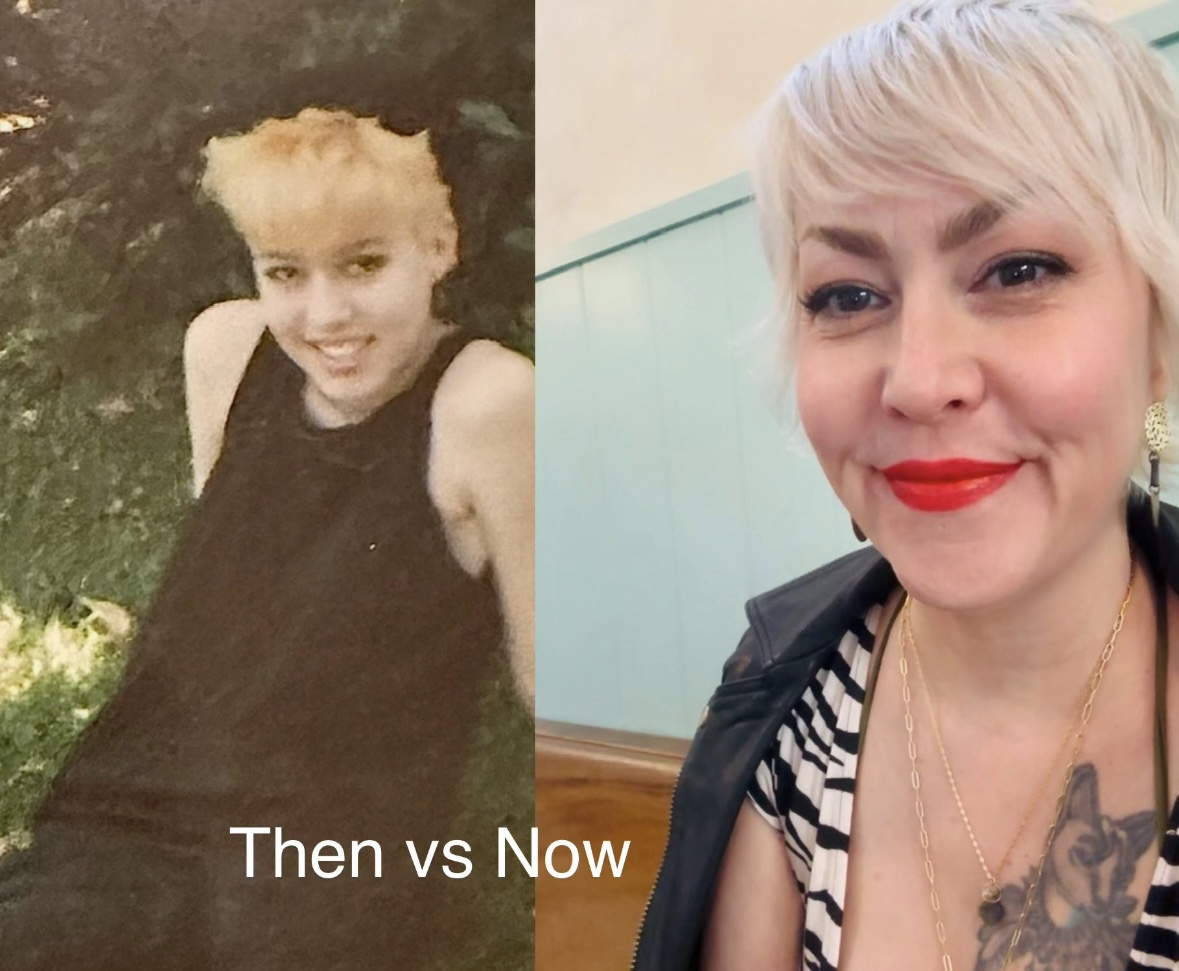
As a teen goth living in the Central Valley in the ’80s, I would have given anything to see something like this. While other kids were hoping for prom queen or a spot on the varsity team, we were playing with gender in a place where that didn’t fly, wearing our misfit uniform of black, long bangs in our faces, and eyeliner. For closeted queer kids and outsiders, our little subculture offered safety, acceptance, and somewhere to belong.
The music at Gagged by Goth was the soundtrack to my adolescence, and the performers spoke to my heart. You can take the girl out of the black dress, but you can never take the goth out of her black heart.
